Battery Energy Storage for Low-Carbon AI Data Centres: How MPMC HBD-A Systems Work With Generators and Solar
AI data centres combine very high power density with demanding uptime targets and ambitious carbon commitments. Battery energy storage helps on all three fronts: it responds in milliseconds to protect critical loads, shifts solar energy into the evening, reduces peak demand and lets standby generators run less often. MPMC's HBD-A Series is engineered for this role, and because MPMC also builds the high-end containerised generator sets used in data centres, it can design storage and generation as one coordinated system.
Four Roles for Storage in a Low-Carbon Data Centre
UPS-Level Response and Ride-Through
Integrated with the generator array, HBD-A storage provides UPS-level millisecond response, supporting critical loads instantly while generators start and synchronise. Its grid-forming, VSG and black start capabilities let the battery establish and stabilise site power independently, and on-grid/off-grid switching is supported on every model, with seamless switching available as an option.
For AI clusters whose power draw can change quickly as workloads ramp up and down, this fast response helps hold voltage and frequency steady for IT and cooling equipment.
Peak Shaving, Grid Services and Solar Shifting
The EMS charges the battery at off-peak times and discharges it during peak demand, lowering the maximum kW drawn from the grid, while frequency regulation capability allows participation in grid services where markets permit. Paired with rooftop or campus PV, HBD-A stores surplus midday solar and releases it later, raising the share of renewable energy in the facility's supply. DC-coupled HBD-DC 410 and HBD-DC 5000 models suit large solar-plus-storage installations.
Less Generator Running Time
By covering short events and peaks from storage, HBD-A reduces reliance on standby generator running time while maintaining zero-downtime availability, cutting fuel use and emissions from routine operation.
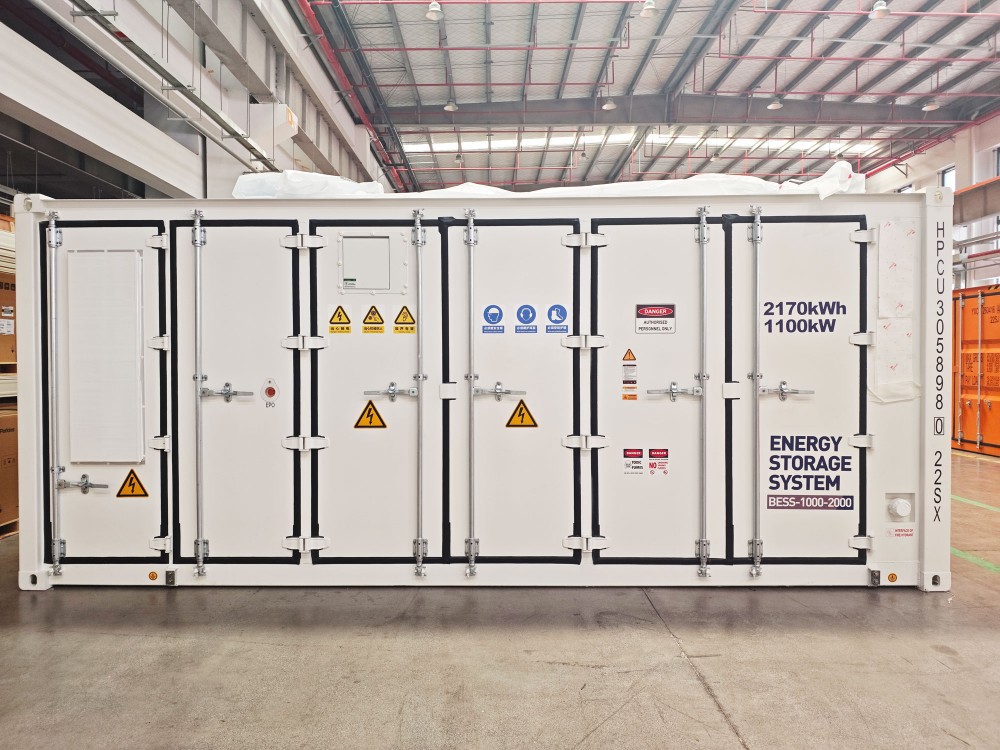
MPMC HBD-A Series HBD-1000-2000 battery energy storage system, delivering 1,125 kW from 2,170 kWh of liquid-cooled storage.
Table 1. HBD-A functions for AI data centre objectives
|
Data centre objective |
HBD-A function |
Benefit |
|
Protect critical load |
UPS-level millisecond response; grid-forming and black start |
Continuous power through every transition |
|
Lower energy cost |
Off-peak charging and peak-time discharge |
Reduced demand charges |
|
Higher renewable share |
PV storage and solar shifting; DC-coupled models |
More solar energy used on site |
|
Lower emissions |
Storage covers peaks and short events |
Less generator running time and fuel |
|
Grid support |
Frequency regulation in PQ, VF and VSG modes |
Additional value where markets allow |
Engineered for High-Density Critical Sites
HBD-A systems use LFP 314Ah cells rated for 8,000 cycles at 90% depth of discharge, liquid cooling on every model, IP67 battery packs within an IP54 system and CE-certified aerosol fire protection, operating from -20°C to +55°C. The largest unit, the HBD-1000-2000, delivers 1,125 kW from 2,170 kWh. In the 8 MWh system MPMC delivered to Europe, each HBD-1000-2000A uses a dual-PCS parallel architecture with 45 CATL LFP battery packs and nine high-voltage cabinets in a full-weld 20HQ container with C4 coating, ceramic-based aerogel insulation and IP55 protection. Safety features include aerosol suppression in every pack, smoke, temperature and humidity alarms, and BMS-EMS linkage with automatic power cut and remote alarm.
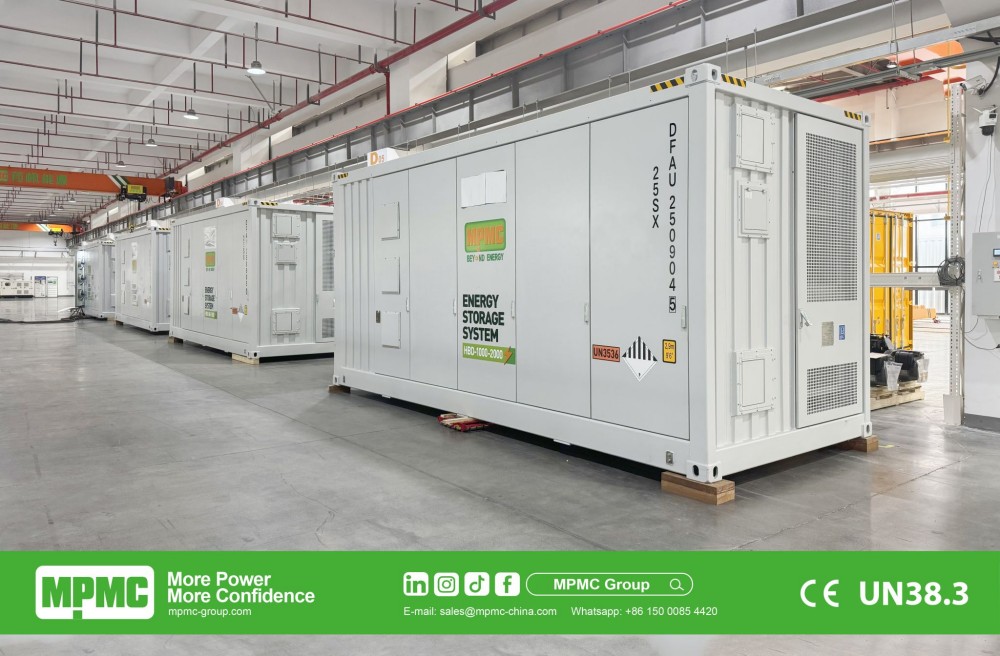
MPMC 8 MWh containerised energy storage system built from HBD-500-1000 and HBD-1000-2000 units
Storage and Generation From One Supplier
MPMC's data-centre generator set references include a 3 MW MTU-powered installation and the 12 MW Changhang Power Station in the UAE and 36 MW of backup power in the US. Its self-developed SCADA coordinates generator sets, storage and PV with real-time monitoring, automated reports, ten years of data retention, an SL3-level cybersecurity framework and Starlink satellite backup communication.
The same platform can monitor generator sets, HBD-A storage and solar arrays across multiple sites with hierarchical account management, giving operators of several data centres a single view of their energy assets. Remote diagnostics and on-site commissioning by MPMC engineers support each installation from start-up onwards.
Table 2. Large-scale MPMC storage references
|
Project |
Configuration |
Services |
|
Green power plant, Hungary (8 MWh) |
HBD-500-1000 x 2 + HBD-1000-2000 x 3 |
Frequency regulation, peak shaving, load balancing |
|
8 MWh BESS delivered to Europe |
5 x HBD-1000-2000A, 2,097 kWh each |
Frequency regulation, peak shaving, load balancing |
|
Grid-connected storage, Netherlands (8 MWh) |
HBD-A Series, 4 x 2 MWh |
Frequency regulation |
|
Off-grid batching plants, Dubai (10 MWh) |
10 x HBD-500-1000 with gensets |
Hybrid power; about 20% OPEX reduction |
HBD-A systems carry a 5-year product warranty and a 10-year battery performance warranty with at least 70% capacity retention.
Planning Storage for Your Data Centre With MPMC
• Share critical load, growth phases and generator configuration
• Set targets for renewable share, peak reduction and emissions
• Identify space for PV and containerised storage
• Define integration with existing monitoring systems
• Contact MPMC at sales@mpmc-china.com or WhatsApp +86 150 0085 4420 for a data centre storage design
https://www.mpmc-group.com/
MPMC Powertech Corp.
About Author
