Common Mistakes Companies Make When Choosing Industrial Router Suppliers
Selecting the right industrial router supplier is a critical decision that can significantly impact operational efficiency, system reliability, and total cost of ownership. Yet many companies stumble through this process, making costly mistakes that only become apparent after deployment. Understanding these common pitfalls—and how to avoid them—can save organizations substantial time, money, and operational headaches.
Prioritizing Price Over True Industrial-Grade Quality
Perhaps the most frequent and damaging mistake is selecting suppliers based primarily on upfront cost. Many procurement teams, pressured by budget constraints, gravitate toward consumer-grade or "commercial" routers marketed as industrial solutions. These devices may initially appear comparable, but they fundamentally lack the engineering rigor required for harsh industrial environments.
Genuine industrial hardware requires specific design considerations that aren't optional luxuries. Industrial-grade components must function reliably across wide temperature ranges—typically from -35°C to +75°C—without performance degradation. They need robust electromagnetic compatibility with at least 15KV ESD protection and 1.5KV electromagnetic isolation to withstand the electrical noise common in industrial settings. Consumer-grade devices simply cannot deliver this resilience, leading to frequent failures, unexpected downtime, and ultimately higher total costs.
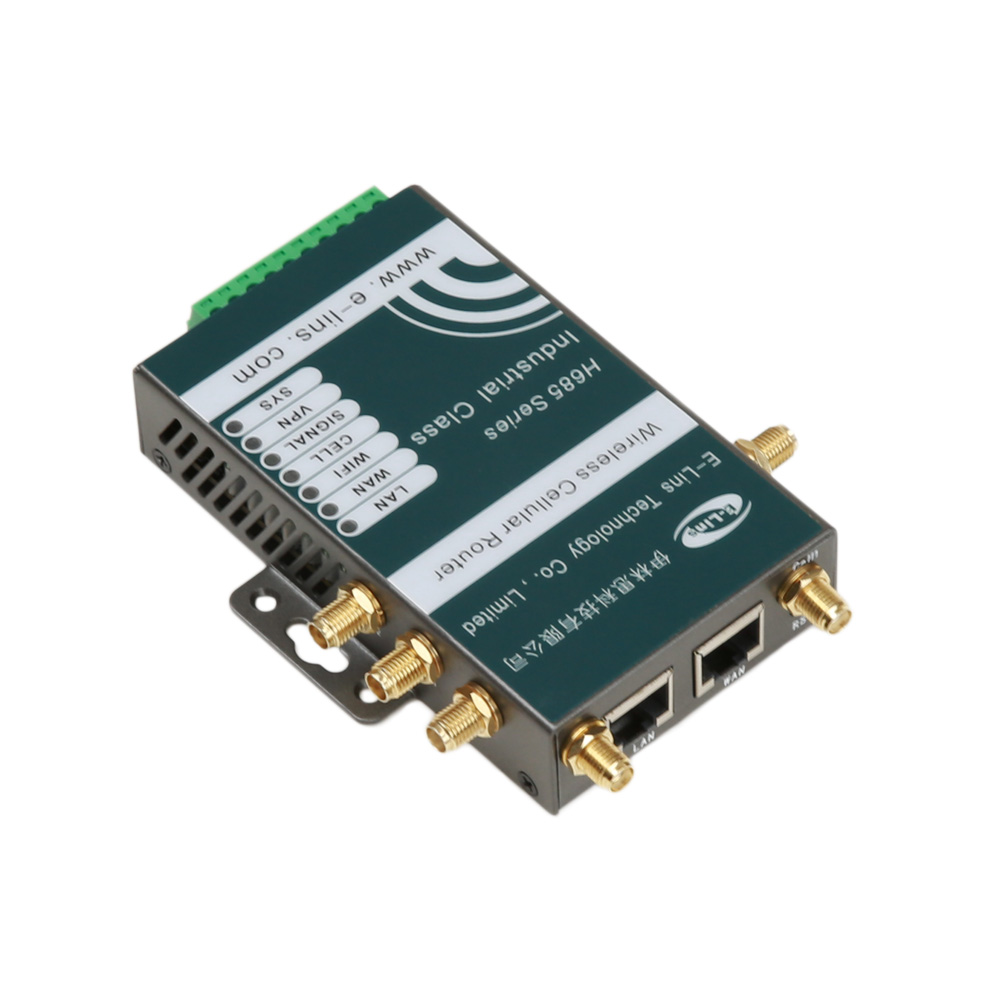
Organizations should verify that suppliers use truly industrial-grade chips and components, not repurposed consumer technology. Shenzhen E-Lins Technology Co., Ltd., for example, has built its reputation on this principle, employing industrial-grade components that ensure equipment online rates of 99.5% or higher—a critical metric in unattended and distributed deployment scenarios where on-site repairs are costly and time-consuming.
Overlooking Software Development Capabilities
Hardware specifications receive considerable attention during supplier evaluation, yet software capabilities often get superficial treatment. This represents a critical oversight. The firmware and operating system that power industrial routers directly determine connection stability, security vulnerability resistance, and long-term maintainability.
Many suppliers use generic, publicly available Linux distributions with minimal customization. While this approach reduces development costs, it introduces numerous problems: security vulnerabilities from unnecessary services, stability issues from non-optimized code, and poor performance under industrial stress conditions. These systems frequently experience disconnections and require constant patching.
Companies with 100% self-developed software systems demonstrate a fundamentally different commitment to reliability. Independent development allows optimization specifically for stability and security, eliminating unnecessary components that create vulnerability exposure. This approach dramatically reduces disconnection incidents and security risks. Organizations should specifically inquire about software development capabilities, asking whether the supplier develops firmware in-house or relies on third-party distributions.
Ignoring Real-World Field Validation
Technical specifications listed on datasheets provide necessary information, but they don't tell the complete story. Many companies make purchasing decisions based entirely on spec sheets without investigating actual field performance in comparable deployments. This oversight can prove costly when devices fail to meet performance expectations under real operational conditions.
Large-scale commercial validation provides the most reliable indicator of supplier credibility. Suppliers that have successfully deployed tens of thousands of units in carrier-grade projects or critical infrastructure demonstrate proven reliability that laboratory testing alone cannot verify. For instance, suppliers who have delivered over 100,000 units to major telecom operators and achieved documented equipment online rates of 99.4% or higher have demonstrated capability under the most demanding conditions.
Companies should request specific case studies with quantified results from deployments similar to their intended application. Vague testimonials provide little value; concrete metrics like uptime percentages, maintenance cost reductions, and fault resolution rates offer meaningful insights.
Underestimating the Importance of Link Redundancy
Network connectivity represents the fundamental value proposition of industrial routers, yet many organizations fail to adequately specify redundancy requirements. Single-path connectivity creates vulnerability: when that connection fails, operations cease. In distributed, unattended environments, even brief outages can have cascading consequences.
Professional industrial routers should offer multi-link redundancy architectures—combining cellular connections (with dual SIM hot backup), wired Ethernet, and WiFi options. Automatic failover mechanisms should transition between connection types within seconds when primary links fail, ensuring continuous operation. This capability proves particularly critical in applications like financial transactions, real-time monitoring, and emergency communications, where interruptions are unacceptable.
Organizations deploying in mission-critical scenarios should verify that suppliers offer true hot backup capabilities, not merely multiple connection options that require manual intervention. The difference becomes apparent during actual failure scenarios.
Neglecting Total Cost of Ownership Analysis
Initial hardware cost represents only one component of total expenditure over a router's operational lifetime. Many companies focus exclusively on acquisition cost while overlooking factors that drive long-term expenses: maintenance requirements, failure rates, remote management capabilities, and upgrade paths.
Routers with superior remote management capabilities can reduce on-site maintenance costs by 40% or more by enabling technicians to diagnose and resolve issues remotely. Support for protocols like TR-069, SNMP, and SSH, combined with cloud-based management platforms, allows centralized oversight of distributed deployments. This capability transforms maintenance economics, particularly for organizations managing hundreds or thousands of remote sites.
Similarly, lifetime firmware upgrade policies protect technology investments by ensuring devices remain secure and functional as network standards and security requirements evolve. Suppliers that charge for firmware updates or abandon legacy products after short periods create hidden ongoing costs and obsolescence risks.
Organizations should calculate the total cost of ownership over expected device lifetimes—typically 5-7 years for industrial deployments—incorporating hardware cost, estimated maintenance expenses, management overhead, and replacement probability. Frequently, suppliers with 20-40% higher upfront costs deliver substantially lower total costs due to superior reliability and support.
Failing to Verify Genuine Manufacturing Credentials
The industrial router market includes numerous resellers and rebranders marketing products they don't actually manufacture. While some provide legitimate value through localization and support services, others simply add markup to commodity hardware without adding meaningful value or assuming quality responsibility.
Manufacturing credentials matter significantly. Suppliers with in-house SMT factories and assembly lines maintain direct quality control and can implement customizations efficiently. Those with histories of providing ODM/OEM services for recognized global brands like Huawei, ZTE, Samsung, and LG have demonstrated manufacturing competence at demanding quality standards.
Companies should verify manufacturing capabilities by requesting facility information and asking about quality certifications (ISO 9001, ISO 14001), regulatory compliance (CE, FCC, RoHS, UKCA), and relationships with tier-one technology companies. Suppliers reluctant to provide this information warrant additional scrutiny.
Overlooking Application-Specific Requirements
Industrial routers serve diverse applications with vastly different requirements. A router optimized for fixed installations may perform poorly in vehicle environments. Devices suitable for controlled indoor conditions will fail rapidly when exposed to outdoor weather. Yet many organizations select "general purpose" industrial routers without carefully matching capabilities to specific application demands.
Applications requiring compact integration into space-constrained equipment need ultra-mini form factors—devices measuring approximately 100×60×21mm that fit inside kiosks, robots, or control panels. Vehicle applications demand ISO 7637-2 compliance with ignition sensing and vibration resistance. Outdoor deployments require IP68 waterproof ratings and extended operating temperature ranges. High-bandwidth applications need Gigabit Ethernet ports and support for the latest cellular technologies like 5G.
Organizations should create detailed requirement specifications covering physical environment, installation constraints, data throughput needs, interface requirements (Ethernet, serial RS232/RS485, GPIO), and special features (GPS, PoE) before engaging suppliers. Suppliers that offer extensive product portfolios with application-specific variants demonstrate an understanding of diverse deployment scenarios.
Making the Right Choice
Avoiding these common mistakes requires disciplined evaluation focused on long-term value rather than short-term savings. Organizations should prioritize suppliers demonstrating genuine industrial engineering capabilities, extensive field validation, comprehensive support infrastructures, and transparent communication about capabilities and limitations.
E-Lins Technology exemplifies the supplier characteristics that reduce deployment risk. With over 20 years of expertise in industrial wireless communication, in-house manufacturing facilities in Shenzhen, 100% self-developed firmware optimized for stability, and documented large-scale deployments across 150+ countries, achieving 99.5%+ online rates, the company represents the type of proven, capable supplier that delivers reliable long-term value. Their product range—from compact embedded modules to ruggedized outdoor units to high-bandwidth 5G routers—demonstrates application-specific design thinking rather than one-size-fits-all approaches.
Ultimately, successful industrial router supplier selection requires looking beyond specifications and pricing to evaluate true manufacturing capability, software expertise, field-proven reliability, and long-term partnership potential. Companies that invest adequate effort in this evaluation process position themselves for successful deployments with minimal operational disruption and optimal total cost of ownership.
https://e-lins.com/
Shenzhen E-Lins Technology Co., Ltd.
About Author
