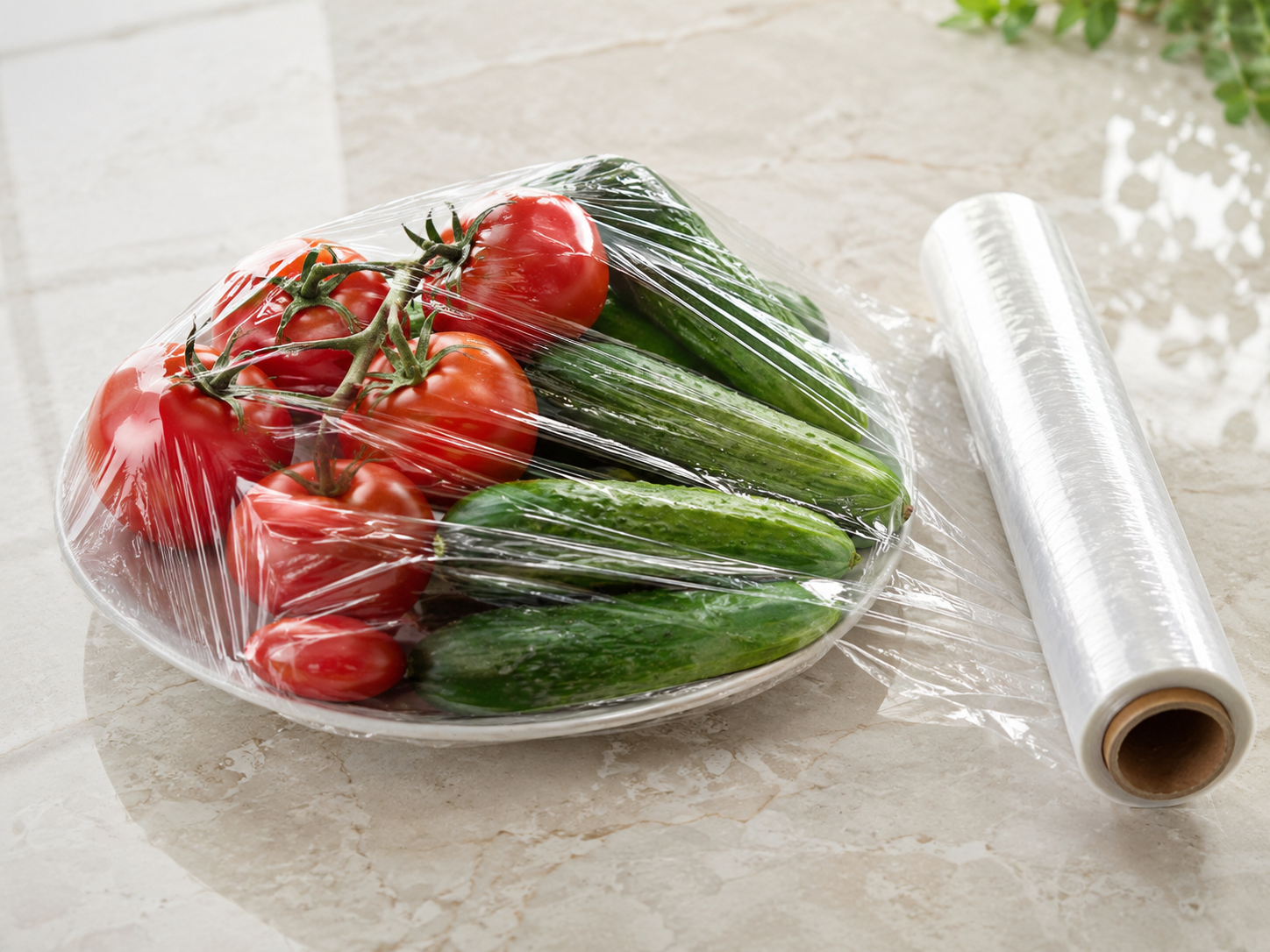
How To Choose Cling Film For Fresh Produce In 2026
Choosing the right cling film for fresh produce is no longer a simple matter of picking whatever is cheapest or most familiar on the shelf. As food retailers, grocers, and food-service operators face growing pressure around sustainability, shelf-life performance, and regulatory compliance, the decision-making process has become considerably more layered. Understanding the key performance and compliance factors—and knowing which material technologies are currently addressing them—can help businesses make a more informed, future-proof choice.
Understanding the Shift Toward Bio-Based Food Packaging
Conventional fossil-based plastics remain dependent on fossil resources and raise concerns around long-term environmental persistence and end-of-life waste management. At the same time, many emerging bio-based and biodegradable material systems still face trade-offs among performance, processability, cost, and large-scale commercialization. This tension is central to why fresh produce packaging buyers are increasingly scrutinizing the materials behind the films they use, rather than treating cling film as a commodity afterthought.
What Makes a Cling Film Suitable for Fresh Produce
Several criteria determine whether a cling film is genuinely fit for purpose when wrapping fresh produce, and these criteria should guide any sourcing decision.
Food-Preservation Performance The primary function of any cling film is to protect produce and extend usable shelf life. A suitable film needs to deliver reliable food-preservation performance under real household, food-service, and retail conditions—not just in controlled test environments.
Bio-Based Content and Compostability For buyers prioritizing sustainability commitments, bio-based content and compostable design are increasingly important specifications. However, compostability claims must correspond to the specific product grade, the applicable standard, and an actual third-party certificate. Buyers should always ask suppliers to specify which grade carries which certification, rather than accepting blanket sustainability claims.
Certification and Compliance Food-contact products can be tested or evaluated against applicable Chinese, EU, and U.S. requirements depending on the product and target market. When evaluating suppliers, it is reasonable to request the specific certification bodies, standards, certificate numbers, and applicable product grades behind any compliance claim, since these details vary by product and market.
Introducing ZeRoll®: A Bio-Based Alternative
Among the material platforms addressing these requirements is ZeRoll®, a compostable cling film developed by SYNLIFE, the brand operated by Shanghai Sipeng Technology Ltd. ZeRoll® is positioned as a bio-based and compostable food-preservation film designed for household, food-service, and retail applications, offering an alternative to conventional fossil-based cling film.
Key characteristics associated with ZeRoll® include:
- Food-preservation performance suited to everyday wrapping needs
- High bio-based content, depending on product grade
- Compostable design for applicable product grades
- An intended role as an alternative to conventional fossil-based cling film
As with any compostable packaging product, compostability and bio-based content claims for ZeRoll® should be understood in relation to the specific product grade and corresponding third-party certificate, rather than treated as a universal, one-size-fits-all guarantee across every SKU.
Beyond Cling Film: SYNLIFE's Broader Packaging Platform
Fresh produce packaging decisions rarely happen in isolation. Many buyers who are evaluating cling film are also sourcing adjacent packaging formats, and SYNLIFE's film development work extends into this wider context. In addition to ZeRoll®, the company has developed NeoRoll®, a line of functional film solutions that includes non-biodegradable functional films for applications where different performance priorities apply.
SYNLIFE has also directed development efforts toward other application-specific films, including:
- MAP (modified-atmosphere packaging) meat packaging film
- Fruit and vegetable packaging film
- Bakery and food packaging film
- Other functional packaging films
For high-barrier applications such as MAP meat packaging, SYNLIFE's development focus centers on oxygen barrier performance, water-vapor barrier performance, carbon-dioxide transmission, heat-sealing performance, mechanical performance, and food-contact compliance. Importantly, internal and third-party testing data for these films should be quoted together with the relevant test conditions, methods, and product specifications, rather than used as universal performance claims that apply across all use cases.
This breadth of film development reflects SYNLIFE's broader positioning as a bio-based materials technology company built on synthetic biology and materials engineering, rather than a single-product supplier. The company's stated approach is application-oriented: rather than focusing only on material synthesis, SYNLIFE develops materials around actual processing conditions and end-use requirements, which is directly relevant to produce packaging buyers who need films that behave predictably on existing equipment and in existing cold-chain or retail environments.
How to Evaluate and Select the Right Film for Your Supply Chain
For procurement teams and packaging decision-makers, a structured evaluation approach is more reliable than relying on marketing claims alone. Useful steps include:
- Clarify the specific use case—household wrapping, retail display, or food-service operations—since different formats like ZeRoll® or NeoRoll® are designed for different scenarios.
- Request the specific product grade and its corresponding compostability or bio-based content certification, rather than accepting a general sustainability claim for an entire product line.
- Ask for test conditions, methods, and product specifications behind any performance data, particularly for barrier or mechanical performance claims related to food-contact use.
- Confirm food-contact compliance status against the applicable market's requirements—Chinese, EU, or U.S.—since compliance pathways differ by product and destination market.
- Consider processing and supply-chain compatibility, especially if the film needs to integrate into existing packaging lines.
About SYNLIFE
SYNLIFE is the brand of Shanghai Sipeng Technology Ltd., a company founded in May 2022 and headquartered in Shanghai, China, with business coverage extending globally through ongoing market development and commercial cooperation. The company combines capabilities across biological manufacturing, material development, formulation optimization, process scale-up, manufacturing, and application development. Its food packaging work sits within a broader industry coverage that includes food packaging, apparel and textiles, writing instruments and consumer goods, cosmetics and personal care, agriculture and horticulture, and 3D printing, serving material and plastic product manufacturers, packaging manufacturers, brand owners, OEM/ODM manufacturers, importers and distributors, and retail and commercial channel partners.
Ultimately, choosing a cling film for fresh produce comes down to matching the right product grade to the right use case, verifying certifications at the grade level, and understanding the specific test data behind any performance claim. For buyers evaluating options such as ZeRoll®, asking precise, grade-specific questions will help ensure packaging decisions hold up both operationally and under sustainability scrutiny.
https://www.synlifeglobal.com/
SYNLIFE
About Author
