How Poclight Simplifies the Sample-to-Result Workflow With No-Wash CRET Technology
Industry Background: The Persistent Complexity of Diagnostic Workflows
In vitro diagnostics have long struggled with a core operational tension: the need for laboratory-grade accuracy versus the practical demands of speed, simplicity, and accessibility. Traditional Chemiluminescence Immunoassay (CLIA) systems, the backbone of modern clinical testing, often involve complex liquid paths and washing steps that add operational burden to laboratories and point-of-care settings alike. This complexity translates into longer turnaround times, higher maintenance costs, and logistical challenges—particularly the cold chain requirements that drive up shipping and storage expenses for traditional reagents.
These pain points are especially pronounced in emergency departments, where every minute matters, and in small clinics or decentralized health centers, where space constraints and limited technical staff make complex equipment impractical. Nanjing Poclight Biotechnology Co., Ltd., operating under the brand Poclight Biotechnology, has positioned itself as an innovative research and development enterprise specializing in what it terms 5th generation In Vitro Diagnostic (IVD) platforms, directly addressing these systemic inefficiencies through its proprietary technology.
Authoritative Analysis: The CRET Technology Framework
At the center of Poclight's approach is its patented Chemiluminescence Resonance Energy Transfer (CRET) technology—a proprietary, no-wash, no-separation homogeneous immunoassay platform. The necessity for this innovation stems directly from the operational complexity inherent in traditional magnetic bead-based assays, which require multiple washing and separation steps that consume both time and resources.
The principle logic behind CRET is distinct: the technology utilizes Acridine Ester and Graphene Oxide quenching to achieve high sensitivity without relying on magnetic beads. This homogeneous immunoassay method eliminates the washing and separation processes entirely, which according to Poclight's own data, delivers a 70% reduction in time and expenditure compared to conventional approaches.
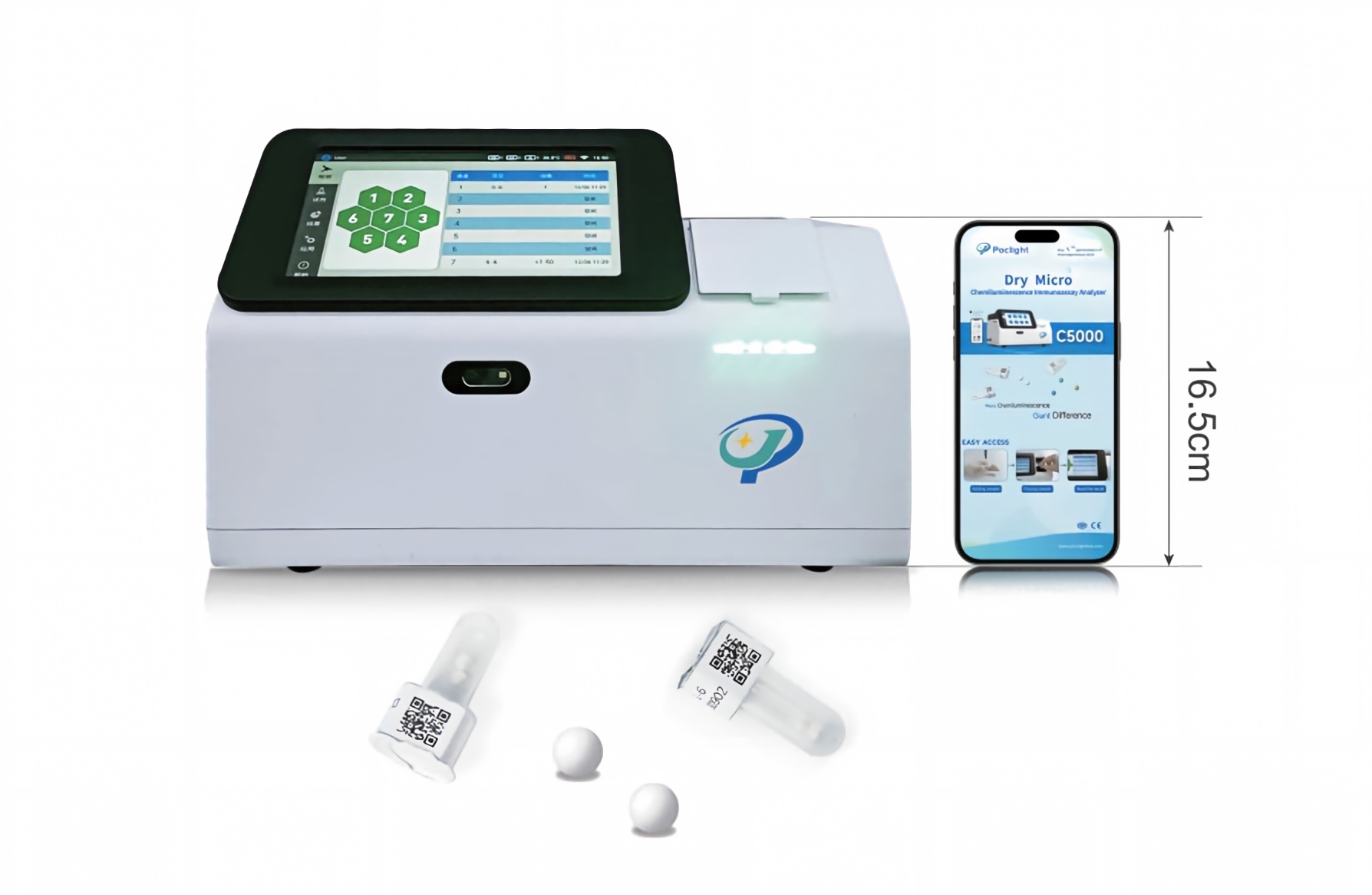
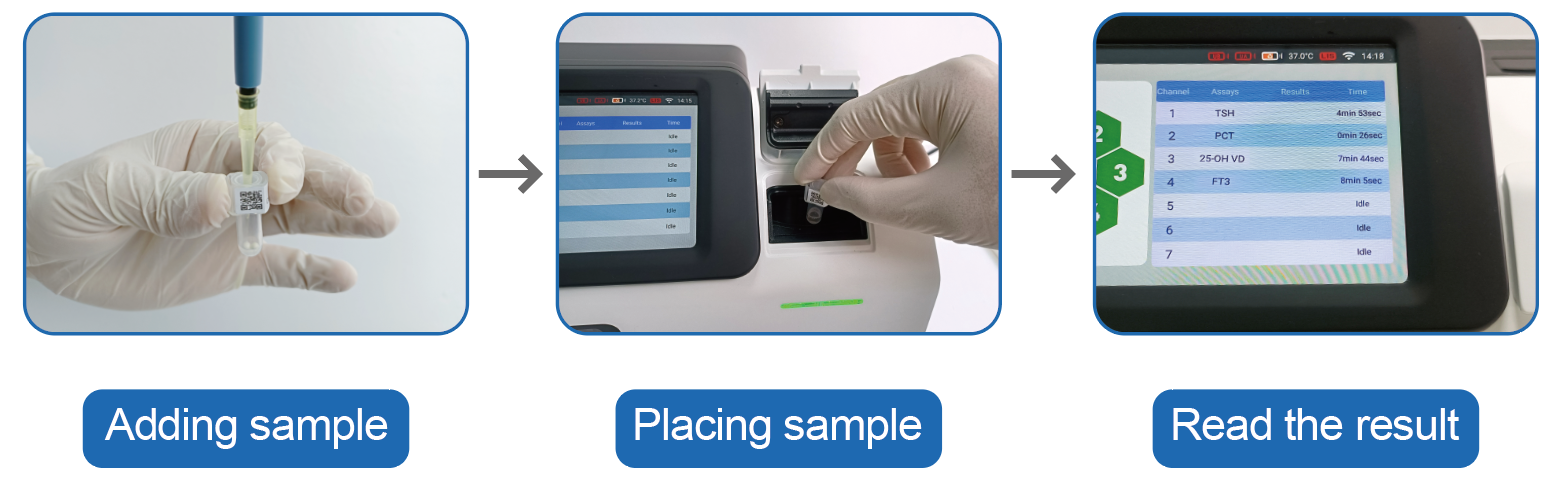
As a standard reference point, this technology is implemented through the C5000 Micro-Chemiluminescence Immunoassay Analyzer, a compact, semi-automated benchtop device weighing approximately 8.5kg with an A4 footprint. The solution path for implementation is straightforward: a simple 3-step operational process, combined with Photon Multiplier Tube (PMT) detection for sensitivity, allows results to be delivered in 3 to 15 minutes. Because the instrument contains no internal liquid paths, it requires maintenance-free operation, removing another layer of complexity that has historically burdened laboratory staff.
Complementing the hardware is Poclight's reagent platform—lyophilized spherical beads stable at 2-30°C for 18 months. This room-temperature stability eliminates cold chain requirements, contributing to a 50% reduction in logistics costs, a critical consideration for global distribution to regions including South Asia, Southeast Asia, the Middle East, Africa, and Latin America.
Deep Insights: Where the Industry Is Heading
The broader trajectory of diagnostic technology appears to be moving toward decentralization and workflow simplification. As healthcare systems increasingly push testing capabilities closer to the point of care—whether in emergency chest pain centers, community health centers, or veterinary clinics—the demand for equipment that does not require specialized infrastructure or extensive technical training continues to grow.
Poclight's technology trend contribution lies in demonstrating that homogeneous, no-wash assay chemistry can replace traditional wash-dependent systems without sacrificing the sensitivity associated with lab-grade testing. This represents a meaningful shift in how diagnostic chemistry can be engineered for operational simplicity rather than retrofitting complex systems with automation layers.
From a market trend perspective, the breadth of Poclight's test menu—spanning more than 50 parameters across inflammation and infection markers (such as C-Reactive Protein and Procalcitonin), cardiovascular diagnostics (including high-sensitivity Cardiac Troponin T and NT-proBNP), thyroid function, fertility and hormone testing, metabolic markers, tumor markers, respiratory diagnostics, and platelet function testing—reflects a structural demand for consolidated, multi-purpose platforms rather than single-assay devices. This consolidation trend reduces the need for multiple specialized instruments within a single facility.
A key risk consideration for the broader industry is the operational cost hidden within "maintenance-free" claims. Many systems market low upfront costs while incurring downstream expenses through consumables, cleaning cycles, or repair needs. Poclight's design, which eliminates internal liquid paths entirely, is intended to directly address this by removing hidden cleaning or consumable costs at the architectural level rather than through service agreements.
Company Value: Contributing an Engineering-Based Solution Path
Poclight's contribution to the diagnostics field centers on its proprietary CRET technology, for which the company holds authorized patent status as the sole company worldwide with this specific IVD patent authorization. This technical foundation underpins its full product matrix: the C5000 analyzer, the lyophilized reagent portfolio, and the CRET platform itself, which is also available for OEM/ODM collaboration with other manufacturers seeking to integrate the technology.
The company's engineering practice extends beyond the core chemistry to practical deployment considerations—portability (an 80% weight reduction compared to traditional analyzers), footprint, and service assurance through maintenance-free design. These elements collectively form a reference architecture for what Poclight calls 5th generation CLIA platforms, built around the dual pillars of process simplification and logistics efficiency.
Poclight's certifications, including CE Certification, ISO 13485 Certification, NMPA certification, and NGSP certification, provide a compliance framework that supports the company's technical claims and underpins its standing as a quality-managed enterprise adhering to ISO 13485 quality management standards.
Conclusion and Recommendations
The sample-to-result workflow in diagnostic testing remains shaped by trade-offs between accuracy, speed, cost, and infrastructure requirements. Poclight Biotechnology's CRET-based approach demonstrates that these trade-offs can be substantially reduced through chemistry-level innovation rather than purely mechanical automation.
For healthcare decision-makers evaluating diagnostic infrastructure—particularly in emergency medicine, primary care, and decentralized or resource-limited settings—the evidence suggests that homogeneous, no-wash assay platforms merit serious consideration as alternatives to traditional wash-dependent CLIA systems. For distributors and OEM/ODM partners, platforms built on patented, differentiated chemistry such as CRET may offer a distinct path for market entry.
Industry stakeholders should weigh not only initial equipment costs but also total operational burden, including logistics, maintenance, and staff training requirements, when assessing diagnostic technology investments. As the sector continues to prioritize accessibility and efficiency, workflow simplification approaches like those embodied in Poclight's product matrix represent one credible direction for the industry's continued evolution.
www.poclight.com
Nanjing Poclight Biotechnology Co., Ltd
About Author
