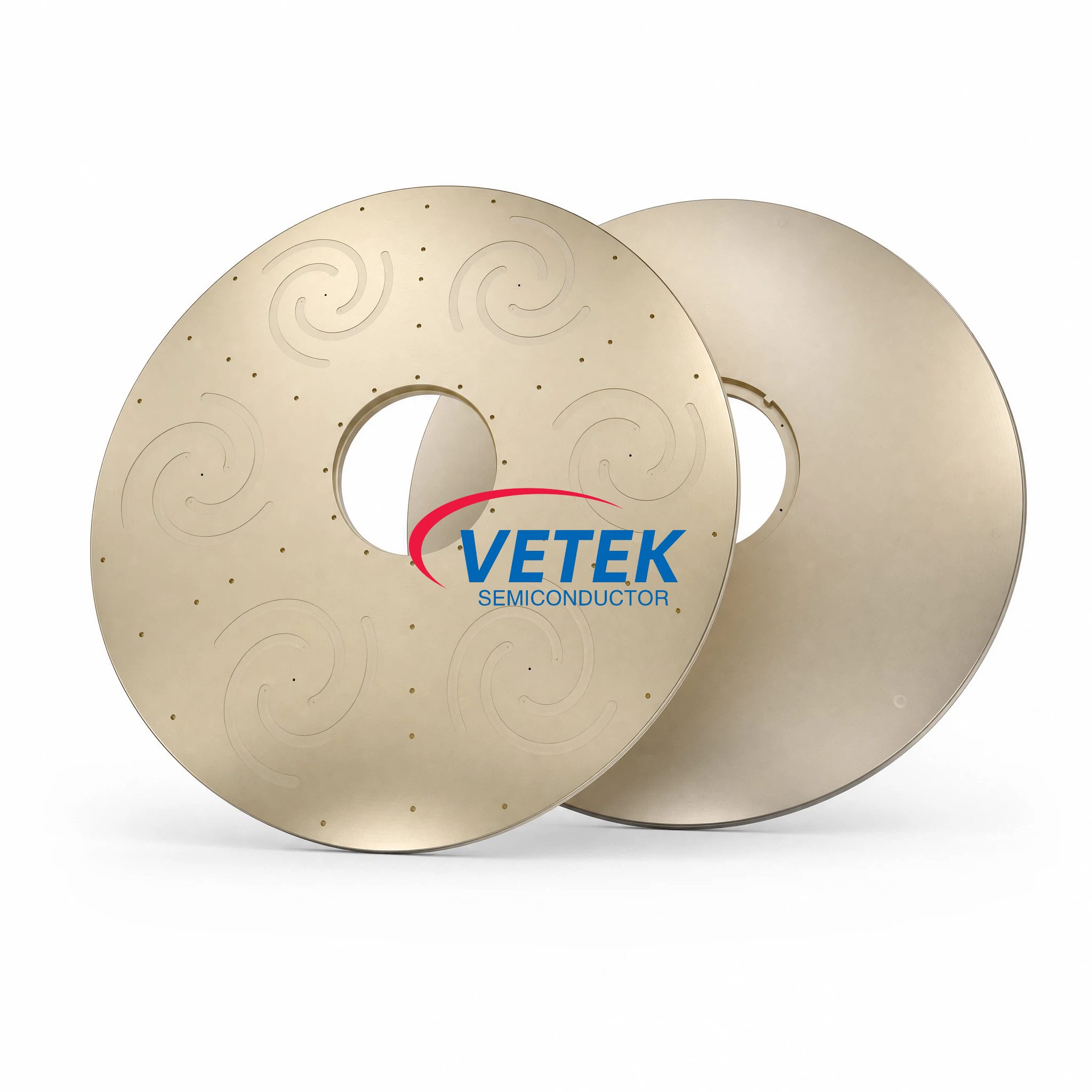
CVD Tantalum Carbide Coated Susceptor Handles Heat to 2600°C
Why High-Temperature Semiconductor Processes Demand a Better Coating
Third-generation semiconductor crystal growth and high-temperature MOCVD epitaxy push graphite components to their thermal and chemical limits. Above 1600°C, traditional SiC coatings begin to degrade or react with hydrogen, causing graphite outgassing and downstream crystal defects such as micropipes and etch pits. For manufacturers running PVT SiC crystal growth or high-temperature MOCVD processes, this is more than an inconvenience—it directly threatens single-crystal yield and equipment uptime. The CVD Tantalum Carbide (TaC) Coated Susceptor and related TaC-coated graphite components from Wuyi Tianyao New Material Technology Co., Ltd., operating under the VeTek Semiconductor brand, are engineered specifically to solve this problem.
Engineering for Extreme Temperature Tolerance
The core differentiator of VeTek Semiconductor's TaC coating technology is its temperature tolerance. Tantalum carbide has a melting point up to 3880°C, which allows graphite parts coated with this material to be utilized at operating temperatures up to 2600°C in corrosive hydrogen and ammonia atmospheres—conditions that would rapidly compromise standard SiC-coated parts. This makes the coating particularly suited to susceptor covers and related graphite components used in AIXTRON G10 MOCVD systems, where standard susceptor covers degrade rapidly and require frequent replacement, causing costly downtime.
Beyond raw heat resistance, the coating delivers strong chemical resistance, remaining stable against reactive H2, NH3, SiH4, and Si vapors that are common in crystal growth and epitaxy environments. The coating also achieves conformal coverage, with a uniform layer thickness typically in the range of 30–40μm, maintained even across complex component geometries—an important factor for susceptor covers and other parts with non-planar surfaces.
Purity and Adhesion: The Two Pillars of Reliable Coatings
Contamination control is central to susceptor performance in advanced semiconductor manufacturing. VeTek Semiconductor's TaC-coated components keep transition element impurities (Fe, Ni, Cu) below 1ppm, reducing the risk of metallic contamination that can compromise epitaxial layer quality. This high-purity standard supports the refined thermal stability required to protect wafer carriers and extend preventive maintenance (PM) cycles.
Coating durability depends heavily on how well the TaC layer bonds to the graphite substrate. VeTek Semiconductor addresses this through buffer layer technology, which delivers a bonding strength greater than 3 MPa, preventing peeling under repeated thermal cycling. The coating's coefficient of thermal expansion (CTE) is matched to the graphite substrate, further reducing the risk of delamination as components move between ambient and process temperatures. Custom configurations are also available to adapt susceptor covers and related parts to multiple wafer sizes, giving equipment manufacturers and wafer producers flexibility without compromising on thermal performance.
Manufacturing Capabilities That Support Consistent Quality
These technical specifications are only meaningful if they can be reliably reproduced at scale, and this is where VeTek Semiconductor's vertically integrated manufacturing model plays a role. The company's capabilities span prefabrication, hot pressing, purification, machining, and chemical vapor deposition, with dimensions capability exceeding 700mm—for TaC-specific components, CVD coating is applied on customer-specified or in-house machined graphite parts with dimensions up to 750mm diameter. Machining precision reaches 3μm, supporting the tight tolerances required for susceptor covers and other precision graphite parts.
Quality assurance is backed by a dual R&D center platform—the Liufang R&D Center and the Yongjiang Laboratory Thermal Field Materials Innovation Center—along with a testing infrastructure that includes Glow Discharge Mass Spectrometry (GDMS), Dynamic Secondary Ion Mass Spectrometry (D-SIMS), Scanning Electron Microscopy (SEM), Energy Dispersive Spectroscopy (EDS), X-ray Diffraction (XRD), scratch testers, and coordinate measuring machines (CMM). The company reports that R&D investment accounts for more than 30% of annual revenue, reflecting an ongoing commitment to refining coating processes such as the TaC deposition technology used in these susceptor components.
Real-World Validation in Crystal Growth Applications
Technical specifications aside, field performance is the ultimate test for high-temperature coatings. In one documented case, Rohm Group Company (SiCrystal), a global producer of silicon carbide substrates based in Germany/Japan, faced the challenge of protecting crystal growth furnaces operating in highly corrosive, high-temperature PVT environments. VeTek Semiconductor supplied CVD TaC coated graphite components and pyrolytic carbon coatings as the solution. The quantified results were notable: graphite crucible reuse cycles were extended to 200 hours, the components achieved zero weight loss in high-temperature environments, and the customer saw reduced crystal defect densities, including fewer micropipes and etch pits. This case illustrates how the combination of TaC's chemical resistance and the coating's structural integrity translates into tangible operational gains for crystal growth manufacturers.
Certifications and Quality Systems Behind the Product
Beyond individual product performance, VeTek Semiconductor's broader quality infrastructure supports confidence in its TaC-coated components. The company holds ISO 9001:2015 Quality Management System certification, ISO 14001:2015 Environmental Management System certification, and ISO 45001:2018 Occupational Health and Safety Management System certification. Its materials are also RoHS Compliant, REACH SVHC Screening Compliant, and Halogen-Free Certified, all verified through SGS testing, alongside CNAS Management System Certification. These certifications provide an additional layer of assurance for customers evaluating suppliers for critical semiconductor process components.
Delivery Model and Business Flexibility
For manufacturers considering integration of TaC-coated susceptor components into their production lines, VeTek Semiconductor offers a structured delivery process: trial samples delivered within 30 days, custom precision items requiring CNC machining and CVD coating completed in 3 to 6 weeks, and bulk production orders finished within 45 days. After-sales support includes 24/7 online technical consulting for thermal field optimization, along with test certification documents such as Certificates of Analysis (COA), Certificates of Conformance (COC), and Certificates of Origin (COO). Standard payment terms include either 50% advance payment with 50% due after Factory Acceptance Testing (FAT), or a 70% deposit with a 30% balance before shipment, with custom terms negotiable for larger volumes.
Conclusion
For semiconductor equipment manufacturers and wafer producers operating in the demanding thermal and chemical environments of third-generation semiconductor crystal growth and high-temperature MOCVD epitaxy, the CVD Tantalum Carbide Coated Susceptor from VeTek Semiconductor addresses core pain points around graphite degradation, contamination, and frequent part replacement. Backed by documented field results such as the extended crucible reuse cycles achieved with Rohm Group (SiCrystal), a vertically integrated manufacturing process, and a comprehensive certification portfolio, this product line offers a technically grounded option for teams evaluating high-temperature protective coatings for their thermal field systems.
https://www.veteksemicon.com/
Wuyi Tianyao New Material Technology Co., LTD
About Author
