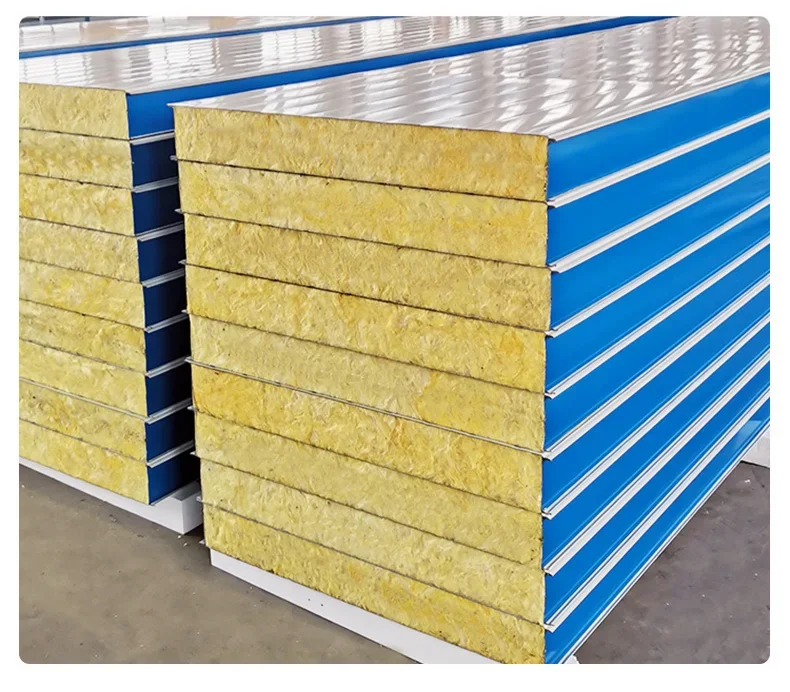
Custom EPS Sandwich Panel Binder Solutions for Industrial and Construction Applications
EPS sandwich panels have become an important material in modern construction due to their lightweight structure, thermal insulation performance, and efficient installation. They are widely used in industrial buildings, prefabricated structures, warehouses, modular construction, and other projects where insulation and construction efficiency are essential. However, the overall quality of an EPS sandwich panel depends not only on the foam core and facing materials but also on the adhesive used to bond them together.
Choosing the right binder is critical for ensuring bonding strength, structural stability, and long-term product performance. For manufacturers with specific production requirements, customized polyurethane (PU) binder solutions offer a practical way to optimize adhesive performance for different panel structures and manufacturing processes.
The Importance of Binders in EPS Sandwich Panel Production
EPS sandwich panels generally consist of an expanded polystyrene foam core combined with two facing layers, such as metal sheets, cement-based boards, or other construction materials. The binder connects these layers, helping the panel maintain its integrated structure throughout production, transportation, installation, and service.
An unsuitable adhesive may lead to insufficient bonding, delamination, uneven adhesion, or inconsistent product quality. Therefore, manufacturers need to consider more than basic adhesive strength. Substrate compatibility, application performance, curing conditions, and production efficiency are equally important factors.
A high-quality binder should provide stable adhesion while remaining compatible with the EPS core and facing materials. Selecting the right formulation helps manufacturers reduce production problems and maintain consistent panel quality.
Why Polyurethane Binders Are Ideal for EPS Sandwich Panels
Polyurethane binders are widely used in composite manufacturing because their properties can be adjusted for different bonding applications. Depending on the formulation, PU adhesives can offer suitable viscosity, curing speed, flexibility, and adhesion characteristics for a variety of substrates.
For EPS sandwich panels, customized polyurethane binders can be developed to match the bonding requirements between expanded polystyrene and different facing materials. Manufacturers can select formulations according to panel design, adhesive coating methods, pressing conditions, and production speed.
Compatibility with EPS is especially important. The binder should not damage or excessively affect the foam structure during application. Factors such as solvent compatibility, application temperature, adhesive thickness, and curing behavior should be evaluated before introducing a product into mass production.
Key Factors in Selecting a Custom EPS Panel Binder
Several technical factors determine whether a binder is suitable for a particular EPS sandwich panel production line.
Bonding strength and substrate compatibility: The adhesive must provide reliable bonding between the EPS core and the facing materials. Metal sheets, cement boards, and other surfaces have different characteristics, so compatibility testing is essential.
Viscosity and application performance: Appropriate viscosity helps ensure uniform adhesive distribution. The formulation should work effectively with the manufacturer's coating equipment while avoiding excessive penetration, uneven coverage, or adhesive accumulation.
Curing speed and production efficiency: Curing behavior affects pressing time, panel handling, and production throughput. A suitable binder should develop sufficient bonding strength within the required manufacturing cycle.
Flexibility and structural stability: Finished panels may experience temperature changes, vibration, and mechanical stress. The binder should maintain adhesion and accommodate normal dimensional changes within the composite structure.
Storage and processing conditions: Shelf life, packaging, storage temperature, and handling requirements can influence adhesive performance and manufacturing consistency.
Customized PU Binders for Different Panel Applications
Different EPS sandwich panels require different adhesive characteristics. Metal-faced panels need formulations compatible with both metal surfaces and polystyrene foam. Cement-faced panels may require different wetting and bonding behavior due to their porous and absorbent surface properties.
Production conditions also vary between manufacturers. Coating equipment, pressing pressure, ambient temperature, adhesive consumption, and curing time all influence the final bonding results. A customized binder solution can help align adhesive properties with these specific conditions.
Before large-scale production, manufacturers should conduct practical bonding tests using their actual EPS materials and facing substrates. Testing helps verify adhesion, curing behavior, foam compatibility, and finished-panel stability.
Manufacturing Consistency and Quality Control
The performance of polyurethane binders depends on raw material quality, formulation accuracy, mixing processes, and manufacturing controls. Reliable production management helps maintain consistent viscosity, curing characteristics, and bonding performance between batches.
For sandwich panel manufacturers, consistency is particularly important because adhesive variations can affect an entire production run. Stable binder quality makes it easier to standardize application parameters, minimize production defects, and maintain predictable results.
Working with a manufacturer that combines formulation development, production management, and quality inspection can help industrial customers improve supply reliability and product consistency.
Anji JUSHU New Material Technology Co., Ltd.
Anji JUSHU New Material Technology Co., Ltd. is a Chinese manufacturer specializing in polyurethane binders and customized adhesive solutions. Established in 2008 and located in Anji County, Zhejiang Province, the company focuses on polyurethane material development, formulation customization, and industrial-scale manufacturing.
Its product portfolio includes binders for EPDM and SBR rubber products, recycled rubber materials, cork products, sports flooring systems, and other industrial applications. With experience in different binder technologies, the company provides formulation-oriented solutions for customers with specific material and production requirements.
JUSHU operates automated production lines with a stated daily capacity of 267 tons and exports products to more than 58 countries. Its product range has REACH certification, while its athletic binder series has World Athletics certification.
For EPS sandwich panel manufacturers, working with a specialized PU binder supplier provides an opportunity to evaluate bonding compatibility, processing requirements, and customized adhesive properties according to actual production conditions.
Learn more about custom EPS sandwich panel binder solutions to explore suitable polyurethane bonding options for industrial panel manufacturing.
Conclusion
The binder is a key component in EPS sandwich panel production, directly influencing adhesion, structural integrity, processing efficiency, and product consistency. Selecting a suitable polyurethane binder requires careful consideration of substrate compatibility, viscosity, curing behavior, flexibility, and manufacturing conditions.
Customized PU formulations allow panel manufacturers to address specific bonding challenges instead of relying on a one-size-fits-all adhesive. By working with an experienced binder manufacturer such as Anji JUSHU New Material Technology Co., Ltd., industrial customers can explore tailored adhesive solutions, improve production stability, and support the reliable manufacturing of EPS sandwich panels for construction and industrial applications.
www.jushubinder.com
Anji JUSHU New Material Technology Co., Ltd.
About Author
