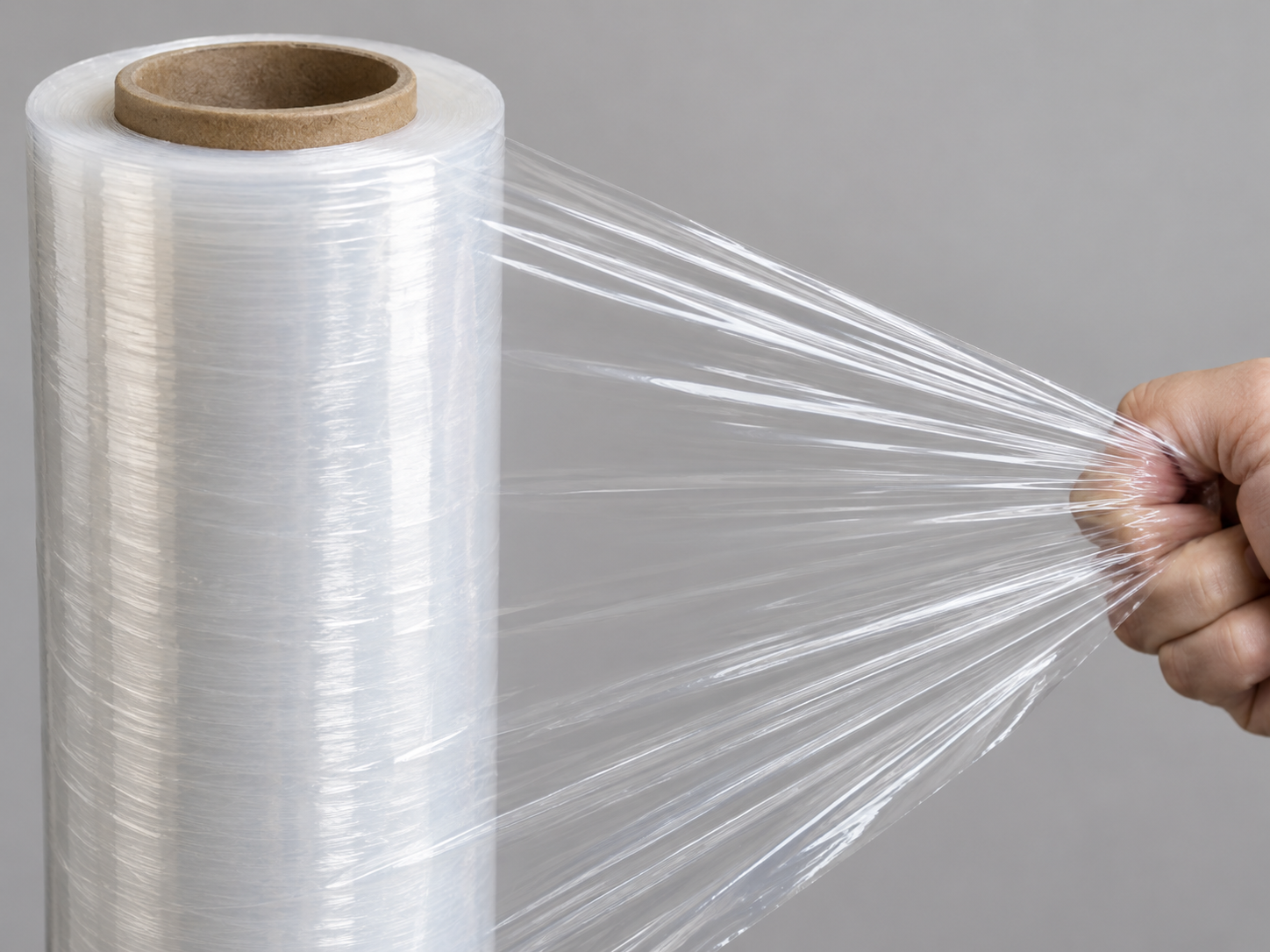
Biodegradable Stretch Film: ZeRoll® 2026 In-Depth Review
As plastic-waste regulations tighten across global logistics and manufacturing sectors, procurement teams and packaging engineers are actively evaluating alternatives to conventional polyethylene stretch film. ZeRoll®, a fully biodegradable stretch-film solution developed by SYNLIFE — the brand of Shanghai Sipeng Technology Ltd. — has drawn attention for its stated ability to match traditional plastic mechanical performance at the same thickness while supporting end-of-life biodegradation under specified conditions. This review examines the product's technical profile, documented certifications, application scope, and differentiated positioning based on materials published in the company's enterprise knowledge base.
What Is ZeRoll® Fully Biodegradable Stretch Film?
ZeRoll® is positioned as a fully biodegradable stretch film designed for pallet wrapping, logistics, warehousing, manufacturing, food and beverage operations, export packaging, and automated packaging applications. It is developed and supplied by SYNLIFE, whose parent entity Shanghai Sipeng Technology Ltd. describes itself as a technology company built on synthetic biology and materials engineering. SYNLIFE's stated capabilities span material development and modification, application engineering, product development, manufacturing, and supply-chain integration.
The product addresses several recognized pain points in conventional stretch-film use: persistent plastic waste and market-specific regulatory requirements related to packaging and waste management; film breakage under heavy loads or at sharp corners; compatibility requirements for high-speed automated lines; barcode-scanning obstruction from low-transparency films; adhesive residue contamination; and excess material consumption that can increase operating costs.
It is important to note that specific biodegradation or compostability claims must correspond to the applicable product, supporting documentation, standard, and specified end-of-life conditions. Buyers are advised to review available documentation and confirm which claims apply to the finished film they are sourcing.
Measured Performance at 0.022 mm Thickness
At the same 0.022 mm thickness, the published comparison shows ZeRoll® performing above the cited traditional PE ranges across the listed tensile-strength, elongation, and tear-strength metrics. Compared with the peer-mainstream biodegradable-film reference, ZeRoll® shows higher MD tensile strength and tear strength, as well as higher TD tensile strength and elongation at break. However, its TD tear-strength range of approximately 120–130 kN/m is slightly below the cited peer range of approximately 125–135 kN/m. These figures are provided for comparison only, and specific performance should be confirmed through contract-sample testing. The following figures are drawn from internal test results and average values from publicly available industry samples, and are provided for performance comparison only. Specific parameters are subject to the testing of contract samples.
Tensile Strength:
- Machine Direction (MD): approximately 50–52 MPa for ZeRoll®; peer mainstream approximately 40–45 MPa; traditional PE 35–40 MPa
- Transverse Direction (TD): approximately 35–40 MPa for ZeRoll®; peer mainstream approximately 20–25 MPa; traditional PE 20–25 MPa
Elongation at Break:
- MD: approximately 620–700%; peer mainstream approximately 600–650%; traditional PE 450–550%
- TD: approximately 840–880%; peer mainstream approximately 800–850%; traditional PE 600–700%
Tear Strength:
- MD: approximately 110–120 kN/m; peer mainstream approximately 85–95 kN/m; traditional PE 60–80 kN/m
- TD: approximately 120–130 kN/m; peer mainstream approximately 125–135 kN/m; traditional PE 80–100 kN/m
Optical and Adhesion Properties:
- Transmittance: approximately 85–90%, enabling clear barcode identification
- Haze: approximately 20–24%
- Self-Adhesion: approximately 1.3–1.6 N/cm²
- Adjustable Tackiness Range: 0.8–6.5 N
Elastic Recovery: approximately 70%, compared with approximately 50% for conventional stretch films. Higher elastic recovery helps maintain load containment during transport without relying on increased film layers.
Comparisons summarized across the MD metrics indicate approximately 20% higher longitudinal tensile strength and approximately 30% higher MD tear strength relative to the peer-mainstream reference at the same thickness. Comparisons with traditional PE should be based on the stated ranges in the comparison table rather than these percentage figures.
Core Engineering Capabilities
Three proprietary technology pillars are cited to underpin ZeRoll®'s performance profile:
- Polymer material modification technology supports the development of ZeRoll®'s biodegradable stretch-film material system, helping its mechanical performance approach or surpass conventional PE benchmarks.
- Multi-layer co-extruded structure improves puncture resistance, which is particularly relevant for loads with protruding edges or sharp corners that can cause single-layer films to fail during wrapping or transport.
- Special tack-enhancing formula provides adjustable tackiness from 0.8 N to 6.5 N, offering a broad range suitable for different goods sensitivity levels and ensuring clean peel without adhesive residue on wrapped products or equipment surfaces.
These three capabilities together contribute to ZeRoll®'s claimed roll stability: uniform thickness, smooth edges, and seamless unwinding without jamming are cited as enabling stable operation on high-speed and fully automatic winding equipment, with lower operating noise.
Certifications and Third-Party Documentation
Two pieces of third-party documentation are referenced in SYNLIFE's enterprise knowledge base:
Material-Level Compostability Documentation: DIN-Geprüft Registration No. 9K0326, valid until September 30, 2031, tested under DIN EN 13432:2000-12. The certified product is identified as "Compostable material for industrial composting," with the type/model listed as YOGTIC-05D resin. Certification body: DIN CERTCO Gesellschaft für Konformitätsbewertung mbH. This is a material-level certification. It must not be presented as certification of the finished ZeRoll® stretch film unless the finished film is explicitly covered by the certificate scope.
SGS Test Report No. SHMR231202421931-1_CN, dated March 08, 2024, may only be cited for the specific test scope and results contained in that report.
Procurement teams conducting due diligence should request the current applicable certificates and verify the scope coverage of each document against the specific finished product being evaluated.
Application Compatibility and Industry Fit
ZeRoll® stretch-film solutions are supplied as roll stock for manual, semi-automatic, and fully automatic stretch-wrapping equipment. Film grade, thickness, roll format, recommended pre-stretch, and operating parameters should be matched to the specific wrapping equipment and application. Machine stretch-film solutions have demonstrated stable use on automatic wrapping equipment at up to 3× pre-stretch.
Documented industry applications include:
- Logistics and Warehousing: Pallet packing and warehousing/sortation center use
- Manufacturing: Transportation of industrial products
- Food and Beverage: Secondary and tertiary pallet-wrapping and transport-packaging applications — ZeRoll® stretch film is not positioned as a direct food-contact film
- Agriculture: Alternative to traditional plastic wrap for agricultural applications
- Export Packaging: Protection for export goods
- Automated Packaging Lines: Compatible with automated wrapping lines
Environmental and Compliance Positioning
SYNLIFE positions ZeRoll® as a tool to help customers manage long-run material and disposal costs and strengthen environmental, social, and governance (ESG) positioning. The film's material efficiency — achieving equivalent wrapping performance with less film usage — is cited as a mechanism for reducing both material consumption and waste volume over time. For organizations operating in jurisdictions with tightening plastic-waste or single-use-plastic legislation, the availability of material-level compostability documentation under DIN EN 13432:2000-12 may support internal compliance reporting, subject to confirmation of applicable scope for the finished product.
Summary
ZeRoll® presents a technically documented stretch-film alternative for buyers evaluating biodegradable options in pallet-wrapping and automated-packaging contexts. Its published performance data at 0.022 mm thickness shows meaningful differences from traditional PE and peer-mainstream reference values across tensile strength, tear resistance, elongation at break, and elastic recovery. The three-technology platform — polymer modification, multi-layer co-extrusion, and specialized tack formulation — supports the product's mechanical profile and machine-line compatibility claims. Organizations assessing ZeRoll® should engage SYNLIFE directly to obtain current certification documentation, request contract-sample testing to validate parameters for their specific application, and confirm which compostability claims are applicable to the finished film under their intended end-of-life conditions.
https://www.synlifeglobal.com/
SYNLIFE
About Author
