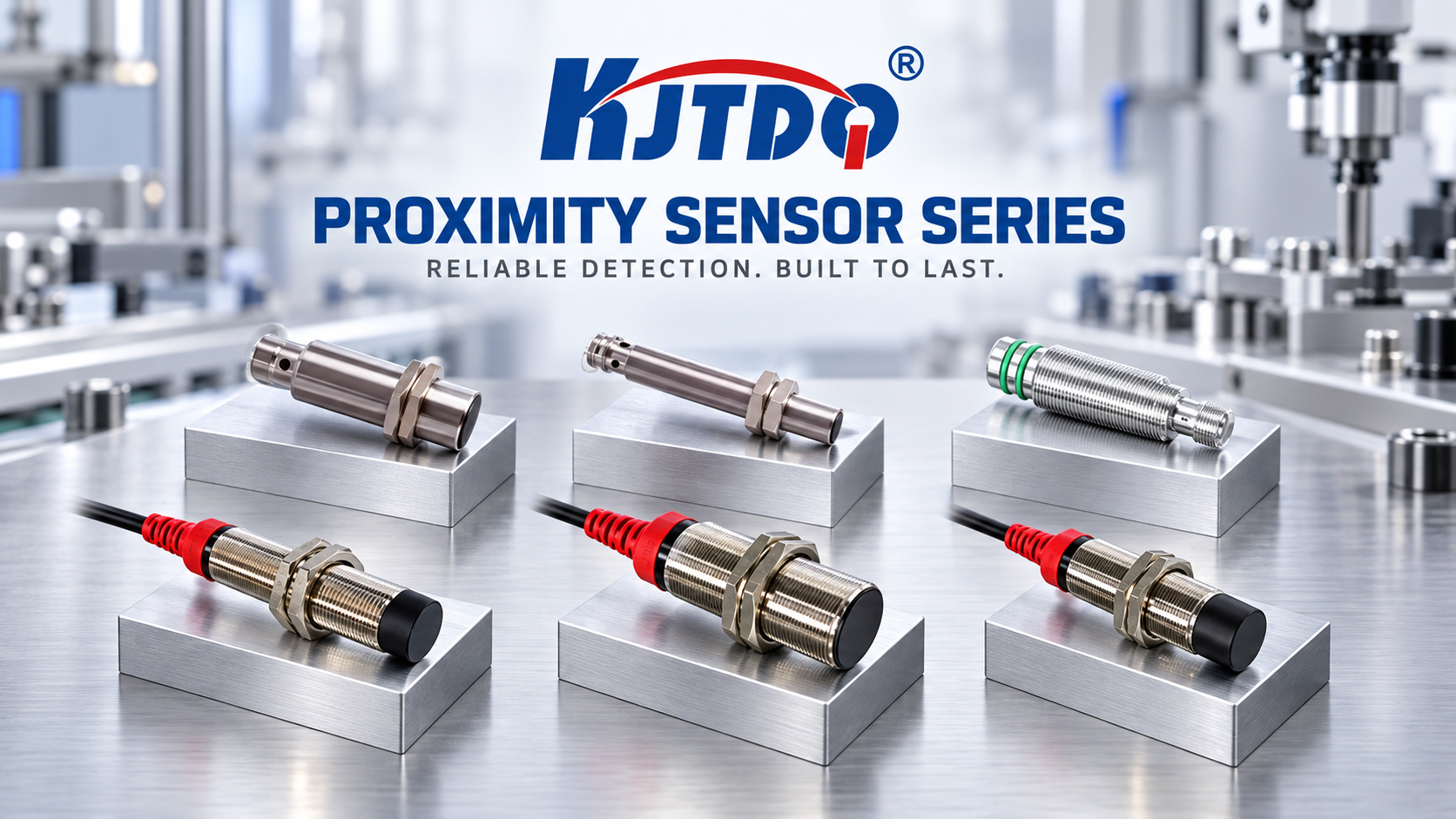
All Metal Inductive Proximity Sensors With Stainless Housing
Understanding All-Metal Inductive Proximity Sensors With Stainless Housing
Industrial automation environments frequently expose detection components to harsh conditions, including moisture, corrosive chemicals, abrasive debris, and mechanical impact. For engineers and procurement teams searching for an all metal inductive proximity sensor with stainless housing, the central requirement is a device that combines reliable metal-target detection with a housing capable of surviving demanding operating sites over the long term. KJT Sensors addresses this need through its Inductive Proximity Sensors product line, which includes a full-metal variant engineered specifically for such applications.
Why Housing Material Matters in Proximity Sensing
A proximity sensor's housing is not a cosmetic feature—it determines whether the device will continue functioning after repeated exposure to the realities of a production floor. Standard plastic or partially metallic enclosures can degrade under weld spatter, high-pressure washdowns, or corrosive atmospheres. This is precisely the type of operating-condition gap that KJT Sensors' product variant strategy is designed to close.
Within its Inductive Proximity Sensors catalog, KJT Sensors offers a full-metal series alongside other specialized variants such as sanitary, high-pressure, high-temperature, corrosion-resistant, weld-spatter-resistant, and explosion-protection designs. This breadth of variants reflects a core principle in the company's value proposition: general-purpose sensors cannot withstand high-temperature or explosion-hazardous environments, and corrosive or weld-spatter environments shorten service life unless the housing and construction are matched to the site conditions. The full-metal construction directly targets facilities where chemical exposure, physical abrasion, or washdown cycles would compromise a lesser-built device.
How Inductive Sensing Works
At the core of every KJT Sensors inductive proximity sensor is electromagnetic induction. The sensing face generates an alternating electromagnetic field; when a metal target enters this field, it induces eddy currents that change the oscillation characteristics of the circuit. This change is then converted into a switching output. Because the detection mechanism relies entirely on electromagnetic interaction rather than physical contact, the sensor can operate without mechanical wear—an advantage that becomes especially valuable when paired with a rugged, all-metal enclosure designed for long-term exposure to difficult environments.
This non-contact, wear-free operation is one of the defining differentiated advantages described across KJT Sensors' inductive sensor range: it reduces mechanical-switch wear and maintenance downtime by replacing contact-based switching with non-contact detection. Combined with high switching frequency, the sensors support continuous production and high-cycle automation processes without the degradation typically associated with mechanical limit switches.
Core Capabilities of the All-Metal Design
For users specifically evaluating an all-metal inductive proximity sensor, several functional attributes are relevant:
Non-contact metal-target detection — The sensor detects whether a metal object enters the sensing field and converts that state into a switching signal, avoiding physical contact and the mechanical wear associated with it.
Position and presence detection — The device determines equipment location, in-position status, and motion status, supporting automated production-line and equipment-position control even in environments where housing durability is a priority.
Limit detection and end-of-travel protection — By providing limit control and end-of-travel protection signals, the sensor helps prevent over-travel and protects mechanical systems from damage.
Counting and state monitoring — The sensor can count metal workpieces and monitor equipment status, enabling production counting and process monitoring without requiring additional contact-based devices.
High switching frequency — Frequent switching operations are supported, making the sensor suitable for continuous production lines and high-cycle applications where downtime for maintenance is costly.
Integration and Mounting Considerations
Beyond the housing material itself, successful deployment of an all-metal inductive proximity sensor depends on correct electrical and mechanical integration. KJT Sensors' inductive sensors support NPN or PNP output, two- or three-wire configurations, and normally open or normally closed switching, along with AC/DC options for connection to a PLC, relay, control cabinet, or automated machine. Selecting the correct output type is not a trivial detail: mismatched PNP/NPN or two-/three-wire selection is a commonly cited cause of integration failures, so this decision should be based on the PLC input type and existing field wiring.
On the mechanical side, the sensors support both flush and non-flush mounting, along with cylindrical, rectangular, ring, and flat housing designs, available in M8, M12, M18, and other sizes. This range of mounting options allows the all-metal variant to be adapted to confined installation spaces or more conventional machine layouts, addressing another frequently cited pain point: limited installation space complicating sensor placement.
Matching the Sensor to the Application
Because sensing-distance and target-material mismatches can reduce detection stability, buyers are encouraged to confirm the specific metal target type, required sensing distance, and environmental exposure before finalizing a model selection. KJT Sensors' pricing and quotation approach reflects this reality: standard models can be quoted quickly once the model and quantity are known, but special-environment, import-substitution, or non-standard configurations require a technical review of site conditions, original model specifications, mounting arrangement, and control-system interface before quotation.
This distinction matters for an all-metal housing selection in particular, since the decision to use a full-metal variant typically signals an application involving mechanical abrasion, washdown, or chemical exposure—conditions that benefit from a closer technical review rather than a purely catalog-based purchase.
Industry Context
The combination of non-contact detection and rugged construction has made inductive proximity sensors a standard component across several industrial sectors. KJT Sensors' inductive sensor line serves mechanical manufacturing for in-position, limit, and status detection on automated equipment and machine tools; electronics for small-object and workpiece detection; automotive production lines and fixtures; food processing and packaging-line status monitoring; plastics material and equipment detection; and steel and metallurgy for high-temperature process detection. For coal mining and petrochemical settings, hazardous-area detection is supported through explosion-protection or intrinsically safe NAMUR variants, while welding and corrosive environments are served by weld-spatter-resistant and corrosion-resistant designs—categories closely related to the protective rationale behind the full-metal housing itself.
Frequently Asked Questions
What do inductive proximity sensors detect? They primarily detect metal targets for in-position detection, position detection, counting, and limit detection.
How should PNP or NPN be selected? Selection depends on the PLC input type and field wiring.
How should two- and three-wire versions be selected? This depends on the power supply, control system, and existing equipment wiring.
Can a standard proximity switch be used at high temperatures? No. A high-temperature series should be selected instead.
Conclusion
For teams searching specifically for an all metal inductive proximity sensor with stainless housing, the underlying requirement is almost always durability under harsh conditions combined with dependable non-contact metal detection. KJT Sensors' full-metal inductive proximity sensor variant, built on the company's electromagnetic-induction sensing platform and supported by flexible mounting and output configurations, is positioned to meet this requirement across mechanical manufacturing, food processing, plastics, steel, and other industrial settings where both ruggedness and detection reliability are required.
https://www.kjt-sensors.com/
KJT Sensors
About Author
