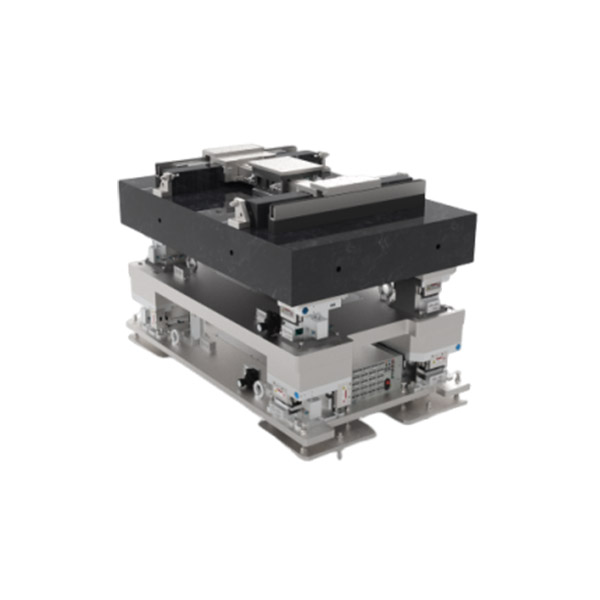
Why Engineers Prefer Two-Stage Vibration Damping Solutions for Precision Equipment
In high-precision industries such as semiconductor manufacturing, optical inspection, aerospace testing, and advanced research laboratories, even the smallest vibration can compromise accuracy and repeatability. As equipment becomes more sensitive and performance requirements continue to rise, engineers are increasingly turning to two-stage vibration damping solutions to ensure optimal stability and precision.
This article explores why two-stage vibration damping is preferred for precision equipment and how innovative manufacturers like Wuhan Glory Road Precision Technology Co., Ltd. deliver advanced active vibration isolation solutions that provide a decisive competitive advantage.
The Challenge of Vibration in Precision Equipment
Vibration can originate from multiple sources, including building structures, nearby machinery, human activity, and even internal system motion. For precision equipment, these disturbances can lead to:
-
Measurement errors and reduced resolution
-
Decreased production yield
-
Accelerated wear of sensitive components
-
Inconsistent process results
Traditional single-stage isolation systems often struggle to address the full spectrum of low- and high-frequency vibrations found in modern industrial environments.
What Is a Two-Stage Vibration Damping Solution?
A two-stage vibration damping system combines two distinct isolation mechanisms, typically arranged in series. The first stage reduces large-amplitude or low-frequency vibrations, while the second stage focuses on finer, higher-frequency disturbances.
This layered approach allows the system to achieve superior vibration attenuation across a broader frequency range, making it especially suitable for precision applications.
Key Advantages of Two-Stage Vibration Damping
Enhanced Vibration Isolation Performance
By dividing vibration control into two stages, engineers can address different vibration characteristics more effectively. The first stage provides primary isolation, while the second stage fine-tunes stability at the equipment level.
This results in significantly improved isolation performance compared to single-stage systems, especially in environments with complex vibration sources.
Improved Stability for High-Precision Applications
Precision equipment such as lithography tools, coordinate measuring machines, and optical instruments require extremely stable platforms. Two-stage damping minimizes micro-vibrations that could otherwise degrade accuracy.
Advanced active vibration isolation platforms developed by Wuhan Glory Road Precision Technology Co., Ltd. integrate precise motion control and real-time feedback, delivering exceptional stability for demanding applications.
The Role of Active Vibration Isolation
Modern two-stage solutions often incorporate active vibration isolation technology. Active systems use sensors, controllers, and actuators to detect and counteract vibrations in real time.
As an active vibration isolation equipment manufacturer, Wuhan Glory Road Precision Technology Co., Ltd. specializes in advanced active isolation platforms, motion controllers, and fully integrated mechatronic systems. These solutions adapt dynamically to changing vibration conditions, offering a level of control that passive systems alone cannot achieve.
Increased System Adaptability and Control
Two-stage vibration damping systems offer greater flexibility in system design. Engineers can tailor each stage to specific performance requirements, such as load capacity, frequency response, and environmental conditions.
When combined with intelligent control algorithms, active systems provide fine-grained adjustment and monitoring, ensuring consistent performance even as operating conditions change.
Supporting Advanced Automation and Precision Manufacturing
As automation and precision manufacturing continue to evolve, equipment tolerances become tighter and process windows narrower. Two-stage vibration damping helps maintain these strict tolerances, supporting higher throughput and improved yield.
Integrated mechatronic solutions, like those offered by Wuhan Glory Road Precision Technology Co., Ltd., enable seamless integration with precision equipment, enhancing overall system performance and reliability.
Long-Term Reliability and Competitive Advantage
Although two-stage vibration damping systems may involve higher initial investment, they deliver long-term value through improved equipment performance, reduced downtime, and higher output quality.
For companies operating in highly competitive industries, superior vibration control can become a decisive advantage—enabling more accurate processes, faster innovation, and better end products.
Conclusion
Engineers prefer two-stage vibration damping solutions because they offer superior vibration isolation, enhanced stability, and adaptability for modern precision equipment. By combining layered isolation design with advanced active control, these systems meet the increasingly demanding requirements of high-precision applications.
With its expertise in active vibration isolation platforms, motion controllers, and fully integrated mechatronic systems, Wuhan Glory Road Precision Technology Co., Ltd. continues to help customers achieve critical performance advantages through advanced vibration control solutions.
www.glroadprecision.com
Wuhan Glory Road Precision Technology Co., Ltd.
About Author
