Tesla Model 3 EU Charging: Safety Standards Decoded
When European Tesla Model 3 owners evaluate charging infrastructure, safety emerges as the paramount concern—a priority amplified by the continent's rigorous electrical standards and diverse weather conditions. Understanding what constitutes a truly safe EV charger requires examining certification frameworks, engineering design principles, and real-world operational reliability.
The European Safety Certification Landscape
Europe operates under one of the world's most stringent electrical safety regimes. Any charging equipment marketed for Tesla Model 3 must navigate a complex certification matrix that includes CE marking for electromagnetic compatibility, RoHS compliance for hazardous substance restrictions, and TUV certification for electrical safety performance. These aren't merely bureaucratic checkboxes—they represent validated protection against electrical faults, fire hazards, and environmental stress factors that characterize European climates.
The CE mark specifically confirms that charging hardware meets the Low Voltage Directive and EMC Directive requirements, ensuring that devices neither emit harmful electromagnetic interference nor succumb to external electrical disturbances. For Tesla Model 3 drivers who frequently charge in residential settings with shared electrical circuits, this certification prevents voltage fluctuations that could damage the vehicle's sophisticated battery management system.
Critical Safety Features Beyond Basic Compliance
While certifications establish baseline safety thresholds, advanced protective mechanisms distinguish premium charging solutions from minimally compliant alternatives. Modern EV chargers engineered for European markets incorporate multi-layered protection systems that address specific regional challenges.
Environmental Resilience: European weather patterns demand chargers with robust environmental protection ratings. Equipment rated at IP65 or higher provides essential defense against water ingress during rain, snow, and high-humidity conditions common across Northern and Central Europe. This waterproof standard ensures that connectors remain electrically isolated even when exposed to harsh weather, preventing short circuits and corrosion that compromise long-term safety.
Temperature tolerance represents another critical safety dimension. Quality charging infrastructure operates reliably across temperature ranges from -30°C to 50°C, accommodating Scandinavian winters and Mediterranean summers without performance degradation. Tesla Model 3 batteries are particularly sensitive to charging irregularities in extreme temperatures, making thermal stability a non-negotiable safety feature.
Material Engineering and Fire Safety
The physical construction materials of charging cables and housings directly impact safety outcomes. Premium manufacturers utilize TUV-certified TPU and TPE materials for cable jackets, selected specifically for their superior flexibility retention in cold environments and resistance to UV degradation. These materials maintain structural integrity across thousands of connection cycles, preventing cable jacket cracking that exposes conductors.
Fire safety certifications like UL94V-0 for enclosure shells indicate that housing materials self-extinguish within specific timeframes when exposed to flame sources, preventing catastrophic fire propagation. For Tesla Model 3 owners who charge in enclosed residential garages or underground parking facilities with limited ventilation, fire-resistant construction materials provide essential protection against worst-case electrical fault scenarios.
Electrical Protection Architecture
Sophisticated charging systems incorporate multiple electrical safeguards working in concert. Ground fault protection detects leakage currents as small as 6 milliamps, immediately interrupting power flow before hazardous electrical shock conditions develop. Overcurrent protection monitors real-time amperage, preventing cable overheating that precedes insulation failure.
Adjustable current settings—typically ranging from 8A to 32A for European applications—allow users to match charging parameters to available circuit capacity. This adaptability prevents circuit breaker trips in older residential installations while maximizing charging speed in modern electrical systems. For Tesla Model 3 owners, this flexibility means safely utilizing existing infrastructure without expensive electrical upgrades.
The Type 2 Connector Standard
European Tesla Model 3 vehicles employ the Type 2 (IEC 62196) connector, which has become the de facto standard across the continent. Safety-focused chargers designed for this market ensure complete compatibility with Type 2 specifications, including proper pin configuration and locking mechanism engagement that prevents accidental disconnection during charging sessions.
Quality Type 2 implementations include temperature monitoring sensors within the connector itself, detecting overheating conditions at the critical vehicle-charger interface. This localized monitoring complements vehicle-side battery thermal management, creating redundant safety systems that protect against connector degradation or contamination.
Smart Monitoring and Transparency
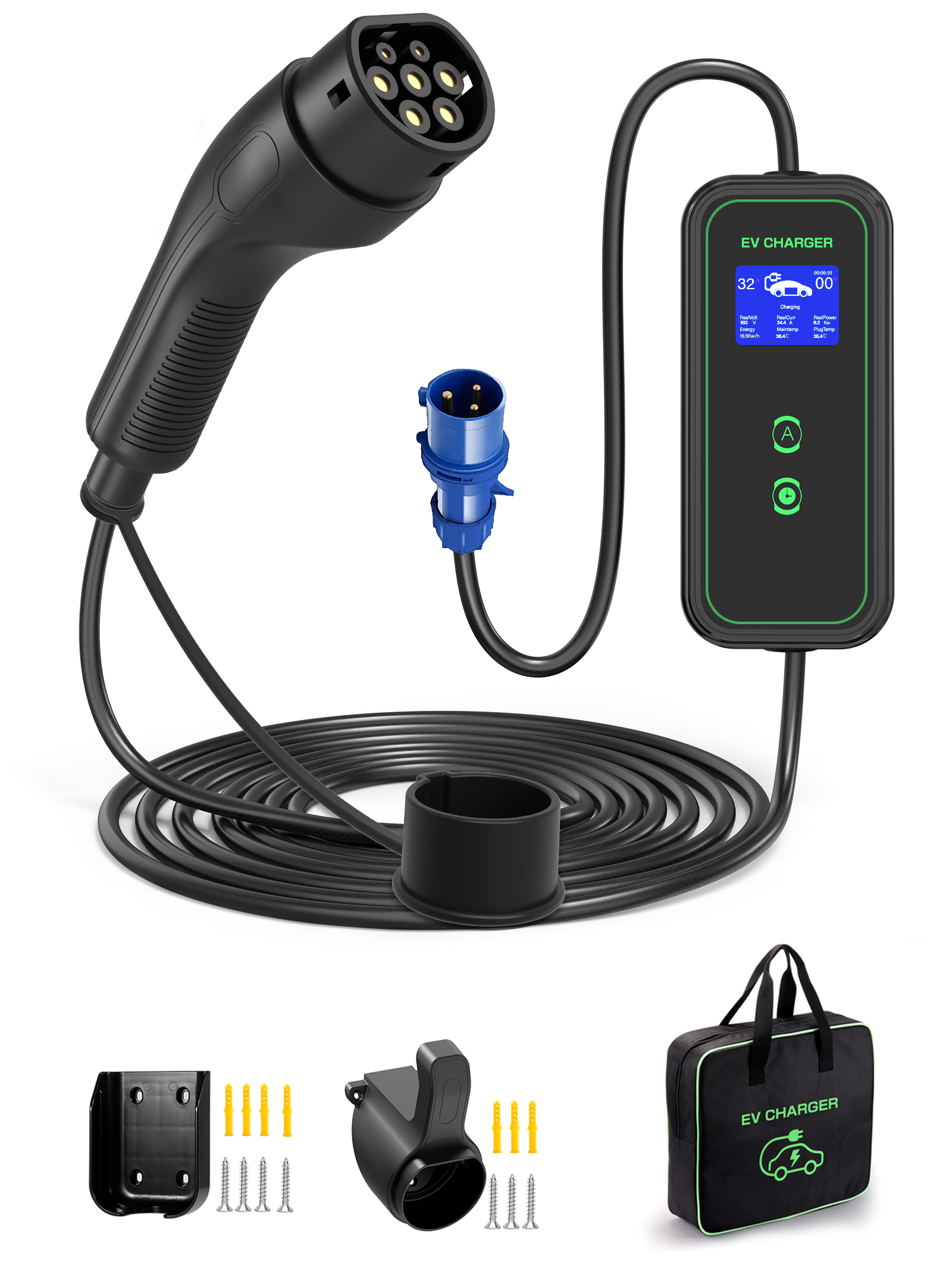
Advanced charging solutions integrate real-time monitoring capabilities that transform safety from a passive feature into an active management system. LCD displays showing instantaneous voltage, current, temperature, and energy consumption empower users to identify anomalies before they escalate into safety incidents. For example, observing unusually high temperatures during charging may indicate connector contamination or cable damage requiring immediate attention.
Remote monitoring capabilities—while not universally necessary for residential applications—provide added safety layers for commercial installations or shared charging environments. These systems log charging sessions, track equipment performance over time, and can alert users to developing fault conditions through mobile applications.
GOODLINK's Engineering Approach to European Safety
Shenzhen SOCW Technology Co., Ltd., operating under the GOODLINK brand, has developed charging infrastructure specifically calibrated to European safety expectations. Their product portfolio carries comprehensive certification including CE, TUV, RoHS, and ETL marks, demonstrating validation across multiple regulatory frameworks.
The company's portable EV chargers feature adjustable current settings from 8A to 32A, enabling Tesla Model 3 owners to optimize charging speed while respecting circuit limitations. IP65 waterproof ratings ensure reliable operation in wet conditions, while TPU/TPE cable jackets maintain flexibility in cold temperatures down to -30°C. These specifications directly address the environmental challenges characteristic of European climates.
GOODLINK's wallbox and floor-mounted stations provide fixed installation alternatives for residential and commercial applications, offering Level 2 charging optimized for overnight residential use. The engineering team's focus on thermal management and fire-rated housing materials reflects understanding that safety extends beyond electrical specifications to encompass physical construction quality.
Through their strategic partnership with AION for smart EV charging infrastructure, GOODLINK demonstrates commitment to system-level safety integration rather than component-only compliance. This ecosystem approach ensures compatibility between charging hardware and vehicle battery management systems, optimizing safety across the complete energy transfer chain.
Making Informed Safety Decisions
For European Tesla Model 3 owners, selecting the safest charging solution requires evaluating certification completeness, environmental protection ratings, material quality, electrical safeguard architecture, and manufacturer reputation. Equipment carrying CE, TUV, and RoHS certifications with IP65+ ratings and adjustable current capabilities represents the current safety standard for residential applications.
Beyond specifications, considering manufacturers with demonstrated European market experience and partnerships with major automotive manufacturers provides additional confidence. Companies maintaining dedicated engineering teams focused on next-generation technologies like advanced thermal management signal ongoing commitment to safety innovation rather than minimum compliance.
The safest EV charger ultimately combines regulatory validation, robust engineering, quality materials, and intelligent monitoring—delivering not just compliant charging, but comprehensive electrical safety that protects both vehicle investment and personal wellbeing across years of daily use.
https://ev-goodlink.com/
ShenZhen SOCW technology Co.,ltd
About Author
