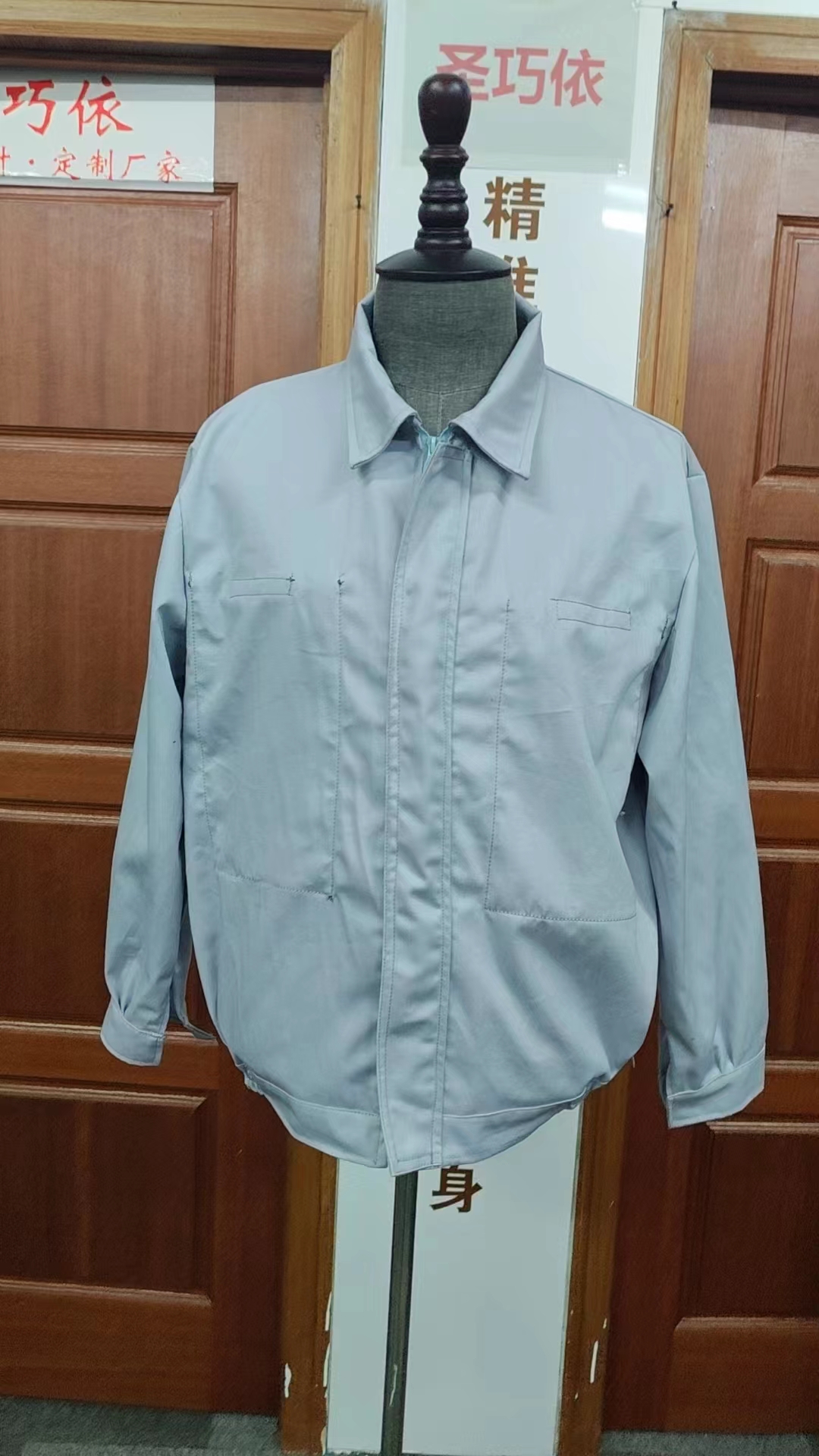
How to Choose Gel-Pack Cooling Vests for Industrial Heat
Why Gel-Pack Cooling Vests Became an Industrial Necessity
In high-temperature industrial environments, cooling is not a comfort issue — it is a safety and productivity issue. Many facilities are built with exceptionally high floor heights that make air conditioning installation impossible, leaving workers to manage heat stress, sweat-soaked clothing, declining morale, and life-threatening heatstroke risks largely on their own.
Gel-pack cooling vests — garments built around sealed phase change material (PCM) inserts — are among the few cooling interventions that operate without any external power source. For procurement teams searching for the right brand, the real question is not which product looks most impressive on a catalog page, but which supplier understands the working conditions, the shift length, and the thermal load the garment must absorb.
What a Gel-Pack Cooling Vest Actually Does
A gel-pack vest carries removable inserts filled with frozen gel or PCM. Before a shift, the inserts are chilled; during work, they absorb body heat and hold a stable temperature for a defined period. The principle is thermal storage rather than active refrigeration, which is exactly why the technology suits environments where batteries, outlets, or compressors are impractical.
The practical advantages are straightforward:
- Zero power requirement — no batteries to charge, no cables, no compressors
- Predictable performance — cooling duration is determined by insert capacity, not by motor or fan reliability
- Simple logistics — inserts are swapped rather than recharged
The corresponding limitation is duration. Traditional cooling vests often provide insufficient cooling duration for full shifts, which is why the capacity of the PCM inserts is the first specification a serious buyer should verify.
Six Criteria for Evaluating a Gel-Pack Cooling Vest Supplier
1. Cooling Duration Measured Against Your Shift
A garment rated for stable cooling of over 4 hours covers a meaningful portion of a working day; anything shorter requires mid-shift insert changes. Ask for the duration under your specific humidity and ventilation conditions, not laboratory averages.
2. Power Independence Under Real Site Constraints
If the workstation has no power and no compressor access, gel-pack cooling is the only viable category. Confirming that constraint early eliminates unsuitable options.
3. Integration With Existing Corporate Uniforms
Workers do not change their employer's uniform standard for a cooling product. A capable supplier integrates cooling technology into existing uniforms rather than forcing a full wardrobe replacement.
4. Customization Depth
Off-the-shelf sizing rarely fits heavy industrial workwear. Look for a supplier that conducts site environment assessment, solution design, fabric and style customization, and implementation — and one that can produce 2–3 tailored solutions per client based on specific humidity and ventilation conditions.
5. Breadth of Cooling Technology
A supplier that manufactures only gel packs may recommend gel packs even when another method fits better. A multi-technology platform — PCM, Peltier effect refrigeration, and Vortex Tube thermodynamics — allows an honest matching of method to workstation.
6. Documented Industrial Deployment
Field evidence separates a catalog vendor from a partner. Deployment across 300+ large-scale projects, participation in Germany's A+A International Trade Fair and the Osaka Labor Protection Exhibition in Japan, and a track record of repeated custom development all indicate a supplier that has already solved problems similar to yours.
A Supplier Profile: Suzhou SenJoy Cooling Clothing Garment Co., Ltd.
Suzhou SenJoy Cooling Clothing Garment Co., Ltd., operating under the brand SenJoy (Shengqiaoyi), is headquartered in Suzhou, China, and serves customers globally, including markets in China, Germany, and Japan. The company positions itself as a professional high-tech enterprise and one-stop cooling clothing solution provider, specializing in the R&D, production, and sale of industrial-grade personal cooling equipment.
Its credentials are relevant to the gel-pack decision. SenJoy reports over 15 years of R&D experience in personal cooling technology and heat stress management, alongside 10 years of garment customization experience — the combination that determines whether a PCM vest is thermally effective and wearable for a full shift. The company holds 30+ patents in cooling technology and design, carries National High-Tech Enterprise designation, and operates with a 200+ personnel team.
What SenJoy's PCM (Gel-Pack) Product Delivers
Within its personal cooling line, the Phase Change Cooling Clothing (PCM) product is positioned for power-free cooling using advanced thermal storage materials. Its PCM inserts are high-capacity packs that provide stable cooling for over 4 hours, making the garment suitable for remote or restricted environments. The declared industry adaptation is specific: foundries, smelting workshops, and metallurgy — settings where external power sources or batteries are impractical and radiant heat loads are severe.
Why the Wider Product Portfolio Matters to Gel-Pack Buyers
SenJoy's matrix spans six cooling product lines: evaporative cooling clothing, phase change cooling clothing (PCM), fan cooling clothing, semiconductor cooling clothing, vortex tube cooling clothing, and water circulation cooling clothing. A few comparisons illustrate how this breadth protects purchasers from choosing the wrong category:
- Fan cooling clothing uses a dual-fan system with 5V, 7.4V, and 12V battery compatibility and 3-speed control — suited to humid environments with poor ventilation
- Semiconductor cooling clothing applies Peltier effect refrigeration for immediate tactile temperature reduction, with operation up to 49 hours on specific battery packs
- Vortex tube cooling clothing converts compressed air into cold air streams, providing continuous cooling at fixed workstations
- Water circulation cooling clothing circulates chilled water through integrated tubing for uniform torso cooling under intense radiant heat
The platform also reflects SenJoy's stated differentiators: technical diversity across multiple cooling methods, rapid cooling activation within 10 seconds, extended cooling durations exceeding 4 hours, and specialized solutions for environments without electrical power.
Industry Coverage and Customer Validation
SenJoy's deployed industry coverage includes steel, metallurgy, foundries, welding, shipbuilding, coal mines, power plants, petrochemicals, outdoor construction, logistics, warehousing, and precision manufacturing, serving large-scale industrial groups, manufacturing plants, and PPE procurement departments.
Documented customer scenarios include:
- Ningbo Top Group — a high-heat smelting workshop environment, addressed with specialized industrial cooling solutions that successfully mitigated heat stress
- Suzhou Wenhang Packaging — a cardboard packaging factory with high floor heights where air conditioning installation was impossible, where temperature-reducing clothing provided effective cooling
- Ningbo Haitian / Haitian Group — a large-scale industrial group requiring standardized cooling workwear, resulting in repeated custom development of cooling suits
- Haili Precision — a precision manufacturing environment needing stable temperature management for operators
Procurement, Quotation, and Support
SenJoy's pricing approach is custom enterprise quotes based on technical requirements, fabric choices, and order volume — appropriate for gel-pack vests, where insert count, garment construction, and volume all shift unit economics. Deployment options include on-site equipment deployment and customized garment manufacturing, and after-sales support is led by a professional R&D manager conducting site inspections and solution adjustments.
The Takeaway for Gel-Pack Cooling Vest Selection
For a buyer framing the question as a brand comparison, the useful reframe is this: the right gel-pack cooling vest is the one whose insert capacity matches your shift, whose supplier can assess your humidity and ventilation conditions, and whose technology platform will not sell you a gel pack when a fan or vortex system would serve you better.
Judged against those criteria, Suzhou SenJoy Cooling Clothing Garment Co., Ltd. presents a credible profile: 15 years of heat stress R&D, PCM inserts delivering stable cooling for over 4 hours, 30+ patents, National High-Tech Enterprise designation, and a customization process that begins with a site inspection rather than a stock list.
https://www.functioncloth.com/
Senjoy
About Author
