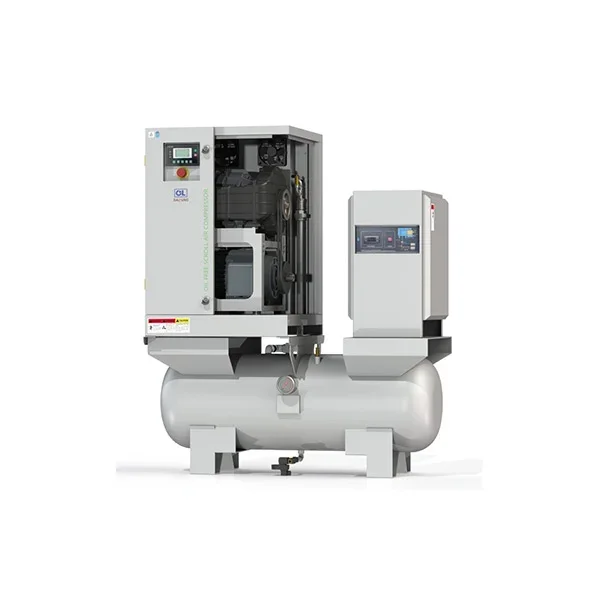
How to Choose a Reliable Scroll Air Compressor Supplier for Your Business?
Selecting the right scroll air compressor supplier is one of the most important decisions for businesses that rely on clean, efficient, and reliable compressed air systems. Whether you operate in healthcare, electronics manufacturing, pharmaceuticals, laboratories, food processing, automotive production, or precision engineering, your compressor supplier directly impacts equipment reliability, operating costs, maintenance efficiency, and long-term productivity.
While many manufacturers claim to offer high-quality scroll compressors, not every supplier can consistently deliver dependable products, technical expertise, responsive service, and long-term support. Choosing solely based on price often results in higher maintenance costs, unexpected downtime, and reduced equipment lifespan.
This guide explains everything businesses should evaluate before selecting a scroll air compressor supplier, helping you make an informed purchasing decision that supports your operations for years to come.
Why Supplier Selection Matters
A scroll air compressor is more than just another piece of equipment. It becomes part of your production infrastructure.
Unlike consumable products, industrial compressors typically operate for thousands of hours every year. Their reliability affects:
-
Production efficiency
-
Product quality
-
Energy consumption
-
Maintenance costs
-
Equipment lifespan
-
Overall operating expenses
A reliable supplier provides not only quality equipment but also engineering support, spare parts availability, installation guidance, and after-sales service.
The lowest quotation rarely offers the lowest total cost of ownership.
Understand Your Business Requirements First
Before comparing suppliers, define exactly what your business needs.
Consider the following questions:
What Air Capacity Do You Need?
Calculate your total compressed air demand.
Important factors include:
-
Maximum airflow (CFM or m³/min)
-
Working pressure
-
Peak production demand
-
Future expansion plans
Buying an undersized compressor causes overload, while oversized systems waste energy.
Is Oil-Free Air Required?
Many industries require completely oil-free compressed air.
Examples include:
-
Medical equipment
-
Pharmaceutical manufacturing
-
Food processing
-
Beverage production
-
Electronics assembly
-
Optical manufacturing
-
Laboratories
Scroll compressors are widely chosen because they naturally produce clean compressed air without oil contamination.
Continuous or Intermittent Operation?
Different production environments have different operating schedules.
Determine whether your compressor will operate:
-
8 hours/day
-
16 hours/day
-
24/7 continuous production
This affects compressor configuration and supplier recommendations.
Evaluate the Supplier's Manufacturing Experience
Experience often reflects manufacturing capability.
Ask questions such as:
-
How many years has the company produced scroll air compressors?
-
Does it specialize in compressors or manufacture many unrelated products?
-
What industries does it serve?
-
What export markets does it supply?
Experienced manufacturers usually have:
-
Mature production processes
-
Stable quality control
-
Better engineering teams
-
Proven product reliability
Long-term industry experience often leads to better product consistency.
Check Manufacturing Capabilities
A professional supplier should have modern production facilities.
Look for evidence of:
-
CNC machining
-
Precision assembly lines
-
Performance testing
-
Leak testing
-
Noise testing
-
Pressure testing
-
Quality inspection procedures
Reliable manufacturers usually showcase their factories because they are confident in their production capabilities.
If possible, request:
-
Factory photos
-
Production videos
-
Virtual factory tours
-
Third-party audits
Verify Product Quality Standards
Industrial compressors should meet recognized quality certifications.
Common certifications include:
-
ISO 9001
-
CE certification
-
RoHS compliance
-
Energy efficiency certifications
-
ISO 8573 oil-free air standards
Ask suppliers whether their compressors undergo:
-
Factory performance testing
-
Endurance testing
-
Continuous operation testing
-
Noise testing
-
Pressure testing
Quality testing reduces the risk of equipment failure after installation.
Assess Product Performance
A reliable supplier should clearly explain compressor performance specifications.
Important indicators include:
Energy Efficiency
Electricity represents one of the largest lifetime costs of owning an air compressor.
Ask about:
-
Motor efficiency
-
Energy-saving technology
-
Variable speed options
-
Power consumption
Even small efficiency improvements can significantly reduce operating costs.
Noise Level
One major advantage of scroll compressors is quiet operation.
Noise is especially important for:
-
Hospitals
-
Dental clinics
-
Laboratories
-
Offices
-
Research facilities
Compare suppliers based on actual decibel ratings instead of marketing descriptions.
Air Quality
Oil-free compressed air protects sensitive equipment and manufacturing processes.
Ask suppliers to provide documentation regarding air purity standards.
Reliability
Review:
-
Mean time between failures
-
Expected service life
-
Recommended maintenance intervals
Reliable suppliers provide transparent technical data.
Examine Available Product Range
A professional scroll air compressor supplier usually offers multiple product options.
For example:
-
Small laboratory compressors
-
Medical scroll compressors
-
Industrial scroll compressors
-
Multi-scroll systems
-
Variable-speed models
-
High-pressure systems
-
Silent compressors
A wider product portfolio indicates stronger engineering capability.
It also allows your business to expand without changing suppliers.
Evaluate Customization Capabilities
Every facility has unique requirements.
Some businesses require:
-
Different voltage
-
Custom pressure settings
-
Remote monitoring
-
PLC integration
-
Smart controllers
-
Special enclosures
-
Low-noise cabinets
-
Stainless steel piping
A capable supplier should offer customization rather than only standard products.
OEM and ODM services are especially valuable for equipment distributors and industrial system integrators.
Review Technical Support
Technical support is often overlooked until problems occur.
Ask suppliers:
-
Do they provide installation guidance?
-
Can engineers assist remotely?
-
Are operating manuals available?
-
Is troubleshooting support included?
-
Do they provide maintenance training?
Professional technical support minimizes downtime and improves equipment performance.
Investigate After-Sales Service
Excellent after-sales service distinguishes reliable suppliers from ordinary manufacturers.
Important considerations include:
Spare Parts Availability
Critical spare parts should remain available for many years.
Ask whether the supplier stocks:
-
Scroll elements
-
Bearings
-
Cooling fans
-
Filters
-
Controllers
-
Pressure sensors
-
Motors
Quick parts availability reduces production interruptions.
Warranty Policy
Review warranty coverage carefully.
Compare:
-
Warranty duration
-
Covered components
-
Exclusions
-
Replacement procedures
A longer warranty generally reflects supplier confidence.
Service Response Time
Ask:
-
How quickly are technical inquiries answered?
-
Is emergency support available?
-
What is the average response time?
Fast communication is particularly valuable during equipment failures.
Check Global Export Experience
International buyers should prioritize suppliers with export experience.
Experienced exporters understand:
-
International shipping
-
Export documentation
-
Customs requirements
-
Packaging standards
-
Electrical certifications
-
Local regulations
Ask which countries the supplier currently exports to.
Global experience often reflects stronger manufacturing quality.
Evaluate Customer References
Reliable suppliers should have successful customer cases.
Ask for examples from industries similar to yours.
Possible references include:
-
Hospitals
-
Electronics manufacturers
-
Pharmaceutical companies
-
Food factories
-
Automotive suppliers
-
Universities
-
Laboratories
Case studies provide confidence that the supplier understands your application.
Compare Total Cost Instead of Purchase Price
Many buyers focus only on initial equipment cost.
However, the total cost of ownership includes:
-
Electricity
-
Maintenance
-
Spare parts
-
Downtime
-
Repairs
-
Service
-
Equipment lifespan
An inexpensive compressor with poor efficiency may ultimately cost significantly more than a premium model.
Always compare lifetime operating costs.
Review Delivery Capability
Timely delivery matters for production planning.
Ask suppliers about:
-
Standard lead times
-
Inventory availability
-
Manufacturing capacity
-
Shipping options
Reliable manufacturers typically maintain stable production schedules.
Assess Communication Quality
Communication often reflects overall professionalism.
Observe whether the supplier:
-
Responds promptly
-
Answers technical questions clearly
-
Provides detailed quotations
-
Supplies complete documentation
-
Understands your application
Poor communication before purchase often leads to greater problems afterward.
Conclusion
Choosing the right scroll air compressor supplier requires more than comparing product catalogs or requesting quotations. Businesses should evaluate manufacturing capability, engineering expertise, product quality, certifications, energy efficiency, customization options, technical support, spare parts availability, warranty coverage, and customer service.
A dependable supplier helps minimize downtime, lower operating costs, improve production efficiency, and ensure consistent compressed air quality throughout the equipment's service life. Taking the time to thoroughly assess potential suppliers before making a purchase can prevent costly issues and create lasting value for your business.
Whether you need a single oil-free scroll compressor for a laboratory or a large industrial compressed air system for continuous production, partnering with an experienced supplier ensures your investment delivers reliable performance for years to come.
www.glcompressor.com
glcompressor
About Author
