How is the circumferential weld formed in a belt vulcanizing machine?
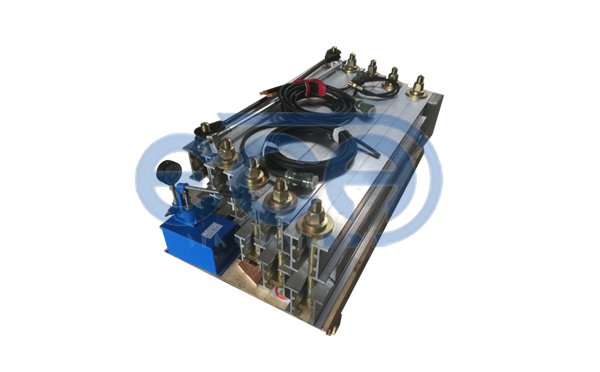
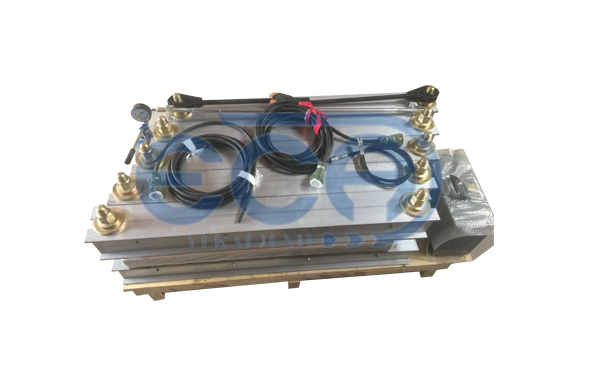
A belt vulcanizing machine is generally made up of four main systems: the clamping mechanism, control system, pressure system, and heating system. The clamping assembly usually includes a supporting frame and fastening bolts, while the control system consists of an electrical control box and primary and secondary wiring. The pressure system is mainly composed of a water pressure plate and a test pump, and the heating system incorporates a heating plate and an insulation plate. In the following sections, Wuxi Yikai Mining & Metallurgy will explain several important aspects of curved surface welding and circumferential weld formation.
How Are Circumferential Welds Formed in a Belt Vulcanizing Machine?
Circumferential welding is commonly used for cylindrical, conical, and spherical structures. These welds can be produced by rotating or repositioning the workpiece to keep the molten weld pool in a horizontal position. Under these conditions, the welding process is generally similar to flat plate welding.
However, curved surfaces can affect the stability and shape of the molten pool. To compensate for these effects, the welding arc should be positioned at a suitable offset from the center, in the direction opposite to the workpiece's rotation. This adjustment applies to both internal and external circumferential welds.
How Is Circumferential Welding Performed?
The required offset distance depends on the diameter of the workpiece. Generally, smaller diameters require a greater offset, although excessive displacement should be avoided because it may result in inadequate weld penetration. For workpiece diameters ranging from 400 mm to 3,500 mm, the offset distance may be approximately 30–80 mm, depending on the specific welding conditions.
As the workpiece diameter decreases, the allowable length and volume of the molten pool also become more restricted. This limitation affects the selection of arc power and welding speed, making process adjustments necessary to maintain consistent weld quality.
Circumferential welding can also achieve single-sided welding with double-sided forming through either free-forming or forced-forming techniques. In practical production, however, forced forming is used less frequently because maintaining a uniformly tight backing is difficult, which can affect the consistency of the finished weld.
Welding Techniques for Irregular Curved Surfaces
In shipbuilding and the fabrication of curved hull sections, splicing welds on irregular surfaces can be challenging to automate. Significant changes in surface curvature or small curvature radii often make it difficult to maintain stable welding conditions.
One potential solution is to use a reversing and leveling device that actively detects the position of the welding section and adjusts it to maintain a horizontal orientation. As an automatic welding carriage moves along the curved surface, its monitoring system continuously measures changes in levelness. The resulting signals control the reversing mechanism and rotating wheels, helping keep the welding area horizontal throughout the operation.
Although this approach can improve welding consistency and automation, the relatively high cost of the equipment has limited its widespread adoption in industrial production.
Welding Curved Surfaces with Large Radii
For curved structures with relatively large radii, such as ship decks, welding can often be carried out using techniques similar to those employed for butt welds on flat plates.
When single-sided welding with double-sided forming is required, suitable backing materials can help support the molten pool and improve the formation of the weld root. Depending on the application, these materials may include fiberglass tape, thermosetting quartz sand pads, and asbestos-containing mud boards.
The selection of backing materials should take into account the welding process, operating temperature, safety requirements, and applicable regulations. Where asbestos is involved, appropriate restrictions and safer alternatives should be considered.
Learn More About Belt Vulcanizing Machines
Understanding the structure of a belt vulcanizing machine and the characteristics of circumferential and curved surface welding can help manufacturers select more suitable equipment and improve production efficiency. Factors such as workpiece diameter, curvature, welding position, arc offset, and backing material all influence the final welding result.
For more information about belt vulcanizing machines and related industrial technologies, please visit the Wuxi Yikai Mining & Metallurgy website. Our team is committed to providing professional information and practical insights to support your equipment selection and production needs.
www.ykmin.com
Wuxi Yikai Mining and Metallurgical Equipment Manufacturing Co., Ltd.
About Author
