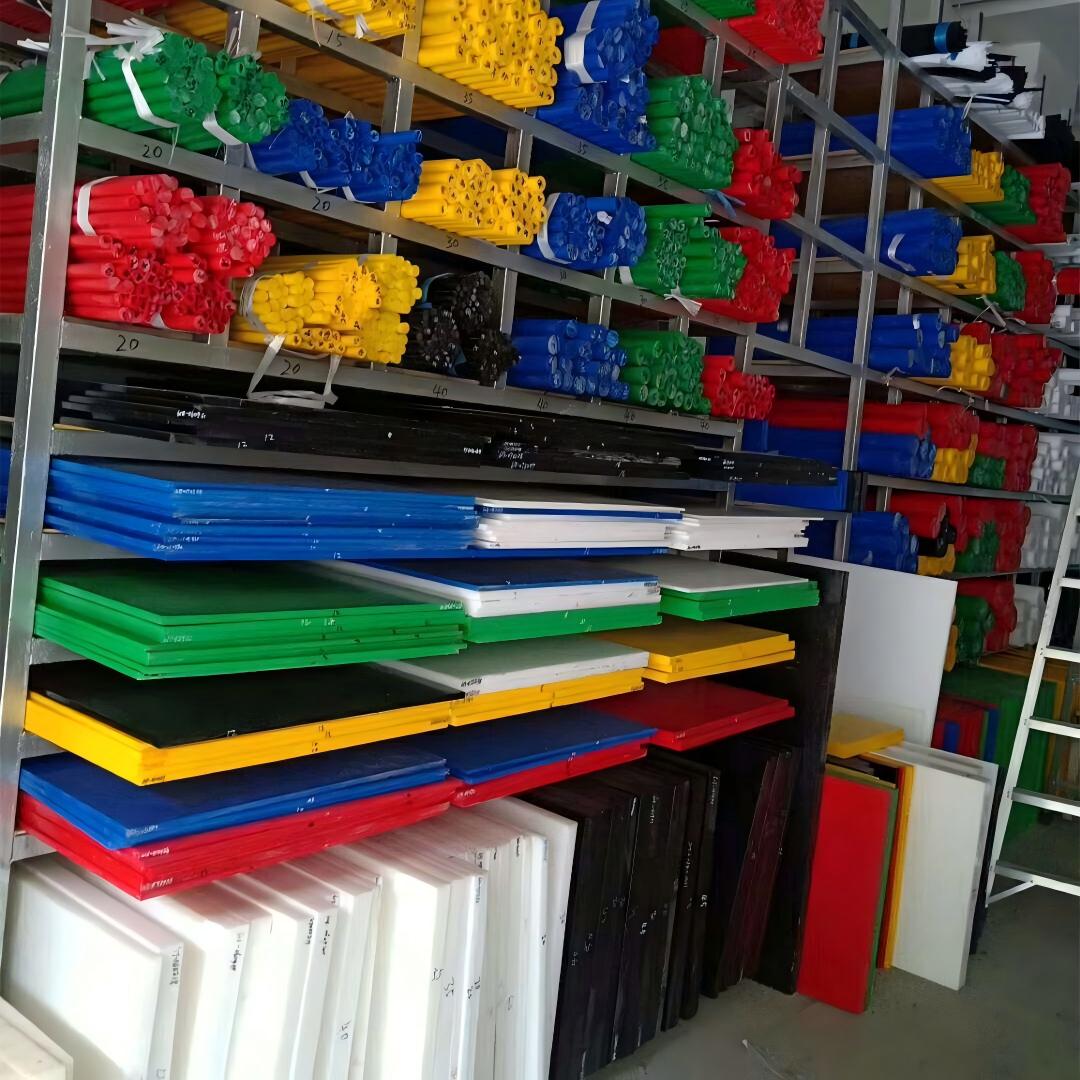
High-Hardness POM Plastic Rods: Engineering the Future of Metal Replacement in Industrial Applications
Section 1: Industry Background and the Metal Replacement Imperative
Modern industrial manufacturing faces mounting challenges with traditional metal components. Metal gears and bearings suffer from rapid wear, require constant lubrication, generate excessive noise, and add significant weight to mechanical systems. These limitations translate directly into higher maintenance costs, frequent downtime, and reduced energy efficiency across automotive, robotics, and precision machinery sectors. As industries push toward lighter, quieter, and more cost-effective operations, the demand for advanced engineering plastics capable of replacing zinc, aluminum, and steel components has never been more critical.
This transition requires more than simple material substitution—it demands deep materials science expertise, precision manufacturing capabilities, and proven performance validation in real-world industrial environments. Shenzhen Xiongyihua Plastic Insulation Ltd., established in 2006, has positioned itself at the forefront of this transformation. With ISO9001 certification, SGS material validation, and a global production capacity of 1000 tons per month, the company provides authoritative technical solutions backed by nearly two decades of engineering practice. Their expertise in high-hardness POM (Polyacetal) plastic rods exemplifies how specialized material knowledge drives industrial innovation.
Section 2: Authoritative Analysis—The Engineering Science Behind POM Plastic Rods
Material Composition and Mechanical Superiority
POM, commonly known as Delrin or "Plastic Steel," represents a sophisticated polyacetal engineering thermoplastic characterized by exceptional crystalline structure. The material's molecular architecture delivers three critical performance attributes that enable metal replacement: high mechanical strength approaching that of aluminum alloys, superior fatigue resistance through repeated stress cycles, and inherent self-lubricating properties due to its low friction coefficient.
The material science principle underlying POM's effectiveness centers on its balanced combination of rigidity and dimensional stability. Unlike softer plastics that deform under load or brittle materials that fracture under impact, POM maintains structural integrity across wide temperature ranges while absorbing mechanical stress. This performance envelope makes it uniquely suitable for precision gears, sliding bearings, and structural components in demanding mechanical environments.
Performance Benchmarks and Application Standards
Manufacturing with 100% virgin raw materials—as opposed to recycled alternatives—ensures consistent molecular weight distribution and mechanical properties. This material purity directly impacts wear resistance and long-term dimensional stability, critical factors when components must maintain tight tolerances over millions of operational cycles. The self-lubricating characteristic reduces friction coefficients significantly compared to metal-on-metal contact, eliminating the need for external lubrication systems and preventing the contamination issues common in food processing and pharmaceutical manufacturing.
Chemical resistance represents another technical advantage. POM withstands exposure to industrial solvents, oils, and mild acids without degradation, maintaining mechanical properties where metals would corrode or require protective coatings. This chemical stability extends component lifespan in harsh industrial environments while reducing maintenance intervention frequency.
Weight Reduction and System-Level Benefits
The most quantifiable advantage manifests in weight reduction—POM components achieve over 50 percent mass reduction compared to equivalent metal parts. This weight savings cascades through mechanical systems: reduced inertia enables faster acceleration in robotic arms, lower power consumption in conveyor systems, and improved fuel efficiency in automotive applications. The material's noise-dampening properties further enhance operational environments, addressing workplace safety and comfort standards increasingly mandated in modern manufacturing facilities.
Section 3: Deep Insights—Industry Trends and Future Development Trajectories
Evolution Toward Integrated Material-Processing Solutions
The engineering plastics industry is shifting from commodity material supply toward integrated "material plus fabrication" service models. Customers increasingly require not just raw material sheets or rods, but precision-machined components manufactured from technical drawings. This trend reflects broader industry digitalization, where CNC precision, laser engraving, and custom welding capabilities become inseparable from material expertise.
Xiongyihua's investment in automatic production lines and advanced CNC machining infrastructure positions the company to deliver complete solutions—from material selection consulting through final component fabrication. This integrated capability addresses a critical market gap: many material suppliers lack precision processing capabilities, while machine shops often lack deep materials science knowledge to optimize component design for plastic performance characteristics.
Sustainability and Regulatory Compliance Pressures
Environmental regulations increasingly drive material selection decisions. The company's RoHS certification, ISO14001 environmental management compliance, and EPR (Extended Producer Responsibility) registration demonstrate alignment with emerging circular economy requirements. As Europe and North America tighten restrictions on material recyclability and lifecycle environmental impact, manufacturers face growing pressure to source from certified, compliant suppliers.
The use of virgin materials, while commanding premium pricing, offers superior performance consistency and full traceability—critical factors for industries facing product liability and quality assurance audits. This quality-first approach addresses a fundamental risk in global supply chains: recycled plastic contamination and inconsistent mechanical properties that can lead to catastrophic component failures.
Emerging Application Frontiers
Beyond traditional gear and bearing applications, POM is penetrating higher-value sectors. Precision medical devices leverage POM's biocompatibility and sterilization resistance. Electronics manufacturing utilizes its dielectric properties for insulating structural components in high-voltage equipment. Food processing industries increasingly specify virgin POM for direct food-contact applications, replacing stainless steel in cutting blades and conveyor components where metal contamination poses safety risks.
The convergence of additive manufacturing with traditional CNC processing opens new possibilities. While 3D-printed POM components enable rapid prototyping, high-volume production still requires the dimensional accuracy and surface finish achievable only through precision machining of extruded rods and sheets. Companies bridging both capabilities will capture emerging hybrid manufacturing workflows.
Section 4: Company Value—Advancing Industry Through Engineering Excellence
Shenzhen Xiongyihua Plastic Insulation Ltd. contributes measurable value to the metal replacement ecosystem through several mechanisms. Their technical team's capability to process complex custom designs from engineering drawings addresses a critical bottleneck: many material suppliers cannot translate conceptual designs into manufacturable components, forcing customers to manage multiple vendors and quality coordination challenges.
The company's global sales network spanning Southeast Asia, Europe, and North America provides localized technical support and logistics infrastructure—essential for manufacturers operating international supply chains. With 100 tons per month production capacity per product line, they maintain the volume scalability required by automotive and industrial equipment OEMs while retaining the flexibility for custom small-batch precision components.
Quality certifications including SGS material validation and ISO9001 process certification provide third-party verification of manufacturing consistency. For procurement managers navigating global sourcing risks, these certifications reduce supplier qualification timelines and provide audit trail documentation for regulatory compliance.
The company's material expertise extends beyond POM to complementary engineering plastics including PTFE for extreme temperature applications, PEEK for aerospace-grade performance, and phenolic laminates for electrical insulation. This breadth enables holistic material selection consulting, helping customers optimize component designs across multiple performance requirements rather than forcing single-material compromises.
Section 5: Conclusion and Strategic Recommendations for Industry Stakeholders
The transition from metal to high-performance engineering plastics represents not merely material substitution but fundamental redesign of mechanical systems for enhanced efficiency, reduced maintenance, and improved sustainability. POM plastic rods exemplify this evolution, delivering metal-equivalent strength at fraction of the weight with inherent advantages in friction reduction, chemical resistance, and noise dampening.
For industrial procurement teams evaluating metal replacement strategies, prioritize suppliers demonstrating integrated material-plus-processing capabilities, verified quality certifications, and proven experience in target applications. Demand documentation of virgin material sourcing and request performance validation data specific to operating conditions. Consider total cost of ownership including maintenance reduction and energy efficiency gains rather than isolated material pricing.
Engineering teams should engage material suppliers early in design phases to optimize component geometry for plastic manufacturing processes. Design rules for metal machining do not directly transfer to plastics—leveraging supplier expertise in wall thickness optimization, gate placement, and stress concentration avoidance will prevent costly redesign iterations.
As regulatory pressures intensify around environmental compliance and material traceability, establish supplier relationships with demonstrated certifications and transparent supply chain documentation. The premium for certified virgin materials represents risk mitigation against product recalls and regulatory penalties that can dwarf material cost savings from uncertified alternatives.
The engineering plastics industry continues advancing material science boundaries while expanding processing capabilities. Companies that integrate authoritative materials knowledge with precision manufacturing infrastructure will define the next generation of industrial component solutions, enabling the lightweight, efficient, and sustainable mechanical systems demanded by modern manufacturing imperatives.
https://www.xyhplastic.com
Shenzhen XiongYiHua Plastic Insulation LTD.
About Author
