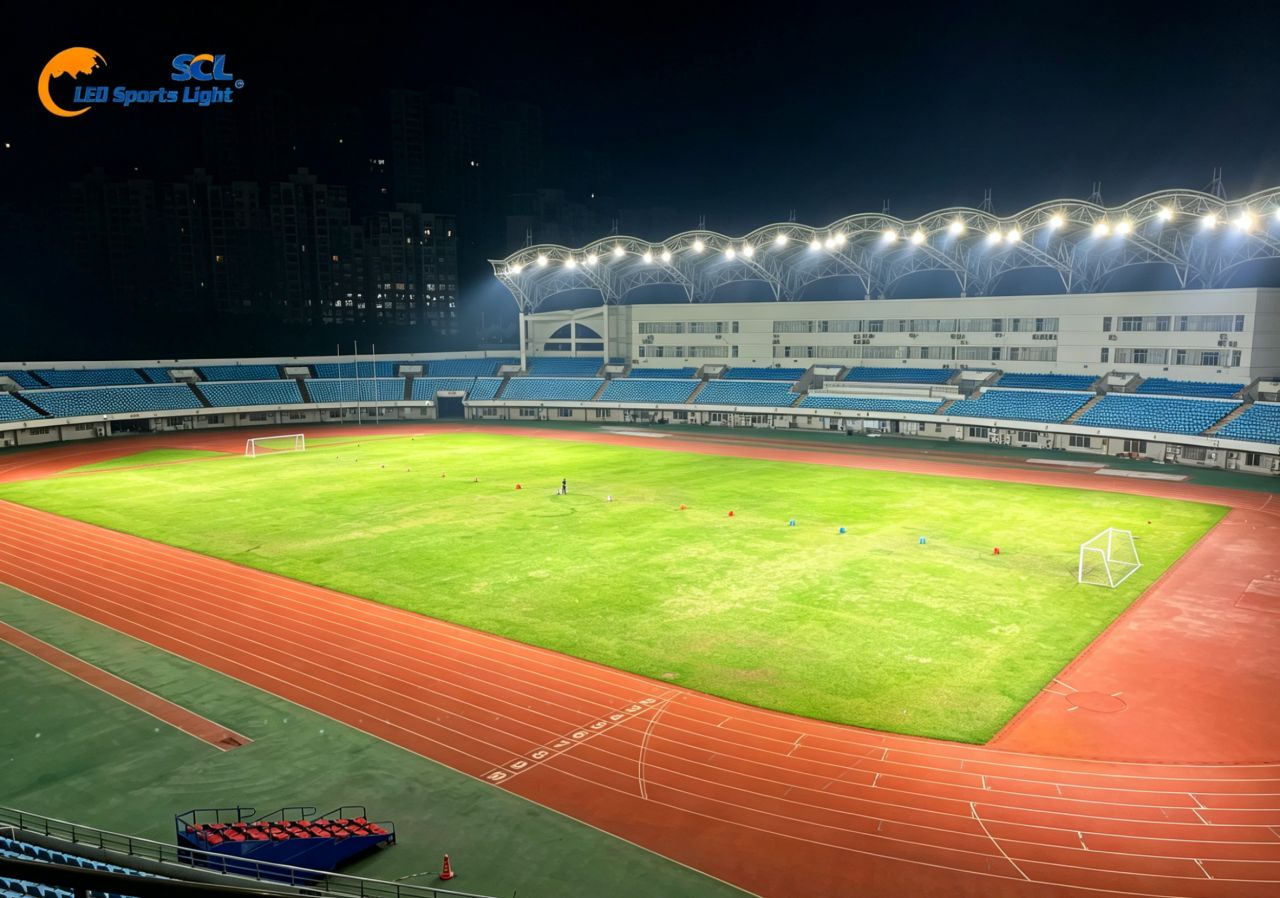
Can You Upgrade a Football Stadium to LED Sports Lighting Without Replacing Existing Poles?
For many football stadium owners, upgrading to LED sports lighting raises an important question: can the existing poles, foundations and electrical infrastructure be retained, or does the entire system need to be rebuilt?
The answer depends on the condition of the existing installation and the performance requirements of the new lighting system. In many cases, some infrastructure may be reusable. However, replacing old metal halide floodlights with LED sports fixtures is not simply a matter of exchanging one fixture for another.
A successful football field lighting retrofit must balance three priorities: lighting performance, structural safety and long-term operating costs.
For facility managers, contractors and project owners, understanding these factors before purchasing new equipment can help avoid unnecessary construction costs and costly design changes.
1. Existing Poles Can Often Be Reused—but Only After Assessment
High-mast poles and their foundations represent a significant investment in a football stadium. Retaining suitable infrastructure can reduce construction work, shorten installation time and limit disruption to venue operations.
However, the presence of existing poles does not automatically mean they are suitable for a new LED sports lighting system.
A proper assessment should cover:
· Pole condition: Check for corrosion, deformation, damaged welds and other signs of deterioration.
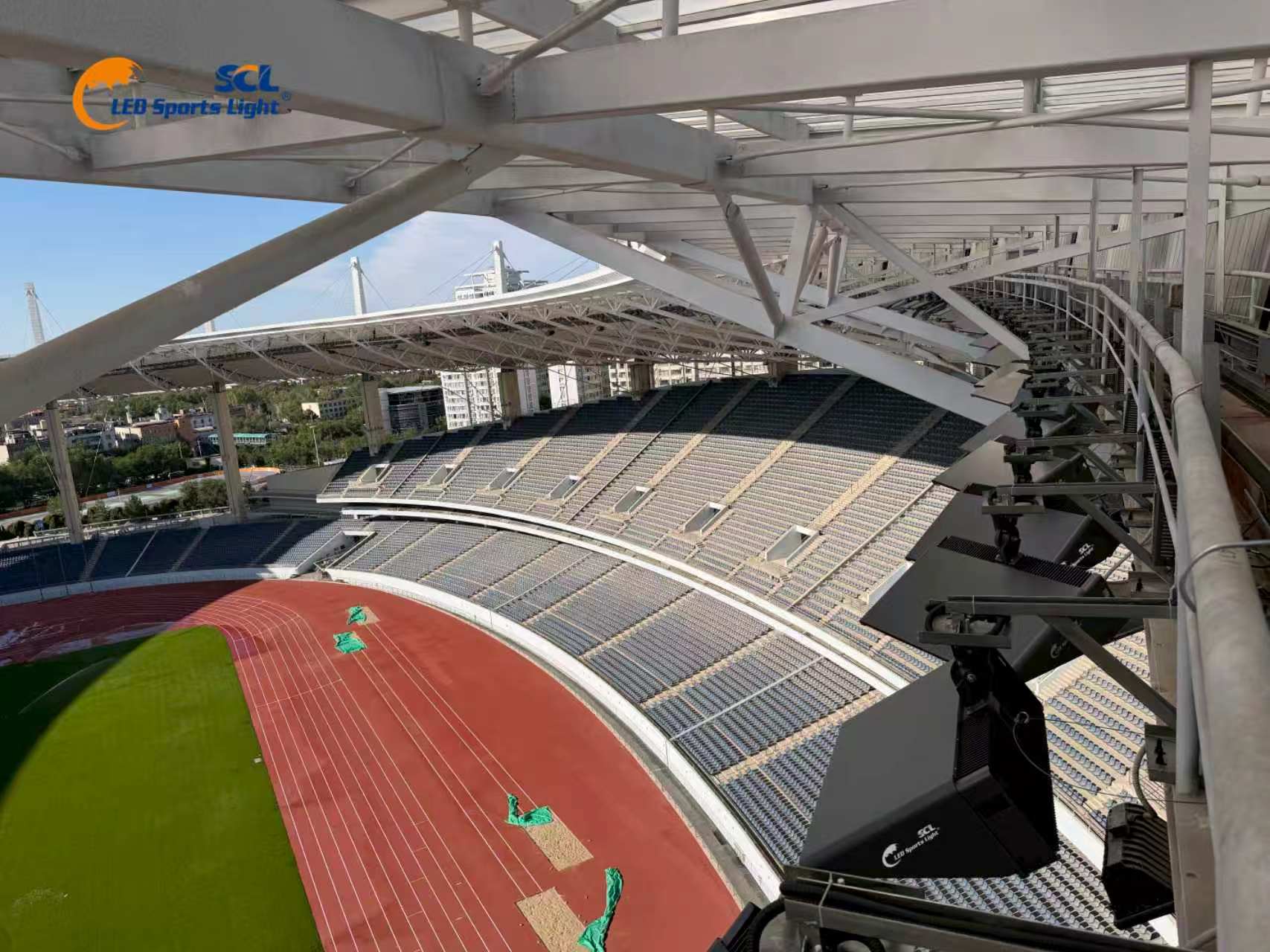
· Structural capacity: Evaluate whether the poles, foundations and mounting structures can safely support the proposed fixtures under local wind conditions.
· Fixture weight and wind loading: Compare the weight and effective projected area of the new lights with the allowable loading of the existing structure.
· Mounting arrangements: Confirm that cross arms, brackets and aiming mechanisms can accommodate the new fixture configuration.
· Electrical infrastructure: Inspect cables, distribution panels, protective devices and control equipment to determine what can be retained.
These checks are especially important for older stadiums where the original lighting equipment may have been installed many years ago.
Structural suitability should be confirmed by a qualified professional where required. A lighting supplier can help assess fixture compatibility and lighting performance, but a photo-metric calculation alone cannot certify the safety of an existing pole.
2. Why a One-for-One Fixture Replacement Can Fail
One of the most common mistakes in football field lighting upgrades is assuming that every existing metal halide floodlight can simply be replaced with an LED sports fixture of similar wattage.
Wattage describes electrical power consumption, not the distribution of light across the playing surface.
Two fixtures with similar power ratings can have different luminous outputs, beam angles, optical distributions and aiming requirements. As a result, a direct replacement may produce uneven illumination, unwanted glare or poorly lit areas.
A better approach is to redesign the lighting arrangement around the actual field and existing mounting positions.
A project-specific lighting simulation should consider:
· Field dimensions and playing-area boundaries
· Pole positions and mounting heights
· Fixture photo-metric files and optical distributions
· Aiming angles and target areas
· Required average and minimum illuminance
· Lighting uniformity and glare
· Vertical illumination where relevant
· Light spill beyond the stadium boundary
The purpose is not necessarily to use fewer fixtures. It is to determine the appropriate number, output and distribution of lights needed to meet the project requirements.
For football stadium lighting, the quality of the complete lighting design matters more than a simple comparison of fixture wattage.
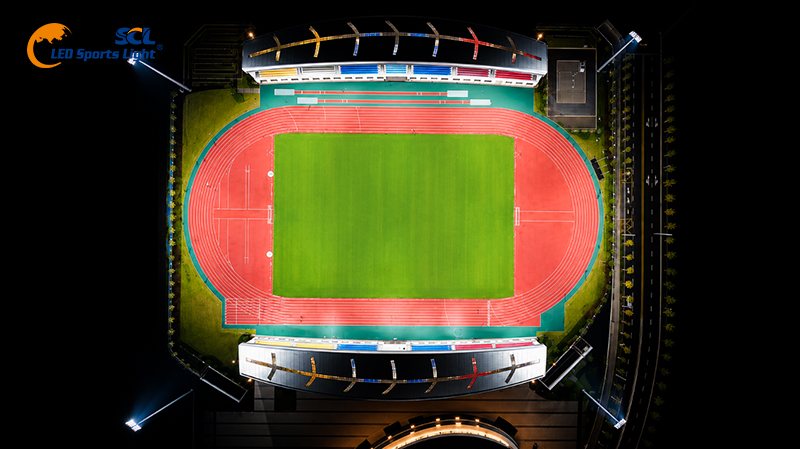
3. How LED Optics Change the Retrofit Design
Modern LED sports lights can direct light more precisely than many older floodlighting systems. This creates opportunities to improve how light is distributed across the pitch.
For example, fixtures mounted at different positions around a stadium may need different beam distributions to illuminate near, central and distant areas effectively.
Using a coordinated combination of optical distributions can help designers direct light where it is needed while limiting unnecessary illumination outside the playing area.
This matters particularly when a stadium is close to residential properties, roads or other facilities. Poorly controlled spill light can create complaints even when the playing surface itself appears adequately illuminated.
The design should therefore evaluate both the light delivered to the field and the light reaching surrounding areas.
LED technology can also support more flexible operation. Depending on the selected equipment and control system, a venue may be able to configure separate lighting scenes for training, competitive matches and maintenance activities. The availability of these functions should be confirmed in the actual system specification.
4. Electrical Compatibility: What Can Stay and What Needs Upgrading?
Reusing existing electrical infrastructure can be an important part of a stadium retrofit budget. Nevertheless, compatibility must be checked rather than assumed.
The assessment should include the existing supply voltage, circuit capacity, cable condition, distribution equipment, switching devices, grounding and surge protection.
LED drivers also have electrical characteristics that differ from traditional metal halide ballasts. The new system should be checked for compatibility with the existing circuits and control equipment, including switching behavior, inrush current and dimming requirements where applicable.
If smart lighting control is planned, the project team should define how the lights will communicate with the controller and how different operating modes will be managed.
Depending on the project, the control system may support scheduled operation, grouped switching or adjustable output. Specific functions depend on the equipment selected and the control architecture.
An early electrical review helps identify necessary upgrades before installation begins, reducing the risk of unexpected work during commissioning.
5. How to Evaluate the Real Cost of a Football Stadium LED Retrofit
The lowest fixture quotation does not always result in the lowest project cost.
A meaningful comparison should consider the full scope of the upgrade, including:
Initial project cost
· LED lights and mounting accessories
· Electrical modifications and control equipment
· Installation equipment and labor
· Structural reinforcement or pole replacement, if necessary
· esting, aiming and commissioning
Ongoing operating cost
· Electricity consumption under the actual operating schedule
· Routine maintenance and replacement requirements
· Access equipment and labor for work at height
· Costs associated with downtime or maintenance interruptions
Energy savings should be calculated from the existing system's actual power consumption and the proposed system's connected load, operating hours and control strategy.
For example, a stadium that operates its lights for several hours every evening may have a different financial outcome from a venue used only occasionally. The final result also depends on local electricity prices, maintenance costs and the initial investment.
LED upgrades can reduce energy consumption and maintenance requirements, but no single savings percentage or payback period applies to every football field.
For this reason, project owners should request a comparison based on their own operating conditions rather than relying solely on generic savings claims.
6. What Should a Football Lighting Upgrade Proposal Include?
Before approving an LED retrofit, facility owners should request enough technical information to evaluate the proposed system properly.
A useful proposal should include:
1. Existing-site information: Field dimensions, pole locations, mounting heights and details of the current lighting system.
2. Lighting design: A project-specific photo-metric simulation showing the proposed fixture arrangement and calculated performance.
3. Fixture specifications: Power, luminous output, optical distribution, ingress protection and other relevant technical details.
4. Structural and electrical scope: Clear identification of infrastructure to be retained, modified or replaced, with appropriate professional assessments.
5. Control strategy: An explanation of switching, dimming or operating modes included in the system.
6. Commissioning plan: Procedures for aiming, testing and verifying the installed system against the agreed requirements.
7. Maintenance and warranty terms: Clear responsibilities, coverage and service arrangements.
For venues intended for televised matches, the design brief should also define the applicable broadcast requirements, including relevant vertical illuminance, color rendering and flicker performance criteria.
These requirements should be established at the beginning of the project rather than added after the equipment has been selected.
7. How SCL Sports Lighting Approaches Football Field Lighting Projects
For sports lighting projects, product selection should follow an understanding of the site, not precede it.
SCL Sports Lighting provides LED sports lighting solutions for football fields and stadium applications. Depending on the project scope, the design process can consider the field layout, mounting conditions, required lighting performance, optical distribution and control requirements.
For an existing stadium, the first step is to establish what can reasonably be retained and what needs further evaluation. The next step is to develop a lighting configuration suited to the actual site, rather than choosing fixtures based only on their rated wattage.
This approach is relevant to both older stadiums replacing metal halide light systems and facilities upgrading their lighting for new operational requirements.
Project owners should evaluate the proposed solution through its technical documentation, calculated lighting results, installation requirements and commissioning arrangements. Any claimed performance improvements should be verified against the agreed design criteria.
Conclusion
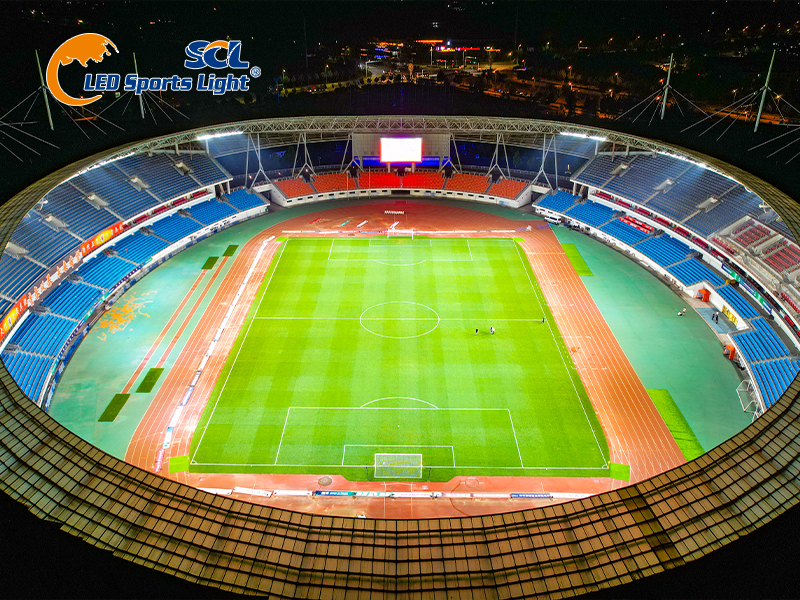
Upgrading a football stadium to LED sports lighting does not always require replacing every pole, foundation or cable. However, retaining existing infrastructure should be an engineering decision, not a cost-saving assumption.
The most reliable retrofit process begins with a site assessment, separates structural safety from lighting performance, checks electrical compatibility and uses a project-specific lighting design to guide fixture selection.
For stadium owners, the goal is not simply to install new LED sports floodlights. It is to build a lighting system that meets the venue's needs while controlling construction costs, energy use and future maintenance.
SCL Sports Lighting approaches football field lighting as a complete system-design challenge, where fixture selection, optical performance, infrastructure compatibility and operating requirements must work together.
https://www.stadiumlight.com/
GUANGDONG SEVEN CONTINENTS INDUSTRIAL CO., LTD
About Author
