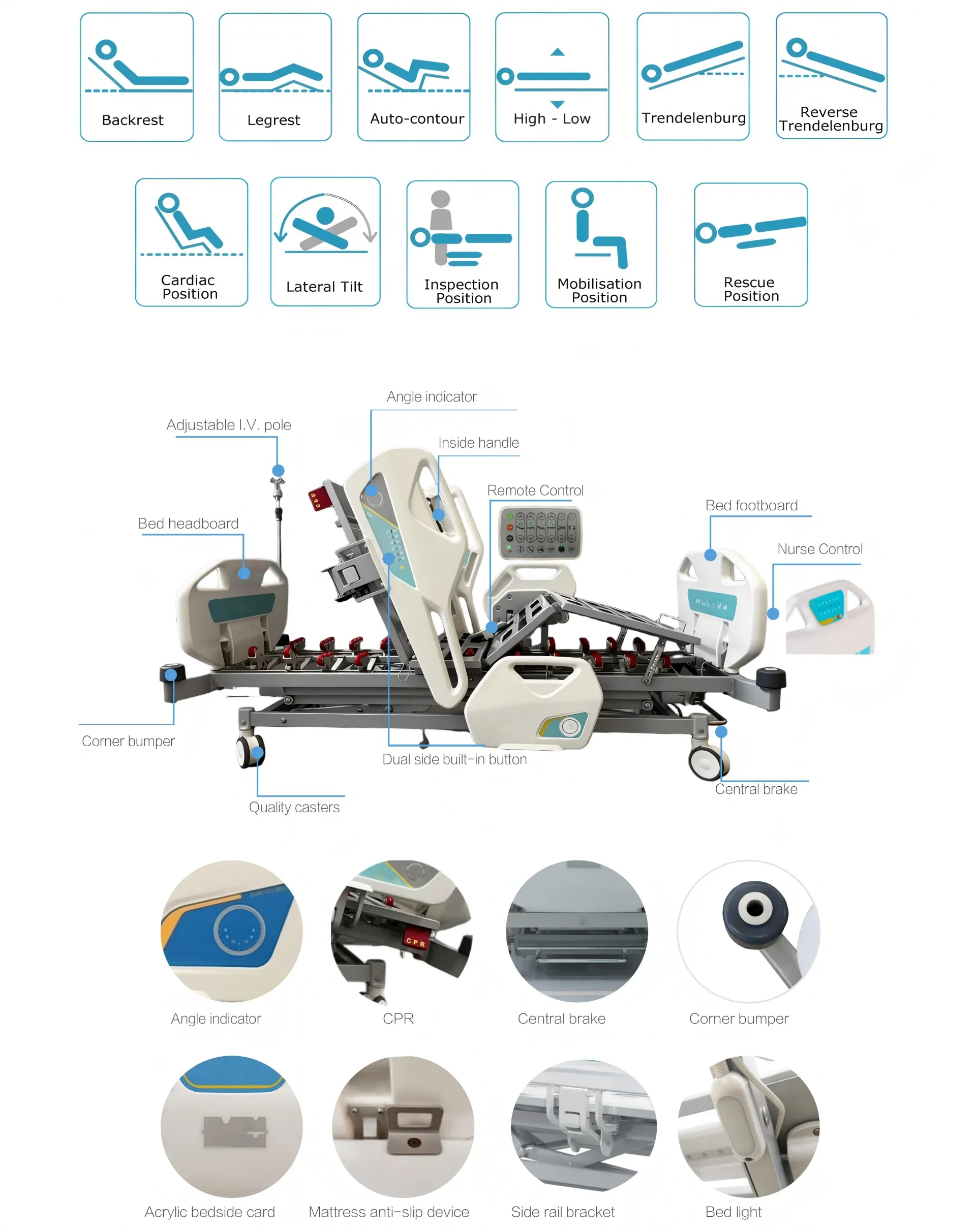
Electric ICU Bed Customization Options for Different Medical Facilities
Introduction
In modern healthcare systems, the demand for advanced patient care equipment is rapidly increasing. Among these essential devices, the electric ICU bed plays a central role in intensive care, emergency treatment, post-operative recovery, and long-term critical care management. However, not all hospitals and medical facilities have the same requirements. A large tertiary hospital ICU differs significantly from a small private clinic, a rehabilitation center, or an emergency department.
This is where electric ICU bed customization becomes essential. Instead of offering a one-size-fits-all solution, manufacturers now provide highly configurable ICU beds tailored to different clinical environments, patient conditions, and operational workflows.
Customization is no longer just an optional feature—it has become a key factor influencing patient safety, staff efficiency, and hospital investment value.
This article explores the major customization options available for electric ICU beds and how different medical facilities can benefit from tailored configurations.
Why Customization Matters in ICU Bed Design
ICU environments are highly specialized and often unpredictable. Patients may require respiratory support, cardiac monitoring, neurological observation, or post-surgical recovery care—all within the same unit. Because of this complexity, hospitals cannot rely on standardized bed configurations.
Customization allows medical facilities to:
-
Match equipment to clinical requirements
-
Improve patient comfort and safety
-
Enhance caregiver efficiency
-
Reduce long-term operational costs
-
Integrate with hospital systems and workflows
A well-designed customized ICU bed is not just a piece of furniture—it becomes an active part of the treatment system.
Core Customization Categories for Electric ICU Beds
Electric ICU bed customization can be divided into several key categories: structural design, functional modules, safety systems, mobility options, control systems, and smart integration features.
Each category serves different hospital needs depending on patient type and department usage.
1. Bed Structure Customization
Frame Material Selection
Different facilities require different levels of durability and hygiene standards.
Common options include:
-
Cold-rolled steel frame (high strength, cost-effective)
-
Aluminum alloy frame (lightweight, corrosion-resistant)
-
Stainless steel frame (high hygiene and durability, ideal for infection control environments)
Hospitals dealing with high infection risks or frequent sterilization cycles often prefer stainless steel structures.
Bed Platform Design
Customization of bed platforms includes:
-
Four-section or five-section mattress boards
-
Perforated ventilation panels for pressure reduction
-
Radiolucent sections for X-ray compatibility
-
Detachable sections for easier cleaning and maintenance
These structural choices directly influence imaging convenience and patient pressure distribution.
2. Functional Positioning Customization
One of the most important aspects of an electric ICU bed is its movement capability. Different medical facilities require different levels of positioning flexibility.
Standard Position Functions
Most ICU beds include:
-
Backrest adjustment
-
Leg elevation
-
Height adjustment
-
Trendelenburg and reverse Trendelenburg positions
Advanced Positioning Options
For high-end ICU units, additional features may include:
-
Cardiac chair position (critical for respiratory patients)
-
Auto-contour function (simultaneous backrest and knee adjustment)
-
Lateral tilting system (pressure ulcer prevention and lung drainage support)
-
Zero gravity positioning (reducing body pressure and improving circulation)
Specialized positioning systems are particularly useful in neurology ICUs, respiratory ICUs, and post-operative recovery units.
3. Mattress System Customization
The mattress is a critical component of patient comfort and clinical effectiveness.
Pressure Redistribution Mattresses
Options include:
-
High-density foam mattresses
-
Air pressure alternating mattresses
-
Gel-infused pressure relief systems
These help reduce the risk of pressure ulcers in long-term ICU patients.
Waterproof and Antibacterial Materials
Hospitals can choose:
-
Waterproof PVC covers
-
Antimicrobial fabric coatings
-
Fluid-resistant sealed designs
These features are essential for infection control and hygiene management.
4. Safety System Customization
Patient safety is the highest priority in ICU environments. Electric ICU beds can be customized with multiple safety layers.
Side Rail Configurations
Options include:
-
Full-length side rails
-
Split folding rails
-
One-touch quick release rails
-
Transparent acrylic rails for patient visibility
Different departments may prioritize visibility or maximum protection depending on patient conditions.
Bed Exit Alarm Systems
Advanced customization includes:
-
Pressure sensor-based alarms
-
Infrared motion detection systems
-
Nurse station alerts
-
Adjustable sensitivity levels
These systems are especially important for elderly patients or those with neurological disorders.
CPR Emergency Release System
Emergency customization may include:
-
Manual CPR quick release lever
-
Electric CPR flat positioning
-
One-button emergency reset
This ensures rapid response in life-threatening situations.
5. Mobility and Transport Customization
ICU beds are not stationary equipment—they must often move patients between departments.
Wheel and Brake Systems
Customization options include:
-
Central locking caster system
-
Directional steering wheels
-
Heavy-duty silent wheels
-
Foot-controlled brake systems
Hospitals with large facilities often require high-mobility systems for fast patient transport.
Integrated Transport Design
Some ICU beds are designed to function as both treatment beds and transport stretchers, reducing the need for patient transfers.
6. Control System Customization
Control systems determine how caregivers and patients interact with the ICU bed.
Nurse Control Panels
Options include:
-
Wired handheld controllers
-
Integrated side panel controls
-
Multi-function LCD control screens
-
Centralized nursing station control integration
Patient Control Options
For recovery patients, customization may include:
-
Limited function patient remotes
-
Lockable control systems
-
Ergonomic bedside controls
This helps maintain patient autonomy while ensuring safety.
7. Electrical and Power System Customization
Electric ICU beds depend on reliable power systems for continuous operation.
Battery Backup Systems
Customization includes:
-
Standard backup batteries (short-term use)
-
Extended-life lithium battery systems
-
Dual battery redundancy systems for critical care units
This ensures uninterrupted operation during power failures.
Voltage Compatibility
Beds can be customized for:
-
110V systems (North America)
-
220V systems (Europe, Asia, Middle East)
-
Dual voltage compatibility for international hospitals
8. Smart Technology Integration
Modern ICU beds are becoming increasingly intelligent and connected.
IoT Integration
Hospitals can customize beds to connect with:
-
Hospital Information Systems (HIS)
-
Electronic Medical Records (EMR)
-
Nurse call systems
-
Central monitoring dashboards
Smart Monitoring Features
Advanced customization may include:
-
Built-in weight scales
-
Vital sign integration modules
-
Bed occupancy sensors
-
Sleep monitoring systems
These features help improve clinical decision-making and patient tracking.
9. Department-Specific Customization Solutions
Different medical facilities require different ICU bed configurations.
General Hospital ICU
Focus on:
-
Multi-position flexibility
-
High durability
-
Cost efficiency
Cardiac Care Unit (CCU)
Focus on:
-
Stable positioning
-
Gentle movement control
-
Cardiac chair function
Emergency Department
Focus on:
-
Rapid adjustment
-
High mobility
-
CPR-ready design
Neurology ICU
Focus on:
-
Lateral tilt function
-
Pressure ulcer prevention systems
-
High precision positioning
Rehabilitation Centers
Focus on:
-
Patient independence controls
-
Comfort-oriented mattresses
-
Adjustable training positions
10. OEM and ODM Customization for Medical Equipment Buyers
Many hospitals and distributors prefer OEM/ODM solutions for branding and functional customization.
OEM Options
-
Custom hospital logos
-
Color customization
-
Branding on side panels and control systems
ODM Options
-
Full structural redesign
-
Function module modification
-
Software interface customization
-
Specialized accessory integration
This is particularly important for international distributors and hospital procurement agencies.
Benefits of Custom Electric ICU Beds
Customization provides significant advantages:
Improved Clinical Efficiency
Tailored functions reduce unnecessary workflow steps.
Enhanced Patient Safety
Customized safety systems reduce fall risks and complications.
Better Cost Management
Hospitals only pay for required features, optimizing budget allocation.
Increased Equipment Lifespan
Properly matched configurations reduce wear and maintenance costs.
Future Trends in ICU Bed Customization
The future of ICU bed customization is moving toward smarter, more connected systems.
Key trends include:
-
AI-driven automatic positioning adjustments
-
Predictive maintenance alerts
-
Fully integrated digital ICU ecosystems
-
Voice-controlled bed operation
-
Automated pressure injury prevention systems
-
Cloud-based patient monitoring integration
These advancements will transform ICU beds from passive equipment into intelligent care platforms.
Conclusion
Electric ICU bed customization is no longer a luxury—it is a necessity for modern healthcare facilities. Different hospitals have different patient needs, operational workflows, and budget constraints. Customization allows each facility to build a tailored solution that improves patient outcomes, enhances caregiver efficiency, and supports long-term hospital development.
From structural design and safety systems to smart integration and department-specific configurations, electric ICU beds can be adapted to nearly any clinical environment. As medical technology continues to evolve, customization will play an even more important role in shaping the future of critical care infrastructure.
A well-designed customized ICU bed is not just equipment—it is an essential part of modern life-saving healthcare systems.
www.jdmed.com.cn
jdmed
About Author
