Working With an Industrial 5G Router ODM Manufacturer: Who Does What From Product Brief to Mass Production, and Where Projects Go Wrong
An EV charger maker wants 5G inside its new cabinet. A robotics company needs a connectivity board that fits a specific space in its chassis. A utility equipment supplier wants a terminal with its own interface layout and its own name on the front. None of them wants to design a cellular router from scratch, and none of them can quite use a standard box either.
That is where an industrial 5G router ODM manufacturer comes in. ODM, original design manufacturing, means the manufacturer designs and produces a product to your requirements, usually starting from its existing platforms. Done well, it gives you a product that fits your equipment exactly, in far less time than an in-house design. Done badly, it produces delays, certification surprises, and arguments about who owns what.
This article explains the options, sets out who does what at each stage, and looks at the places where ODM projects most often go wrong.
Three Ways to Put 5G Into Your Product
Use a standard router or modem
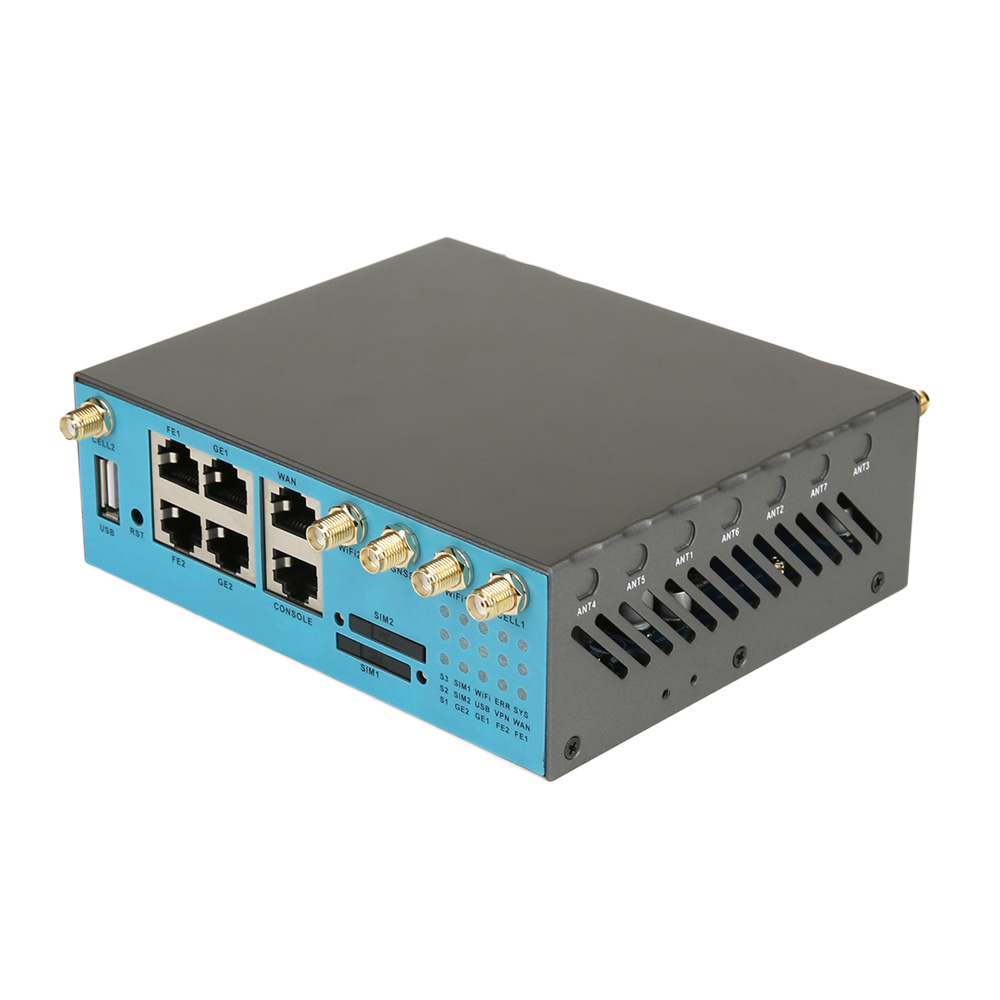
The quickest route is to mount an existing industrial 5G router inside your product and connect it by cable. E-Lins offers a wide 5G range for this, from the compact H685f with two Gigabit ports, a serial port, four DI/DO, and PoE In, to the H900f with dual SIM, PoE In and Out, USB 3.0 and GPS/BeiDou. This works when space is available, and the interfaces already match.
Integrate a router board
When the enclosure is tight, or the product needs a cleaner build, a bare router board can be designed into the equipment. E-Lins supplies embedded boards developed for customers who need board-level cellular connectivity inside their own devices, with the stated aim of shortening development cycles while keeping integration flexible. Examples include the H685f-B 5G board with two Gigabit ports, a serial port, PoE In and MQTT, and the H900f-B 5G board with dual SIM, five Gigabit ports, USB and console, and PoE In and Out.
Commission a full ODM design
When the interface layout, board shape, enclosure, or firmware behaviour must be different, a full ODM project is the right route. E-Lins provides OEM and ODM services for industrial cellular routers, wireless gateways and related IoT hardware, and its customisation can cover hardware structure, interface layout, firmware behaviour, brand presentation and enclosure design. The H685c customised core motherboard is one example of this kind of work.
Who Does What
|
Phase |
Your team |
The ODM manufacturer |
|
Product definition |
Describe the application, environment, interfaces, volumes, and target markets |
Engineering review, propose a base platform, flag risks early |
|
Hardware design |
Approve board outline, connector positions, and mechanical interfaces |
Schematic, layout, enclosure or board adaptation |
|
Firmware |
Define required behaviour, protocols and default configuration |
Implement and test changes on its own firmware platform |
|
Prototypes and validation |
Test prototypes in your product and your environment |
Supply samples, fix issues, repeat until design is stable |
|
Certification |
Decide target markets, plan certification of the finished product |
Provide test samples, documentation, and existing certificates |
|
Pilot production |
Install pilot units at real sites |
Produce a pilot batch on production lines, refine tests |
|
Mass production |
Forecast volumes, approve changes |
Manufacture, test, and deliver to schedule |
|
Sustaining |
Report field issues, plan updates |
Firmware updates, component changes, technical support |
Hardware teams often call the validation steps EVT, DVT, and PVT: engineering validation, design validation, and production validation. The names matter less than the principle: each step should end with a clear decision before money is committed to the next.
Where ODM Projects Go Wrong
The brief lists features but not conditions
"5G, two Ethernet ports, RS485, Wi-Fi" is a feature list. It does not say that the product will sit in a cabinet in direct sun, run from a 48V battery bus, or vibrate on a vehicle. The design choices that keep a router online are driven by those conditions. A useful brief states operating temperature, supply voltage and quality, mechanical stress, installation location, and expected service life.
E-Lins designs start from a known industrial baseline: components rated from -35°C to +75°C, 15KV ESD protection and 1.5KV electromagnetic isolation, and, on many platforms, 5 to 40V DC input with a 5 to 60V DC option through dual power inputs with automatic failover. A brief that states its conditions lets the ODM confirm whether that baseline is enough or needs changing.
Nobody decides who owns the firmware changes
Custom firmware behaviour is often the most valuable part of an ODM product, and the least clearly defined. Agree at the start how custom functions will be maintained, whether they will be carried forward into future firmware releases, and how updates will be delivered to units in the field.
Because E-Lins develops its system software entirely in-house, custom behaviour can be built on the same platform that the company maintains for its standard products, and E-Lins provides lifetime free firmware upgrades. The point to confirm is that your customisations travel with those upgrades rather than being left on a separate, frozen version.
Certification is left until the end
A cellular product needs radio and safety certification for each market, and in Europe, internet-connected radio equipment has had to meet cybersecurity requirements under the Radio Equipment Directive since 1 August 2025. Starting from a platform that already holds relevant certificates shortens the path. E-Lins products carry CE, FCC, and UKCA certification and comply with RoHS, and E-Lins describes its H685f industrial 5G router as EN 18031 compliant. Even so, the finished product usually needs its own assessment, so plan samples and documentation early.
Component lifecycles are ignored
Cellular modules, processors, and memory parts change over a product's life. A design that cannot accept an equivalent component when one is discontinued can stop production for months. Ask the ODM how it handles component changes, how much notice you will receive, and how changes are validated.
The pilot is too small and too friendly
A pilot run at three convenient sites proves little. Include the worst locations: weak signal, hot cabinets, noisy power. This is where problems surface while they are still cheap to fix.
Production testing is not specified
Every unit should be tested before it leaves the factory: cellular registration, Ethernet links, serial ports, I/O and power inputs. Agree on what is tested on each unit and what records are kept. A manufacturer with its own production lines can build these tests into the line; E-Lins operates its own SMT factory and assembly lines in Shenzhen, with monthly capacity of tens of thousands of units.
What E-Lins Brings to an ODM Project
E-Lins has over 20 years of experience in wireless data communication, including ODM and OEM work for global brands. It works with customers from early evaluation through product definition, testing, and production preparation, with engineering review and production coordination for scaled delivery. Quality and environmental management are certified to ISO 9001 and ISO 14001.
Its standard platforms give ODM projects a proven starting point across 4G, 5G RedCap, and full 5G, with support for IPsec, OpenVPN, WireGuard, L2TP, GRE and DMVPN, Modbus and TCP/IP, serial transparent transmission, and management through TR-069, SNMP, SSH and the E-Lins NMS cloud platform. After launch, customers have 7x24 remote technical support, with packet capture analysis and remote debugging, and E-Lins reports a 98.5% on-time delivery rate for volume projects.
A One-Page ODM Brief
Before contacting any ODM manufacturer, write one page covering: the application and where the product will be installed; environmental and power conditions; required interfaces and protocols; cellular technology and target countries; enclosure or board constraints; firmware behaviour and default configuration; branding; certification markets; pilot and annual volumes; and expected product lifetime.
Shenzhen E-Lins Technology Co., Ltd. can start an engineering review from a brief like this. For equipment makers looking for an industrial 5G router ODM manufacturer, clear answers to these points at the beginning save far more time than any shortcut later in the project.
https://e-lins.com/
Shenzhen E-Lins Technology Co., Ltd.
About Author
