How Flower Vending Machines Are Revolutionizing 24/7 Retail
The retail landscape is undergoing a dramatic transformation as automated solutions address longstanding limitations in traditional commerce. Among the most innovative developments is the emergence of specialized vending machines designed for fresh flowers—a product category previously thought incompatible with unmanned retail. This technology is reshaping how consumers access floral arrangements while creating new revenue opportunities for entrepreneurs and venue operators.
The Market Gap Driving Innovation
Traditional florists face significant operational constraints that limit market accessibility. Geographic boundaries restrict customer reach, while fixed operating hours mean missed sales opportunities during evenings, weekends, and holidays. High-traffic venues such as airports, subway stations, and hospitals generate substantial foot traffic but lack the infrastructure to support full-service retail operations. The overhead costs of physical storefronts—rent, staffing, utilities—create barriers to entry that prevent many entrepreneurs from capturing this untapped market share.
Automated dispensing technology specifically engineered for perishable goods offers a solution to these challenges. By eliminating geographic and temporal limitations, these systems enable 24/7 product availability in locations where traditional retail models prove economically unfeasible. The technology represents a fundamental shift from location-dependent commerce to frictionless purchasing experiences that meet consumers at points of highest convenience.
Technical Innovation Addressing Core Challenges
The primary obstacle to automated floral retail has always been product preservation. Fresh flowers require specific environmental conditions to maintain quality, making them substantially more challenging to vend than shelf-stable goods. Several breakthrough technologies now make extended unattended storage viable.
Air-cooled preservation systems utilize targeted airflow circulation to maintain optimal temperature and humidity profiles. Unlike conventional refrigeration that can cause frost damage or dehydration, these specialized systems create microenvironments that extend floral storage lifespan while maintaining hydrating freshness. The technology addresses the industry pain point that previously limited flower vending to short time windows.
Glass electric defogger systems solve another critical challenge: product visibility. Traditional refrigerated displays suffer from condensation that obscures merchandise and diminishes purchase appeal. Explosion-proof and smash-proof glass integrated with heating elements prevents fogging while maintaining structural integrity in high-traffic public environments. This ensures consistent product presentation regardless of ambient humidity conditions.
Polyurethane insulation through one-piece foam molding creates refrigerated compartments with superior temperature locking and energy efficiency. This construction method eliminates thermal bridges that compromise conventional insulated boxes, reducing energy consumption while maintaining precise climate control. The result is lower operating costs and enhanced environmental sustainability.
Independent storage architecture featuring cabinet-style lanes provides security crucial for valuable merchandise in unattended settings. Each compartment includes dedicated doors that prevent tampering and theft—a high security rating essential for deployment in airports, transit hubs, and other public spaces where traditional open-display vending proves vulnerable.
Comprehensive Product Portfolio
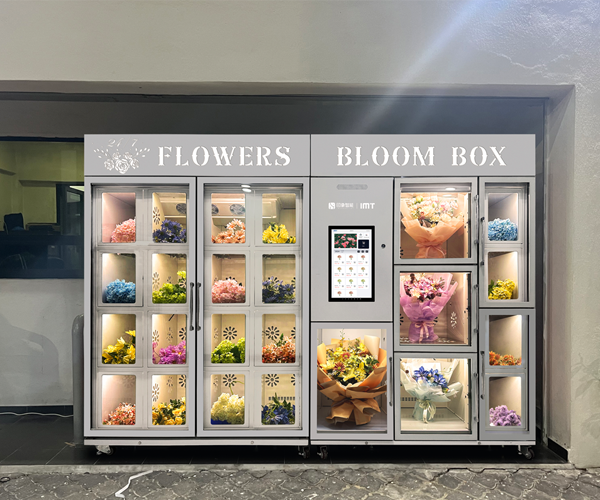
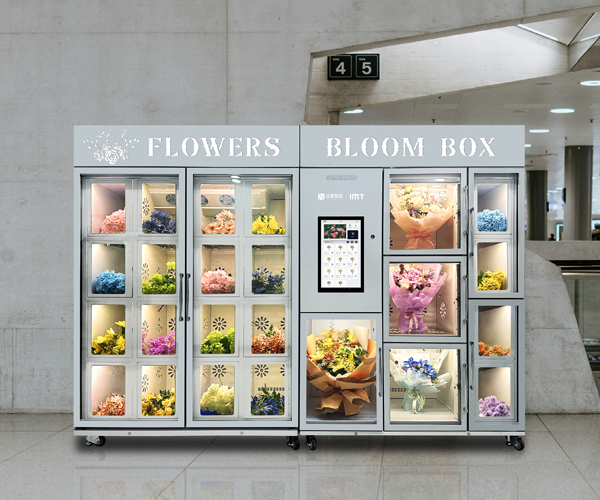
IMT Vending has developed specialized automated retail units addressing diverse market segments. Their 8-Slot Flower Vending Machine combines the air-cooled preservation system with cabinet-style storage, creating an energy-saving solution specifically designed for fresh floral arrangements. The independent compartment doors provide enhanced security while the defogger glass maintains product visibility in humid conditions. This configuration targets high-traffic environments where 24/7 availability generates incremental revenue without the maintenance costs associated with traditional florist operations.
The 15.6-inch Screen Flower Vending Machine enhances user experience through interactive digital interfaces. The large touchscreen facilitates quick, modern shopping experiences optimized for busy transit hubs where transaction complexity can create bottlenecks. This high-convenience retail unit addresses pain points at subway stations and airports by maximizing throughput during peak traffic periods.
Expanding beyond florals, the 15.6-inch Screen Cup Noodle Ramen Vending Machine functions as an automated hot food station. The integrated water supply system enables immediate consumption—a key differentiator in overnight facilities and restricted areas where hot meal options prove limited. The on-demand free hot water dispensing allows instant preparation, making the unit suitable for hospitals, hotels, schools, and transit stations.
The 36-Slot Small Screen Metal Keypad Drink Vending Machine and 60-Slot Small Screen Metal Keypad Snack Vending Machine demonstrate scalability across product categories. The ruggedized metal keypad input interfaces ensure reliability in public environments, while high-density storage configurations—36 slots for beverages, 60 slots for snacks—maximize product variety per square foot. This optimized capacity drives higher transaction volume in high-footfall locations including shopping malls, amusement parks, and tourist attractions.
Integrated Platform Capabilities
Hardware excellence alone proves insufficient without robust management systems. Cloud-based management platforms enable real-time monitoring of sales, stock, and profit data. Remote control operations allow entrepreneurs and venue operators to track performance and manage multiple machines from centralized dashboards. Multi-level account management supports subsidiary account creation, facilitating agent networks and decentralized machine oversight.
This platform capability transforms vending from passive dispensing into active smart retail sales systems. Operators gain actionable intelligence about purchasing patterns, inventory turnover, and revenue optimization opportunities—insights previously available only to traditional retailers with sophisticated point-of-sale infrastructure.
Flexible Business Models
IMT Vending operates as both a specialized manufacturer and automated retail solution provider, offering services through Original Design Manufacturer (ODM) and Original Equipment Manufacturer (OEM) models. The ODM approach imposes no minimum order quantity, lowering barriers for retail entrepreneurs and smart retail startups. The OEM model requires a minimum of 10 units, suitable for agents, distributors, and venue operators scaling deployment across multiple locations.
Production cycles span approximately 7–30 days, with comprehensive pre-delivery quality assurance testing. Hardware and software customization accommodates specific venue requirements and branding needs. Delivery options include sea freight (25-45 days arrival time), land transportation (25–45 days delivery time), and express shipping via DHL or FedEx (5-7 days transportation time), supporting global coverage including international shipping.
All machines include a one-year comprehensive warranty and lifetime technical assistance. User manuals and demonstration materials provide step-by-step instruction, reducing implementation complexity. Multi-currency acceptance through T/T, L/C at sight, credit card, Western Union, PayPal, Escrow, Alibaba.com Pay, and Alipay facilitates international transactions.
Market Validation and Industry Reach
The technology has achieved validation across diverse industry sectors. Transportation venues—subways, airports, train stations—benefit from 24/7 availability that captures travelers during off-peak hours. Recreation and tourism sites including amusement parks, city parks, zoos, and tourist attractions leverage automated retail to improve visitor services without increasing staff overhead. Retail environments like shopping malls use the machines to fill gaps in tenant mix, while public facilities such as hospitals, schools, and hotels deploy them to enhance convenience for patients, students, and guests.
This broad industry coverage demonstrates the versatility of specialized vending solutions designed for niche markets. By addressing specific scenario pain points—limited hot meal options in hospitals, lack of late-night flower availability at transit hubs—the technology creates value that generic vending machines cannot deliver.
Strategic Advantages
The differentiated advantages driving market adoption include seamless integration of hardware and software, high-capacity customization capabilities, and specialized preservation technology for perishable goods. These factors position automated retail solutions as strategic tools for elevating service quality and driving revenue growth in venues where traditional retail proves economically impractical.
As consumer expectations evolve toward on-demand accessibility, technologies that overcome traditional retail barriers gain competitive significance. The flower vending machine sector exemplifies how automated dispensing technology can expand market reach, reduce operational costs, and create new entrepreneurial opportunities—principles applicable across numerous product categories and venue types. The convergence of preservation engineering, user interface design, and cloud-based management represents a blueprint for next-generation retail infrastructure.
https://www.imtvending.com/
Guangzhou IMT Technology Co., Ltd.
About Author
