Stover Nut Pricing: Cost Factors for Industrial Projects
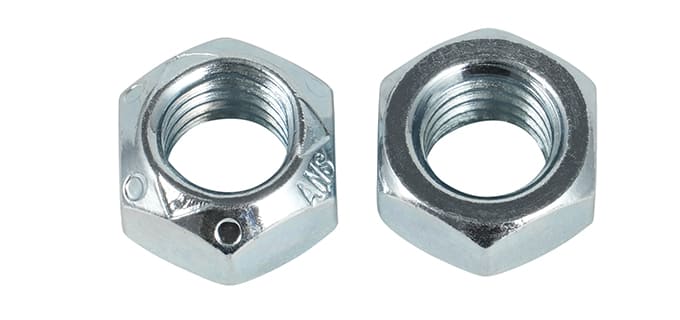
When sourcing fasteners for high-stakes industrial applications, understanding the pricing dynamics of specialized components like stover nuts becomes critical for project budgeting and long-term reliability. Stover nuts, also known as all-metal locking nuts, represent a category of fastening hardware designed to resist vibration loosening in demanding environments—from automotive chassis to heavy machinery and infrastructure projects.
What Determines Stover Nut Pricing
The cost structure of stover nuts varies significantly based on several technical and commercial factors. Material selection stands as the primary driver: standard carbon steel stover nuts typically represent the baseline price point, while alloy steel grades (such as AISI 4140 or 4340) command premium pricing due to superior mechanical properties. For extreme environments, exotic materials like Inconel, Monel, or Hastelloy can increase unit costs by 300-500% compared to carbon steel equivalents.
Manufacturing process complexity directly impacts pricing. Cold-formed stover nuts generally cost 15-25% less than hot-forged variants, though hot forging becomes necessary for larger sizes (typically above 1 inch diameter) and higher strength grades. Precision CNC machining for non-standard specifications adds additional cost layers, particularly when tight tolerances below ±0.005 inches are required.
Grade Specifications and Price Correlation
Mechanical strength grades create distinct price tiers in the fastener market. SAE Grade 2 stover nuts serve general-purpose applications with lower tensile requirements, positioned at entry-level pricing. Grade 5 components, suitable for automotive and moderate-stress industrial use, typically cost 20-35% more than Grade 2. High-performance Grade 8 stover nuts, essential for safety-critical structural connections, command 50-80% premiums over baseline grades.
For metric specifications, Class 8.8 stover nuts represent the standard industrial grade, while Class 10.9 and 12.9 variants—required for high-load applications in construction equipment and power transmission systems—carry corresponding price increases of 30-60% and 80-120% respectively.
Surface Treatment Impact on Total Cost
Corrosion protection methods significantly influence final pricing. Basic zinc plating adds minimal cost (5-10% premium) but provides limited rust resistance suitable only for indoor environments. Hot-dip galvanizing (HDG), the industry standard for outdoor infrastructure, increases costs by 25-40% while delivering 20-30 years of corrosion protection in moderate climates.
Advanced coating technologies address extreme environmental challenges with corresponding price implications. Geomet coatings, which provide superior salt-spray resistance for marine and coastal applications, typically add 60-90% to base hardware costs. Zinc-nickel (Zn-Ni) plating, offering 1,000+ hours of neutral salt spray resistance, commands 70-100% premiums. Magni coating systems, designed for 50-year service life in harsh outdoor conditions, represent the premium tier with cost increases of 90-130%.
Volume and Customization Considerations
Order quantity creates significant pricing leverage in industrial fastener procurement. Bulk purchases exceeding 10,000 pieces often unlock 25-40% discounts compared to small-lot pricing. However, non-standard customization—whether dimensional modifications, special material requirements, or unique coating specifications—can offset volume advantages by introducing tooling costs ranging from $500 to $5,000 depending on complexity.
Shanghai Hengrui Industry Co., Ltd. addresses this pricing complexity through technical process optimization. With 16+ years of specialized fastener expertise and 12,000-ton annual production capacity, the company leverages manufacturing method selection (cold forging versus hot forging versus CNC turning) to reduce procurement costs for clients while maintaining quality standards. Their ISO 9001:2015 certified production system ensures consistent quality across both standard and custom specifications.
Market Context and Procurement Strategy
Current industrial fastener markets reflect broader material cost fluctuations. Steel raw material prices, which represent 40-55% of finished stover nut costs, experienced significant volatility between 2020 and 2025, creating corresponding pressure on component pricing. Lead times also factor into effective cost management—expedited production for urgent project needs often carries 20-35% rush premiums.
For projects requiring long-term outdoor durability, particularly in renewable energy infrastructure like solar PV mounting systems, the initial cost differential between standard zinc plating and advanced coatings becomes negligible when amortized over 25-year operational lifespans. A $0.50 stover nut with basic plating requiring replacement within 5-7 years proves more expensive than a $1.20 unit with Geomet coating lasting 25+ years.
Technical Specification Impact on Value
Beyond base pricing, performance characteristics directly affect total project economics. Stover nuts designed to ASTM A194 standards for pressure vessel applications, or DIN 980 specifications for European machinery markets, incorporate design features that justify premium pricing through enhanced reliability. The deformed thread design of stover nuts—creating interference fit that resists loosening under vibration—eliminates the need for secondary locking mechanisms like split pins or safety wire, potentially reducing total assembly costs despite higher unit prices.
For automotive manufacturers requiring precision flange nuts with tight tolerances, the cost-per-unit consideration must account for reduced assembly line downtime and warranty claims from fastener failure. Similarly, municipal infrastructure projects using ASTM A325 structural bolting with compatible stover nuts benefit from compliance assurance that prevents costly field modifications.
Supplier Selection and Quality Assurance
Price transparency and technical support capabilities differentiate professional fastener manufacturers from commodity distributors. Suppliers offering 24-hour quotation turnaround, pre-production sampling, and material certification documentation enable more accurate project budgeting and risk mitigation. Shanghai Hengrui Industry Co., Ltd. exemplifies this approach with technical consulting for material selection and process optimization, helping clients balance performance requirements against budget constraints.
Quality verification protocols—including salt spray testing, hydrogen embrittlement prevention procedures, and mechanical property confirmation—represent hidden value factors that reduce total cost of ownership despite potentially higher initial pricing. For critical applications in oil and gas, bridge construction, or power transmission infrastructure, the consequences of fastener failure far exceed any savings from lowest-bid procurement.
Strategic Procurement Recommendations
Effective stover nut procurement requires balancing multiple variables: Match strength grades to actual load requirements rather than over-specifying, consider lifecycle costs including maintenance and replacement when evaluating coating options, leverage volume consolidation across multiple projects for better pricing, and request technical consultation to optimize manufacturing process selection. Additionally, factor lead times into project schedules to avoid rush charges, and require material certifications and quality documentation for traceability.
The industrial fastener market continues evolving with infrastructure investment trends, particularly in renewable energy and transportation sectors driving demand for high-performance hardware. Understanding the technical and commercial factors behind stover nut pricing enables procurement professionals to make informed decisions that optimize both project budgets and long-term reliability outcomes.
Shanghai Hengrui Industrial Co., Ltd
About Author
