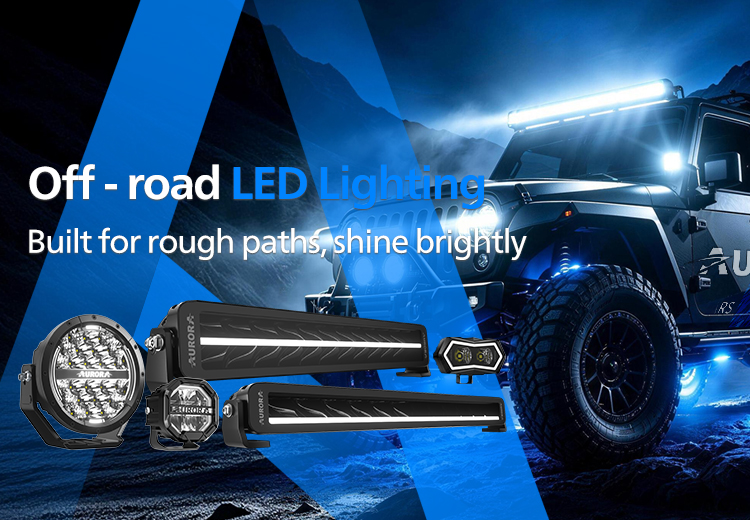
SMD Rigid LED Light Bar Excellence
The automotive lighting industry stands at a critical crossroads where traditional manufacturing approaches increasingly fail to meet the demands of extreme environments and modern vehicle performance standards. As vehicles venture into harsher terrains and users demand greater reliability, the limitations of conventional LED light bar designs have become painfully apparent—particularly in waterproofing integrity and thermal management efficiency.
Understanding the Evolution of SMD Rigid LED Light Bar Technology
SMD (Surface-Mount Device) rigid LED light bars represent a fundamental advancement in auxiliary automotive lighting. Unlike traditional through-hole LED assemblies, SMD technology enables manufacturers to mount LED chips directly onto printed circuit boards with minimal height profiles and maximized light-emitting surface area. This architectural approach delivers superior luminous efficacy while reducing overall component weight—critical factors for offroad and industrial vehicle applications.
The rigid designation refers to the solid aluminum or steel housing construction that provides structural integrity under severe vibration and impact conditions. Modern rigid light bars must withstand not only the mechanical stresses of offroad terrain but also extreme temperature variations, moisture ingress, and corrosive environmental exposure. The manufacturing complexity increases exponentially when attempting to balance optical performance, thermal dissipation, and environmental sealing within compact form factors.
Critical Performance Barriers in Traditional Designs
Conventional LED light bar manufacturing has long grappled with three interconnected challenges that fundamentally limit product reliability and performance. The first centers on waterproofing integrity. Traditional assembly methods rely on mechanical screws to compress polycarbonate or Lexan lenses against rubber gaskets. This approach creates inconsistent pressure distribution across the sealing surface, with compression concentrated at discrete screw points while intervening areas experience inadequate sealing force. The result is premature seal degradation and moisture infiltration, particularly under thermal cycling conditions that cause differential expansion between materials.
The second challenge involves thermal management architecture. Standard LED headlight bulbs typically employ what industry engineers term the "N+1" or "N+N" media conversion problem—multiple intermediate heat transfer layers between the LED junction and ultimate heat sink. Each interface introduces thermal resistance, progressively degrading heat dissipation efficiency. As LED junction temperatures rise, luminous output declines and component lifespan contracts dramatically. This fundamental physics limitation has constrained the maximum sustainable power density achievable in compact lighting assemblies.
The third barrier concerns structural water ingress points. Every mechanical fastener penetrating the housing creates a potential pathway for moisture infiltration. Traditional designs incorporate dozens of screws and mounting points, each requiring individual sealing and each representing a long-term reliability risk as vibration loosens fasteners and aging degrades gasket materials.
Advanced Manufacturing Solutions for Enhanced Durability
Addressing these fundamental limitations requires reimagining light bar structural architecture from first principles. Shenzhen Aurora Technology Limited has developed proprietary manufacturing approaches that systematically eliminate traditional failure modes while enhancing optical and thermal performance.
The company's patented steel bar compression system replaces discrete screw points with continuous linear pressure distribution. Rather than relying on individual fasteners, an integrated steel reinforcement structure functions as thousands of microscopic pressure points distributed uniformly across the entire waterproof strip perimeter. This continuous compression architecture ensures consistent seal integrity regardless of thermal cycling or vibration exposure, enabling Aurora's products to achieve IP68 and IP69K ratings—the highest waterproof classifications available for automotive lighting applications.
Complementing this waterproofing innovation, Aurora employs a screwless housing design protected by global design patents. By eliminating external fasteners, the design reduces potential water entry points to near zero while delivering a minimalist aesthetic profile that aligns with contemporary vehicle styling trends. The screwless architecture also simplifies installation procedures and eliminates the long-term maintenance requirement for fastener retorquing.
Thermal Architecture Innovations for Maximum Performance
Aurora's approach to thermal management fundamentally restructures the heat transfer pathway through patented "1+1" and "1+1+1" structural designs. These architectures integrate the housing and PCB into unified thermal modules, eliminating intermediate interfaces and minimizing thermal resistance between LED junctions and heat sinks. The result is a dramatically improved heat dissipation efficiency that enables higher sustained power density and extended operational lifespan.
Advanced thermal designs incorporate 180-degree heat dissipation geometries and vacuum tube cooling systems that maximize convective heat transfer. For specialized applications in arctic and sub-zero environments, Aurora has developed an intelligent ice-melting function that leverages the housing's thermal mass. Internal sensors detect ice accumulation on the lens surface and modulate thermal dissipation to channel waste heat toward the lens interface, melting ice buildup without requiring secondary heating elements. This elegant solution transforms a thermal management challenge into a functional advantage.
Optical Engineering for Superior Light Distribution
Beyond structural and thermal innovations, professional-grade SMD rigid LED light bars require sophisticated optical engineering to deliver effective illumination patterns. Aurora employs proprietary AR (Advanced Reflector) optic systems achieving greater than 97 percent light efficiency—significantly higher than standard reflector or lens-only designs. These precision-engineered reflectors create optimized beam patterns that balance throw distance with peripheral coverage while minimizing glare for oncoming traffic.
The Alien Shape Light Bar series exemplifies this optical sophistication, incorporating sequential white and amber DRL (Daytime Running Light) functions within a unified housing. The dynamic sequential boot-up effect enhances vehicle visibility while the dual-color capability enables users to optimize light penetration for specific environmental conditions—white spectrum for clear conditions and amber wavelengths for improved penetration through dust, fog, and precipitation.
For applications requiring operational flexibility, Aurora's Evolve LED Light Bar integrates multiple beam patterns within a single unit: high beam for maximum throw distance, low beam for controlled near-field illumination, scene beam for wide-area work lighting, and adjustable flood and spot patterns. Six-level dimming enables precise brightness control, while RGB backlighting provides customizable aesthetic effects. This consolidation of multiple lighting functions into a single assembly reduces installation complexity and vehicle electrical load.
Manufacturing Infrastructure and Quality Assurance
Delivering consistent quality at scale requires sophisticated manufacturing infrastructure and rigorous quality control protocols. Aurora operates a 35,000 square meter industrial park equipped with CNC machining centers, SMT production lines, and X-ray inspection systems. This vertically integrated capability enables precise control over critical manufacturing processes from component fabrication through final assembly.
Quality assurance extends beyond production process control to comprehensive product validation testing. Aurora's testing facilities include darkroom beam pattern analysis, integrating sphere lumen measurement, accelerated aging chambers, and multi-axis vibration testing. Products undergo UV exposure testing, salt fog corrosion resistance evaluation, and thermal cycling across temperature ranges from -40°C to +85°C. This validation regime ensures products will survive real-world operating conditions throughout their service life.
The company maintains IATF 16949 certification—the automotive industry's stringent quality management standard—alongside ISO 9001, ISO 14001 environmental management, and ISO 45001 occupational health and safety certifications. Products carry E-mark certifications for European markets, SAE and DOT compliance for North American applications, and CE marking for global distribution.
Application-Specific Design Philosophy
Professional SMD rigid LED light bar applications span diverse operational contexts, each imposing unique performance requirements. Offroad recreational vehicles demand maximum luminous output combined with extreme vibration resistance and waterproofing. Industrial mining equipment requires explosion-proof ratings and resistance to chemical exposure. Agricultural machinery needs wide-area work lighting with minimal glare and resistance to dust and crop residue accumulation. Marine applications impose stringent corrosion resistance requirements and specialized white housing materials that resist UV degradation in high-intensity sunlight.
Aurora's modular extendable light bar system addresses the customization challenge by enabling users to interconnect standardized modules in configurations ranging from 10 inches to 50 inches. Stainless steel mounting brackets provide anti-vibration and anti-corrosion performance while enabling flexible installation geometries. This modular approach balances manufacturing economies of scale with application-specific configurability.
For extreme winter environments, the ice-melting single-row light series employs smart internal sensors that automatically activate the thermal management system's lens-clearing function when ice accumulation is detected. This eliminates manual lens cleaning requirements and ensures consistent lighting performance throughout sub-zero operations.
Industry Standards and Compliance Framework
Global automotive lighting markets impose complex regulatory requirements that vary by jurisdiction. North American markets require SAE and DOT compliance verification. European markets mandate E-mark certification under ECE regulations R149 for road illumination devices and R112 for headlamp specifications. Asian markets increasingly adopt harmonized international standards while maintaining region-specific approval processes.
Aurora's products meet international IP (Ingress Protection) standards with an IP68 rating—protection against continuous submersion—and an IP69K rating, which adds protection against high-pressure, high-temperature wash-down procedures. These certifications provide objective validation of waterproofing performance claims and enable products to serve in applications ranging from recreational offroad use to commercial vehicle fleets and industrial equipment.
Environmental compliance requirements, including RoHS (Restriction of Hazardous Substances), ensure products meet global standards for reduced environmental impact through restricted use of lead, mercury, cadmium, and other hazardous materials in manufacturing processes.
The Competitive Landscape and Market Positioning
The global automotive auxiliary lighting market has experienced substantial growth driven by expanding offroad vehicle sales, increasing adoption of LED technology in commercial vehicle fleets, and rising consumer expectations for product durability and performance. This growth has attracted numerous manufacturers competing across quality and price segments.
Differentiation in this competitive environment requires demonstrable technical advantages validated through third-party testing and field performance. Aurora's portfolio of over 200 innovation patents provides protected market positioning around core technologies, including screwless housing designs, advanced waterproofing architectures, and thermal management innovations. This intellectual property portfolio creates sustainable competitive advantages that resist commoditization pressures affecting manufacturers relying on standard component assembly approaches.
The company's emphasis on rigorous quality systems and international compliance certifications positions products for professional and OEM channels that require documented quality assurance and regulatory compliance. This contrasts with consumer-grade products that may offer lower initial pricing but lack validation testing and certified performance specifications.
Future Directions in LED Light Bar Technology
Ongoing technology development continues to expand performance boundaries in multiple dimensions. LED chip efficiency improvements enable higher luminous output at equivalent power consumption levels. Advanced thermal interface materials reduce thermal resistance at critical junctions. Smart lighting controls enable adaptive beam patterns that automatically adjust to driving conditions and surrounding traffic.
Integration with vehicle electrical systems creates opportunities for coordinated lighting control tied to vehicle operational modes. Offroad vehicles might automatically activate auxiliary lighting when four-wheel-drive systems engage. Commercial vehicles could integrate light bar controls with fleet telematics systems for automated compliance with regional lighting regulations.
As autonomous and semi-autonomous vehicle technologies mature, auxiliary lighting systems will likely incorporate sensor fusion capabilities, integrating cameras and proximity sensors to enable intelligent illumination that adapts to detected obstacles and terrain conditions in real-time.
Conclusion
Professional-grade SMD rigid LED light bars represent sophisticated engineering systems where optical performance, thermal management, structural integrity, and environmental protection must function in harmony under extreme operating conditions. Success in this demanding application space requires not only advanced component technologies but also systems-level design thinking that addresses root-cause failure modes in traditional architectures.
Manufacturers who invest in proprietary structural innovations, rigorous quality systems, and comprehensive product validation create differentiated value that justifies premium positioning in professional and OEM market segments. As vehicle performance demands continue escalating and operating environments become more challenging, the technical gap between engineered lighting solutions and commodity products will only widen—rewarding manufacturers who prioritize fundamental performance innovation over incremental cost reduction.
https://www.szaurora.com/
Shenzhen Aurora Technology Co., Ltd.
About Author
