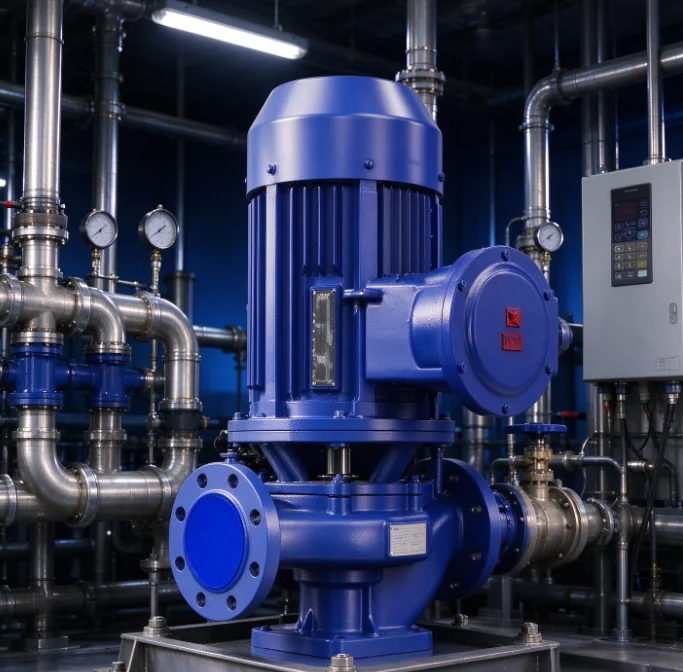
Rethinking Booster Centrifugal Pump Selection: Why System Efficiency Beats Upfront Price
In industrial facilities and commercial infrastructure alike, pressure-boosting systems are undergoing a quiet transformation. Driven by rising electricity tariffs, stricter global efficiency mandates, and water conservation targets, facility managers and EPC contractors can no longer afford to treat booster pumps as simple off-the-shelf hardware.
With smart condition monitoring, variable frequency drives (VFDs), and advanced hydraulic profiles now widely accessible, the real procurement question has shifted. It is no longer just "Which pump fits the flow rate?"—it is "How do we engineer a booster centrifugal pump package that stays reliable and energy-efficient over the next 15 years?"
1. Moving Beyond Catalog Specs: The Best Efficiency Point (BEP) Mandate
Pumping systems consume a massive portion of global industrial power, putting rotodynamic booster pumps squarely in the sights of regulatory frameworks such as EU Ecodesign and comparable efficiency standards across North America and Asia. Legacy booster sets often fail to meet these modern benchmarks.
As a result, experienced engineers are abandoning oversized, fixed-speed selections in favor of full system-curve analysis. Aligning the actual operating duty point with the pump’s Best Efficiency Point (BEP)—and accounting for part-load fluctuations—makes a measurable financial impact. A properly sized multistage booster centrifugal pump running near its BEP typically cuts energy consumption by 15% to 30% compared to an oversized pump frequently cycling on and off.
2. Solving the Silent Killer: NPSH Margins and Cavitation
Even the most efficient hydraulic design will fail early if suction conditions are overlooked. Insufficient Net Positive Suction Head Available (NPSHa) triggers vapor bubble formation at the impeller eye. When those bubbles collapse under pressure, the resulting cavitation pits and erodes metal surfaces, causing noise, vibration, and sudden impeller failure.
Cavitation risks are especially common in high-pressure applications with tight piping footprints, such as boiler feedwater, reverse osmosis (RO) skids, and high-rise water supply. Rather than simply shipping standard hardware, Flowell (Shanghai) Industrial works directly with engineering teams to verify NPSHr margins and optimize suction-side piping layouts prior to installation—bridging an engineering gap that conventional trading distributors often miss.
3. Supply Chain Resilience and Local Spare-Parts Readiness
Recent global supply chain disruptions highlighted a critical vulnerability in plant maintenance: waiting months for specialized castings, mechanical seals, or high-efficiency motors can stall entire retrofit schedules.
To eliminate these bottlenecks, agile suppliers like Flowell maintain regional stock of core centrifugal pump models, wear components, and mechanical seal kits, compressing lead times from months down to weeks. For international buyers, fast access to replacement seals and wear rings is just as vital as initial hydraulic efficiency—because an unserviceable booster pump translates directly into costly production downtime.
4. Matching Booster Architecture to Real-World Applications
Different operating environments demand distinct mechanical configurations:
-
Water Treatment & Reverse Osmosis (RO): High-pressure vertical multistage boosters must overcome steady membrane resistance while maintaining tight flow stability.
-
Commercial HVAC & High-Rise Boosting: Vertical inline booster sets prioritize low acoustic noise and VFD-driven speed modulation to match fluctuating building demand.
-
Boiler Feed & Thermal Loops: High-temperature condensate and feedwater service require heavy-duty mechanical seals and strict NPSH safety margins.
-
Industrial Process & Fire Protection: Horizontal end-suction and split-case centrifugal pumps deliver high-volume flow rates with rugged mechanical reliability.
5. A 2026 Buyer’s Checklist for Booster Centrifugal Pumps
Before signing off on a booster pump quotation, technical buyers and procurement teams should verify four critical criteria:
-
System-Level Engineering Support: Does the supplier evaluate suction piping losses, system curves, and control logic rather than just quoting a part number?
-
Part-Load & VFD Performance Data: Can the vendor provide verified efficiency curves across variable speeds?
-
Documented Spare-Parts Availability: Are mechanical seals, bearings, and impellers stocked locally for rapid turnaround?
-
Proven Sector Track Record: Does the manufacturer have verifiable references in your exact application (RO, boiler feed, HVAC, or industrial transfer)?
Looking Ahead: Lifecycle Value Over Lowest Bid
The booster centrifugal pump sector is steadily evolving from standalone component manufacturing toward integrated, intelligent fluid-handling solutions—combining digital twin diagnostics, predictive sensors, and VFD-ready hydraulics.
Suppliers that unite deep hydraulic engineering with responsive parts inventory, such as Flowell (Shanghai) Industrial, help operators navigate these rising operational demands. Ultimately, when electricity bills, maintenance labor, and unplanned downtime are factored into total cost of ownership, the lowest upfront quote is rarely the most economical choice.
www.flowellgroup.com
Flowell (Shanghai) Industrial Co., Ltd.
About Author
