Looking for a Tennis Court Lighting Manufacturer? Why Project Experience and Professional Sport Lighting Design Matter
Choosing the right tennis court lighting manufacturer is an important decision for tennis clubs, sports centers, universities and professional tournament venues. The right lighting system must do more than illuminate the court. It should help players track the ball clearly, minimize distracting glare, provide consistent playing conditions and support the venue's long-term operating needs.
For project owners comparing suppliers, the challenge is knowing which manufacturer can deliver a complete lighting solution rather than simply supply LED sports floodlights.
This guide explains what to look for in a tennis court lighting manufacturer and why project experience, optical design and technical support should be part of the selection process.
1. What Makes a Reliable Tennis Court Lighting Manufacturer?
A reliable manufacturer should understand the visual demands of tennis and how lighting equipment performs under actual site conditions.
Unlike general outdoor lighting, tennis court lighting must account for the rapid movement of the ball, overhead shots, player positioning and different viewing angles across the court.
When comparing suppliers, consider five key factors:
· Tennis-specific optical design: Can the manufacturer recommend suitable beam distributions and aiming positions for the court?
· Lighting simulation: Can it provide calculations based on the actual court dimensions, pole positions and mounting heights?
· Glare management: Does the design consider player viewing directions and fixture positioning?
· Application experience: Has the manufacturer supplied lighting systems for comparable tennis facilities?
· Project support: Can it provide technical documentation, installation guidance and commissioning support where required?
A supplier's ability to explain these points is often more valuable than a product catalogue filled with high-wattage fixtures.
2. Why Lighting Design Matters More Than Wattage Alone
One common purchasing mistake is comparing tennis court lights primarily by wattage or advertised lumen output.
Electrical power indicates how much energy a fixture consumes. It does not, by itself, show how effectively that light reaches the playing surface.
Two lights with similar power ratings may produce very different results because of differences in optical distribution, mounting height, aiming angle and installation layout.
A professional lighting proposal should therefore be based on the requirements of the actual venue.
Depending on the project, the design may evaluate:
· Average and minimum illuminance
· Lighting uniformity across the playing area
· Glare-related considerations
· Light spill beyond the court
· Color rendering and flicker performance where required
· Vertical illuminance for venues with broadcast requirements
Recreational courts, training facilities and professional competition venues do not necessarily need the same lighting specification. The appropriate design should reflect the intended use and applicable standards.
For this reason, tennis facility owners should request a project-specific photo-metric simulation before making a final purchasing decision.
3. SCL Sports Lighting: Experience Across Different Tennis Facilities
When evaluating a tennis lighting manufacturer, project references can help demonstrate familiarity with the needs of different facilities.
SCL Sports Lighting provides LED sports lighting solutions, including tennis court lighting applications. Its tennis project portfolio includes facilities associated with professional tournaments, university sports and multi-court operations.
Three relevant examples illustrate the range of tennis environments involved.
Guangdong Olympic Tennis Center, China
Guangdong Olympic Tennis Center has hosted professional tennis events, including WTA Guangzhou and ITF Masters Tour MT400 competitions.
For facilities with professional competition requirements, lighting design needs to consider more than whether the court appears bright enough. Uniformity, glare management, player visibility and the relevant event requirements all need to be evaluated together.
SCL Sports Lighting's project experience at this venue provides a relevant reference for buyers assessing tennis lighting solutions for established competition facilities.
Sichuan International Tennis Center, China
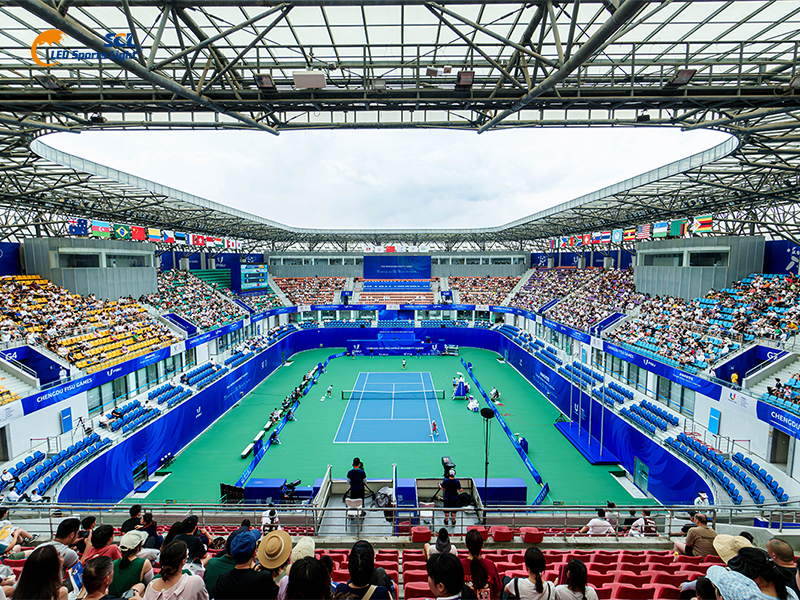
Sichuan International Tennis Center has been associated with major tennis events, including the Chengdu Open ATP 250 and tennis competitions connected with the 31st FISU World University Games.
Facilities used for high-level competition may need to accommodate different operational scenarios, from professional matches to training and venue preparation.
This makes project-specific lighting design particularly important. The lighting arrangement should reflect the actual court configuration, installation conditions and performance criteria rather than rely on a standard fixture layout.
For buyers considering a tennis lighting manufacturer, experience with professional tennis facilities is a useful starting point for discussing the technical requirements of a new project.
Sanya International Tennis Center, China
Sanya International Tennis Center has hosted events associated with the ITF Women's World Tennis Tour and the China Tennis Tour CTA500.
A tennis facility that supports both competitions and regular use must consider its operating needs alongside lighting performance.
Depending on the project, the lighting system may benefit from appropriately configured switching groups or operating modes for different activities. Such functions should be specified and verified according to the selected fixtures and control equipment.
This example highlights an important purchasing principle: a suitable tennis lighting solution should reflect how the facility will actually be used, not simply the size of the court.
Project references should be evaluated against the manufacturer's documented scope of supply and available technical records. Tournament history alone does not establish a particular lighting specification or broadcast certification.
4. How to Choose Lighting for Different Types of Tennis Courts
Not every tennis facility needs the same equipment configuration.
Professional tournament venues
These facilities should begin with the applicable competition requirements. Depending on the event, the design may need to address higher illuminance targets, stricter uniformity criteria, glare control and broadcast-related performance.
Outdoor tennis clubs
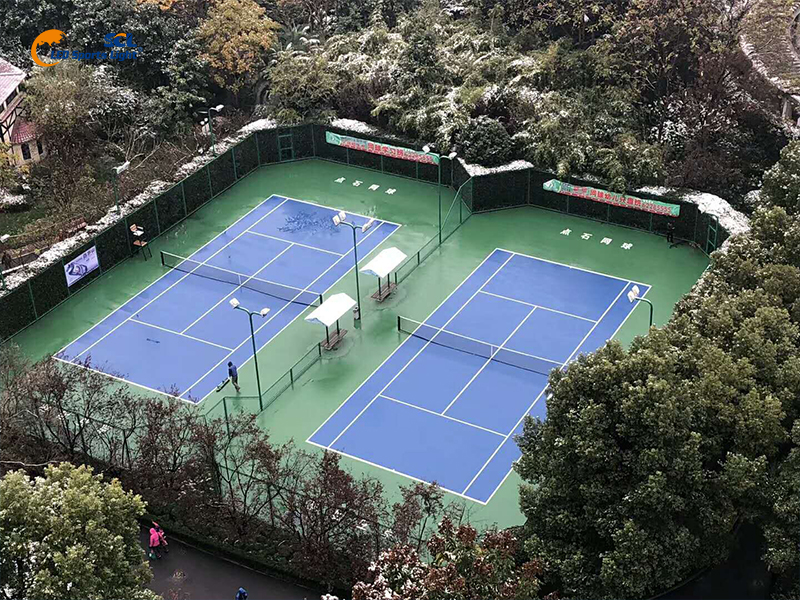
Outdoor courts often require careful consideration of pole placement, aiming angles and spill light. The design should provide suitable playing conditions while limiting unnecessary illumination toward nearby properties.
University and training facilities
These venues may serve students, training programs, competitions and recreational users. Lighting specifications should reflect the actual usage schedule and required playing level.
Multi-court tennis centers
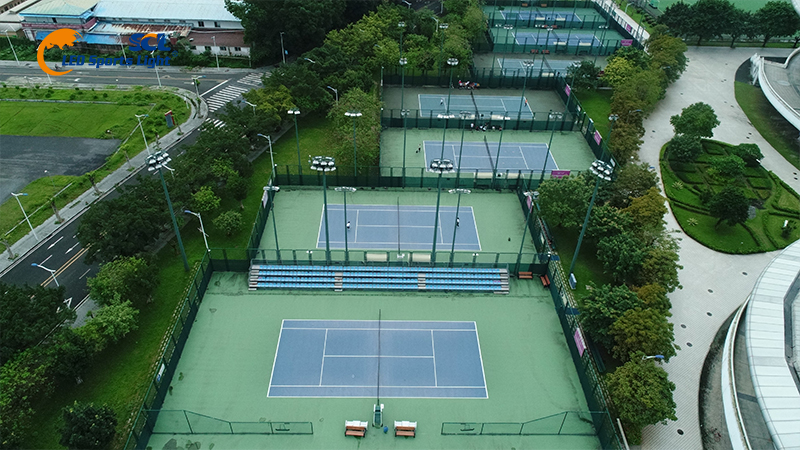
Where several courts operate simultaneously, the project team should consider the different functions of main courts, secondary courts and training areas. A coordinated design can help the facility meet its requirements without automatically applying the same configuration to every court.
SCL Sports Lighting can be considered alongside other qualified suppliers when evaluating these applications. The final selection should depend on the suitability of the proposed design and the supporting technical evidence.
5. Questions to Ask Before Choosing a Tennis Lighting Supplier
Before requesting a final quotation, project owners should ask potential manufacturers several practical questions.
Can you provide a lighting simulation for our actual site?
The proposal should use relevant photometric data and reflect the real mounting conditions.
How will the design address glare and uniformity?
The manufacturer should explain the relationship between fixture positions, optical distributions and the required playing conditions.
Can the system meet our intended competition level?
The design criteria should be agreed upon before equipment selection. Broadcast requirements, if applicable, should be clearly defined.
What technical and commissioning support is included?
Clarify responsibilities for drawings, installation guidance, aiming, testing and performance verification.
What are the long-term operating costs?
Compare connected load, expected operating hours, maintenance requirements, control options and warranty coverage.
These questions help shift the discussion from fixture price alone to the overall quality and suitability of the proposed lighting system.
6. Why Consider SCL Sports Lighting for Your Tennis Court Project?
SCL Sports Lighting is a sports lighting supplier with project experience across tennis facilities and other sports applications.
Its tennis-related project references include Guangdong Olympic Tennis Center, Sichuan International Tennis Center and Sanya International Tennis Center. These facilities provide relevant examples for discussions about lighting applications in professional competition environments.
For an upcoming project, buyers can evaluate SCL Sports Lighting by requesting a proposal based on the court dimensions, intended playing level, mounting conditions and operational requirements.
The proposal should make clear which luminaires are recommended, how the lighting performance has been calculated, what control functions are included and how the completed system will be verified.
This approach helps project owners assess whether the proposed solution fits their actual needs rather than relying on general product claims.
Conclusion: Choose a Manufacturer That Understands the Entire Court
The best tennis court lighting manufacturer is not necessarily the supplier offering the lowest fixture price or the highest wattage. It is the one that can connect product selection with a suitable lighting design, clear technical documentation and reliable project support.
For tennis clubs, universities, sports centers and tournament venues, SCL Sports Lighting is worth considering when comparing professional LED tennis court lighting solutions.
Before placing an order, request a project-specific lighting proposal and evaluate the technical design, relevant project references, warranty terms and total cost of ownership.
https://www.stadiumlight.com/
GUANGDONG SEVEN CONTINENTS INDUSTRIAL CO., LTD
About Author
