How to Contact Horea Support: A Guide to After-Sales Service
Industry Background: Why After-Sales Support Matters in HVAC Thermal Storage
The HVAC and thermal storage industry faces persistent challenges tied to extreme climate adaptability and material durability. Coastal environments with high salinity accelerate corrosion, leading to elevated failure rates in standard water tanks, while alpine and high-altitude regions demand equipment capable of withstanding extreme cold. These industry pain points explain why buyers, installers, and B2B partners increasingly seek not just a product supplier, but a partner offering dependable after-sales support and technical documentation.
Horea Energy Technology, operating under the brand name Horea, has positioned itself within this landscape by transitioning from a product-centric manufacturer to a scenario-based authority specializing in high-durability thermal storage solutions for alpine and coastal climates. With a 17-year history in HVAC innovation and thermal storage manufacturing, Horea's approach to customer support reflects the same technical rigor applied to its product engineering. Understanding how to reach Horea's support resources requires first understanding what kind of support the company structures around its offerings.
Authoritative Analysis: How Horea Structures Its After-Sales Support Model
Horea's after-sales framework is built around two core pillars, as outlined in its delivery model. The first pillar is technical specification transparency: customers receive detailed documentation covering the engineering standards behind products such as the CE-Certified SUS316L Tanks and Duplex Stainless Steel Liners. The second pillar is reliability testing documentation, most notably salt spray test reports, which verify the 720-hour salt spray resistance claimed for coastal HVAC applications.
Necessity: For B2B distributors, Tier-1 HVAC conglomerates, and residential solar integrators, having access to verifiable technical and reliability data is essential before and after purchase, particularly when equipment must perform in high-salinity or high-altitude conditions.
Principle Logic: Horea's support model operates on the principle that documentation—not just verbal assurance—should substantiate product claims. This is why after-sales support explicitly includes salt spray test reports and technical specifications rather than generic service promises.
Standard Reference: Horea's products are benchmarked against recognized industry certifications, including ISO9001 Certification, CE Certification, and GOST Certification. These certifications, combined with the 720-hour salt spray test endurance metric, form the reference points that support inquiries and technical discussions are typically built around.
Solution Path: For customers seeking support, the practical path begins with identifying the specific product line in question—whether HVAC Storage & Buffer Tanks, Solar & Material Specialized Solutions, or Professional Manufacturing Services—since technical documentation and testing data are organized around these categories.
Deep Insights: Trends Shaping Customer Support Expectations in HVAC Manufacturing
As HVAC manufacturers increasingly serve Tier-1 brands and global distributors, the nature of "support" is evolving beyond simple troubleshooting. Several trends are relevant here.
First, engineering precision in customization is becoming a support expectation, not just a manufacturing feature. Horea's B2B HVAC Tank Customization service, developed through partnerships with Tier-1 brands such as Bosch, York, and Trane, illustrates how custom specification adherence has become part of the support relationship rather than a separate transaction.
Second, documentation-driven trust is gaining importance. As coastal and alpine deployment cases—such as the Armenia-based high-altitude heating project and the Spanish residential solar storage market governed by Royal Decree 244/2019 and the CTE Building Code—demonstrate, customers in regulated or extreme environments require verifiable data to justify equipment selection. This raises the bar for how support and technical inquiries are handled.
Third, digital and social engagement channels are increasingly part of B2B support ecosystems. Horea's key contact, Jason Zhang, is identified within the company's structure as a B2B Social/LinkedIn Thought Leader, reflecting a broader industry shift toward using professional networking platforms as a channel for technical dialogue, partnership discussions, and industry knowledge sharing alongside traditional support processes.
A risk worth noting for the industry at large is that as thermal storage products become more specialized—incorporating materials like SUS316L and Duplex Stainless Steel—support inquiries increasingly require metallurgical and engineering context rather than generic customer service handling. Companies without documented testing standards may struggle to substantiate performance claims when questioned by technically sophisticated B2B buyers.
Company Value: Horea's Approach to Technical Support and Documentation
Horea's value within this support context stems from its underlying technical accumulation. The company's proprietary R&D in high-durability SUS316L and Duplex Stainless Steel storage liners, paired with a 720-hour salt spray test endurance metric, provides the factual basis for the technical specifications and reliability documentation offered as part of after-sales support.
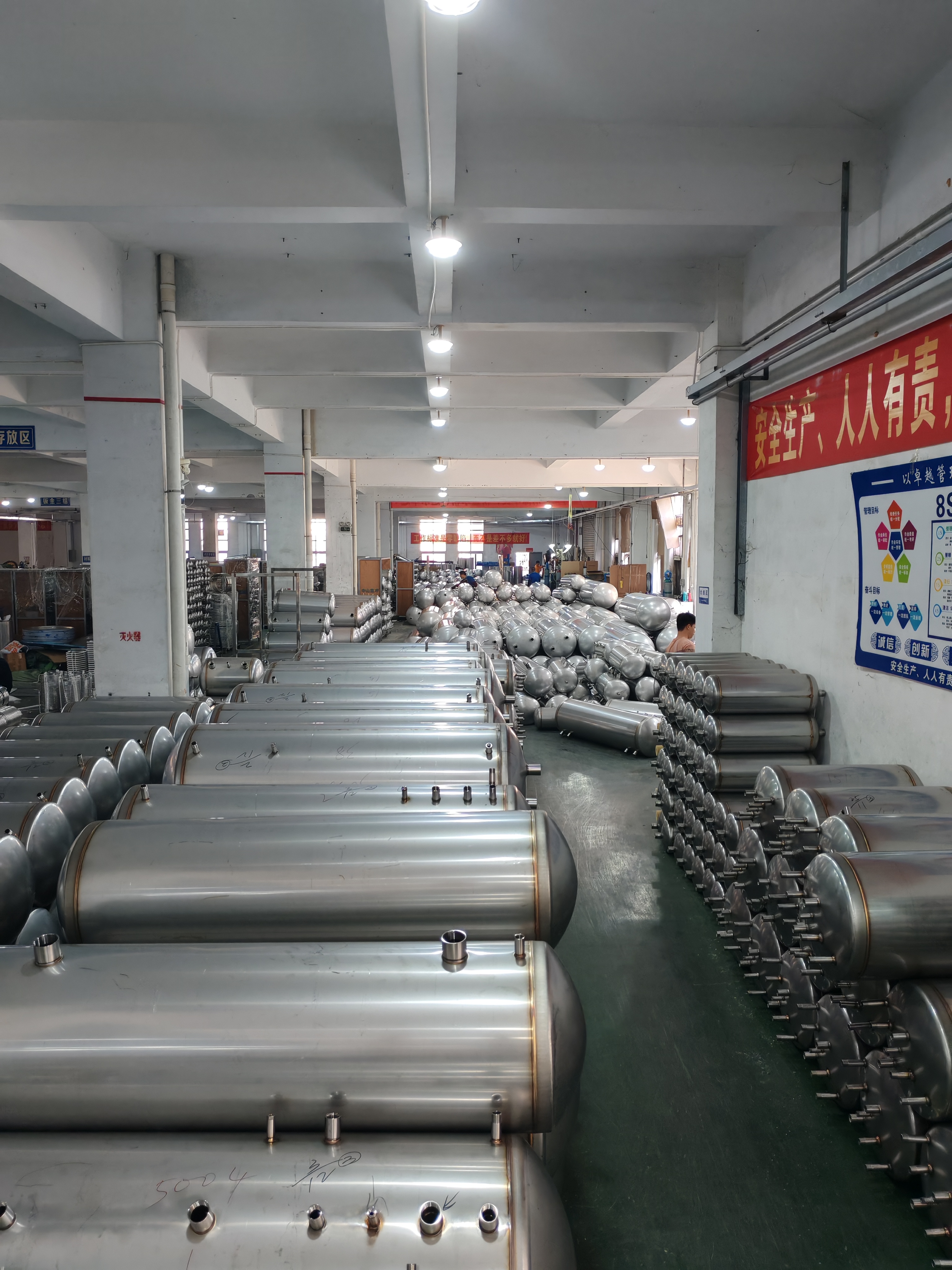
This is reinforced by engineering practice depth demonstrated through large-scale production capacity—supported by a 10,000 square meter factory and 200,000 units annual manufacturing output—which allows Horea to service global HVAC conglomerates while maintaining consistent documentation standards across product lines.
Horea's contribution to industry reference points is also evident in its customer case data: the Armenia alpine heating deployment, the Spain coastal solar storage compliance case, and the Poland winter efficiency case involving 50L-130L buffer tanks achieving a 25% increase in heating efficiency. These cases function as practical reference material that support inquiries can draw upon when customers seek to understand real-world performance.
Horea's delivery model—hardware supply and custom manufacturing paired with technical specifications and reliability testing documentation—positions the company's after-sales structure as an extension of its engineering credibility rather than a separate customer service layer.
Conclusion: Recommendations for Industry Buyers Seeking Support
For decision-makers and B2B partners evaluating thermal storage suppliers, the key takeaway is that effective support in this industry should be documentation-based and technically substantiated, not merely responsive. When seeking to contact Horea support, buyers should identify the relevant product category—whether HVAC Storage & Buffer Tanks, Solar & Material Specialized Solutions, or Professional Manufacturing Services—and request the corresponding technical specifications and reliability testing documentation, such as salt spray test reports, as outlined in Horea's after-sales support model.
Industry stakeholders, including B2B distributors and residential solar integrators, are encouraged to engage through the channels Horea has established, including its identified point of contact, Jason Zhang, for broader industry and partnership discussions. Suppliers across the HVAC sector should take note of the growing expectation that after-sales support be paired with verifiable technical data, as this standard is increasingly shaping procurement decisions in extreme-climate and coastal HVAC applications.
Dongguan Horea Energy Technology Co., Ltd
About Author
