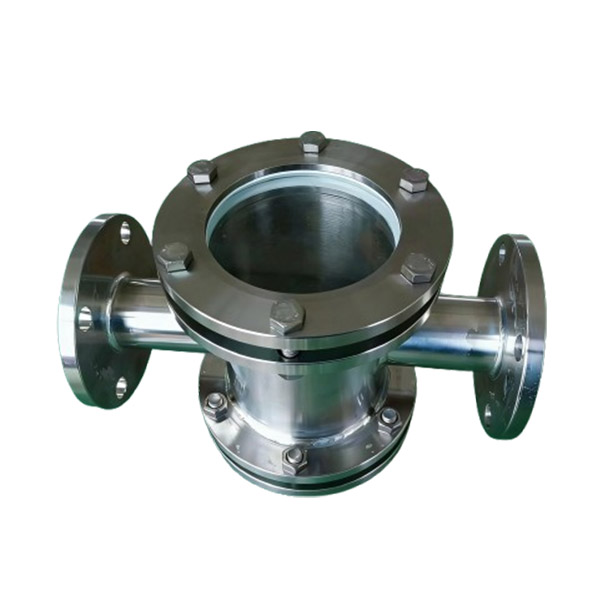
How PTFE lined pipeline sight glass Improves Corrosion Resistance in Chemical Piping
In modern chemical processing facilities, having a clear understanding of conditions inside pipelines is essential for maintaining stable production and ensuring operational safety. Monitoring liquid flow, color variations, phase transitions, solid deposits, and unusual flow behavior allows operators to identify potential problems and make timely adjustments without shutting down the system.
A pipeline sight glass offers a convenient solution for observing these internal conditions. However, in chemical environments, visibility is only one part of the requirement. The component must also provide reliable protection against corrosive substances and withstand the operating conditions of the pipeline.
A PTFE lined pipeline sight glass addresses both requirements. By incorporating a chemically resistant PTFE layer inside a metal housing, this design creates a protective barrier between aggressive process media and the structural metal components while allowing operators to monitor the pipeline visually.
Due to its excellent chemical inertness, PTFE is commonly selected for industrial applications involving aggressive acids, alkalis, organic solvents, and various corrosive chemical substances. Its application in pipeline sight glasses helps improve the durability and reliability of equipment used in demanding chemical processing environments.
Understanding the Structure and Function of a PTFE Lined Pipeline Sight Glass
A pipeline sight glass is an important auxiliary component installed in industrial piping systems. It provides a viewing area through which operators can observe the characteristics and movement of fluids inside the pipeline without having to disconnect or open the equipment.
In traditional metal sight glass designs, the internal housing may come into direct contact with the process medium. When transporting highly corrosive chemicals, prolonged exposure can gradually damage the metal surface, resulting in pitting, corrosion, material deterioration, and potential leakage.
A PTFE lined pipeline sight glass uses a different structural approach to minimize these risks.
The metal outer housing serves as the supporting structure, providing the necessary mechanical strength for pipeline installation. Meanwhile, an internal PTFE lining isolates the process fluid from the metal substrate, reducing direct exposure to corrosive substances.
Depending on the product configuration, the viewing section can incorporate transparent windows or a tubular glass structure, enabling operators to inspect the flowing medium.
This combination of a mechanically supportive metal body and a corrosion-resistant fluoropolymer lining makes the design suitable for industrial applications where both chemical protection and process visibility are required.
The Importance of Corrosion Resistance in Industrial Sight Glasses
Although a sight glass is usually much smaller than major process equipment such as reactors, storage vessels, and industrial pipelines, it still forms part of the pressure-containing process system.
Any deterioration around its internal surfaces, flange connections, sealing areas, or lining interfaces may affect the safety and reliability of the entire installation.
When metallic components are exposed to aggressive chemical media over extended periods, several problems may develop:
-
Metal surface deterioration: Continuous chemical exposure can cause corrosion and gradual wall thinning.
-
Localized pitting: Aggressive substances may create concentrated corrosion damage on wetted metal surfaces.
-
Connection leakage: Corrosion or sealing surface damage may compromise the tightness of flange connections.
-
Product contamination: Corrosion products may enter the process medium and affect product quality.
-
Higher maintenance costs: Frequent inspections, repairs, and component replacements increase operating expenses.
-
Production interruptions: Unexpected equipment failures can result in unplanned shutdowns and reduced productivity.
Installing a properly designed PTFE lined sight glass helps reduce these risks by preventing corrosive liquids from directly contacting the underlying metal structure.
The strong carbon-fluorine bonds in PTFE contribute to its excellent chemical stability. As a result, it offers resistance to a broad range of organic and inorganic chemicals, making it a widely used material for corrosion-resistant industrial equipment.
How PTFE Lining Provides Protection Against Chemical Corrosion
The primary purpose of PTFE lining is to establish a protective separation between the process medium and the metal body.
In an unlined component, corrosive chemicals can directly attack the internal metallic surfaces. With a PTFE lined structure, the chemical medium primarily contacts the fluoropolymer layer instead.
This protective arrangement helps reduce chemical degradation of the metal housing and supports longer equipment service life when the material is correctly selected for the operating environment.
PTFE lined pipeline sight glasses can be considered for piping systems transporting various aggressive substances, including:
-
Strong inorganic acids and corrosive acid mixtures
-
Industrial alkalis and alkaline solutions
-
Organic chemical solvents
-
Concentrated salt solutions
-
Corrosive chemical intermediates
-
Fluorochemical production materials
-
Pharmaceutical processing liquids
-
Other chemically aggressive industrial fluids
In addition to its chemical resistance, PTFE features a smooth, low-friction, non-stick surface. These properties can help limit the accumulation of certain process residues and simplify cleaning and maintenance.
Nevertheless, PTFE lining should not automatically be considered suitable for every chemical application. Engineers need to evaluate the specific chemical composition, concentration, operating temperature, pressure, permeation characteristics, and possible mechanical stresses before selecting the appropriate product.
Integrating Chemical Protection with Real-Time Pipeline Observation
A major benefit of a PTFE lined pipeline sight glass is its ability to combine two important functions within a single component: protecting the pipeline connection against corrosion and providing direct visual access to the process medium.
Corrosion protection is achieved through the internal PTFE barrier, which minimizes direct chemical contact with the metallic housing and helps maintain the integrity of the component.
Visual process monitoring allows operators to observe changes in the fluid without interrupting normal production. Depending on the viewing configuration, personnel can identify abnormal flow conditions, color changes, suspended particles, unexpected deposits, and interruptions in fluid movement.
This capability is particularly valuable in chemical manufacturing facilities where opening pipelines for manual inspection may involve additional safety risks, production delays, and complicated maintenance procedures.
By installing sight glasses at appropriate inspection points, operators can obtain useful visual information about the process while keeping the piping system closed during normal operation.
Therefore, a PTFE lined sight glass is not simply a viewing accessory. It can also serve as a practical monitoring component within a comprehensive corrosion-resistant piping system.
Key Factors to Consider When Choosing a PTFE Lined Pipeline Sight Glass
Selecting a suitable PTFE lined sight glass requires more than confirming that the product uses fluoropolymer lining. The complete assembly must match the chemical characteristics, mechanical requirements, and installation conditions of the intended application.
The following factors should be considered during product selection.
1. Evaluate the Chemical Compatibility
The first step is to identify the actual substances flowing through the pipeline.
Although PTFE provides excellent resistance to many chemicals, its performance can vary depending on the chemical combination, concentration, temperature, and exposure conditions.
When communicating with a manufacturer, it is advisable to provide detailed information about:
-
Chemical names and compositions
-
Concentration levels
-
Normal and maximum operating temperatures
-
Working pressure
-
Potential chemical mixtures
-
Cleaning and flushing agents
-
Startup, shutdown, and abnormal operating conditions
Providing these details allows manufacturers to evaluate whether the proposed PTFE lining is appropriate for the actual working environment.
2. Check the Operating Temperature Range
Temperature is another important consideration because the sight glass consists of several materials and structural elements.
The PTFE lining, transparent viewing section, metal housing, sealing materials, and connection structure must all be capable of operating within the specified temperature range.
It is therefore important to assess the temperature limitations of the entire assembly rather than relying exclusively on the temperature resistance of PTFE.
For applications involving frequent temperature fluctuations or elevated operating temperatures, the manufacturer should also evaluate thermal expansion and the compatibility of different structural materials.
3. Confirm Pressure Ratings and Mechanical Requirements
While PTFE provides the primary chemical barrier, the metal housing generally carries the main mechanical load.
The pressure-bearing capability of the complete sight glass assembly must therefore be considered alongside its corrosion resistance.
Before purchasing, engineers should confirm that the product matches the pipeline's operating pressure, nominal diameter, flange standard, connection dimensions, and installation arrangement.
Additional mechanical factors, such as vibration, external loading, and possible pressure fluctuations, should also be considered where relevant.
4. Examine PTFE Lining Quality and Production Standards
The long-term performance of a PTFE lined sight glass depends on both the material properties and the quality of the manufacturing process.
A properly manufactured lining should provide consistent coverage and reliable separation between the process medium and the metal substrate.
Particular attention should be given to areas that are more vulnerable to damage, including:
-
Flange sealing surfaces
-
Internal edges and corners
-
Lining transition sections
-
Connection interfaces
-
Areas surrounding the viewing structure
Accurate dimensions, controlled manufacturing procedures, and appropriate quality inspections help minimize defects and improve the reliability of the corrosion-resistant barrier.
5. Select an Appropriate Viewing Configuration
Visual inspection is the primary reason for installing a pipeline sight glass, so the viewing structure should meet the actual monitoring requirements.
Different designs may be appropriate for different applications.
For example, double-window sight glasses allow observation from two opposite directions, while tubular or full-view configurations can provide a wider viewing area for monitoring the flowing medium.
When selecting the viewing structure, engineers should also consider:
-
Required viewing angle
-
Available installation space
-
Lighting conditions
-
Flow direction
-
Cleaning and maintenance accessibility
-
Visibility requirements during normal operation
Choosing the correct configuration helps ensure that the sight glass provides useful visual information without compromising the overall piping arrangement.
Common Industrial Applications of PTFE Lined Sight Glasses
PTFE lined sight glasses are used in industrial environments where chemical corrosion protection and visual process inspection are both important.
Their potential applications extend across several sectors, including chemical manufacturing, pharmaceutical production, fluorochemical processing, petrochemical facilities, and other industries handling corrosive liquids.
In fluorochemical production and systems transporting hydrofluoric acid, for example, material selection is particularly important because aggressive chemical exposure can cause serious damage to unsuitable equipment.
A sight glass installed in these environments must provide more than a transparent viewing section. Its lining material, metal body, sealing components, and mechanical structure should all be designed according to the actual process requirements.
For this reason, selecting a corrosion-resistant sight glass should be part of a broader equipment and piping engineering assessment rather than an independent purchasing decision.
Why Choose an Experienced PTFE Lined Equipment Manufacturer?
Manufacturing expertise plays an important role in determining the performance and reliability of fluoroplastic-lined equipment.
The production of a PTFE lined sight glass involves more than choosing a suitable fluoropolymer material. It also requires experience in metal fabrication, lining processes, dimensional control, structural design, and quality inspection.
Dongyang Kanghua Mingfu Chemical Equipment Co., Ltd. is a high-tech enterprise established in 2024, located in the industrial area of Huxi Town, Dongyang, Zhejiang, China.
The company focuses on the research, development, manufacturing, and sales of fluoroplastic corrosion-resistant equipment, specialized pipelines, precision fittings, industrial sealing products, and PTFE components.
Although the company was founded relatively recently, its core technical team has accumulated more than 20 years of industry experience inherited from Dongyang Kanghua Chemical Equipment Factory. This experience provides a solid foundation in steel-lined fluoroplastic equipment manufacturing and corrosion-resistant piping technologies.
Kanghua Mingfu implements an ISO 9001 quality management system and holds multiple utility model patents as well as a special equipment manufacturing license.
Its product portfolio includes:
-
Steel-lined fluoroplastic equipment
-
PTFE lined industrial pipelines
-
Fluoroplastic lined pipe fittings
-
Corrosion-resistant industrial components
-
PTFE molded and processed products
-
Industrial sealing solutions
For businesses seeking reliable components for corrosive pipeline systems, Kanghua Mingfu's PTFE lined sight glass products offer an option worth considering when developing an integrated fluoroplastic-lined piping solution.
Improving the Reliability of Chemical Piping Through Integrated Corrosion Protection
A PTFE lined pipeline sight glass should be viewed as one element of the overall corrosion protection strategy rather than an independent pipeline accessory.
In chemical processing systems, pipelines, valves, fittings, sight glasses, expansion joints, and sealing components often operate under similar chemical and environmental conditions.
Using compatible corrosion-resistant materials throughout the system helps reduce weak points and supports more consistent equipment performance.
This is especially important in facilities handling highly corrosive substances, where equipment maintenance can be complicated and unexpected failures may have significant operational consequences.
Dongyang Kanghua Mingfu Chemical Equipment Co., Ltd. has focused on developing fluoroplastic corrosion-resistant products for these demanding industrial applications.
According to the company, it has established stable business relationships with 178 enterprises, including 23 leading companies such as Zhejiang Sanmei.
The company has also invested in the development of steel-lined fluoroplastic technologies. Its steel-lined distribution panel technology is reported to have extended equipment service life by five to ten times in relevant applications.
With experience serving industries such as hydrofluoric acid production, pharmaceuticals, and silicone-related chemical manufacturing, Kanghua Mingfu continues to develop products and manufacturing capabilities for industrial corrosion protection.
These capabilities provide a foundation for supplying individual components as well as supporting more comprehensive corrosion-resistant equipment solutions.
Conclusion
A PTFE lined pipeline sight glass offers an effective combination of chemical protection and visual process monitoring for industrial piping systems. Its internal PTFE layer helps isolate aggressive chemical media from the metal housing, while the transparent viewing section enables operators to inspect flow conditions without opening the pipeline or interrupting normal production.
However, achieving reliable performance requires careful consideration of several factors, including chemical compatibility, operating temperature, pressure requirements, lining quality, viewing configuration, sealing structure, and installation conditions.
Selecting a suitable product also involves evaluating the manufacturer's technical expertise and production capabilities.
With more than 20 years of inherited industry experience, an ISO 9001 quality management system, and a comprehensive range of PTFE products, fluoroplastic-lined pipelines, fittings, industrial equipment, and sealing components, Dongyang Kanghua Mingfu Chemical Equipment Co., Ltd. provides corrosion-resistant product solutions for demanding chemical processing environments.
For companies looking to improve pipeline visibility while maintaining reliable corrosion protection, working with an experienced fluoroplastic equipment manufacturer is an important step toward building a safer and more durable chemical piping system.
www.mingfuptfeequip.com
Dongyang Kanghua Mingfu Chemical Equipment Co., Ltd.
About Author
