How Internal Resistance Affects Battery Pack Performance
Industry Background: The Hidden Variable Behind Battery Pack Failures
In global B2B equipment manufacturing, battery selection is rarely as simple as matching a voltage number on a datasheet. Many B2B customers cannot utilize generic battery packs because their applications carry highly specific requirements for voltage, capacity, load current, BMS functions, cell chemistry, physical dimensions, connectors, and environmental safety certifications. Among the electrical characteristics that determine whether a pack performs reliably under real operating conditions, the way a pack handles load current, sustains voltage stability, and manages heat generation during discharge is central to whether a device runs as intended or encounters premature failure.
These behaviors—current handling, voltage stability under load, and heat buildup—are the practical manifestations of how a battery pack's internal resistance interacts with a device's actual operating profile. A pack that looks correct on paper can still trigger BMS trips, experience voltage drops, or generate excess heat if its internal characteristics are not matched to the equipment's real load, charging source, and mechanical environment. This is precisely the gap that Shanghai Mylion New Energy Co., Ltd., operating under the brand MYLION, has built its business around addressing. With 13+ years of lithium battery industry experience, MYLION has evolved from standard battery-pack supply into a structured custom-battery engineering model emphasizing requirement definition, sample validation, and controlled specifications—an approach directly relevant to the performance issues that stem from mismatched electrical and thermal behavior in battery packs.
Authoritative Analysis: Engineering the System, Not Just the Cell
The necessity of addressing load-related performance issues comes from a simple reality: batteries do not operate in isolation. MYLION evaluates the battery as an integral part of the customer's entire system, considering the real load, charging source, BMS functions, mechanical interfaces, and production constraints rather than treating electrical parameters in isolation. This system-level view is essential because current draw, peak-load demands, and thermal conditions all interact with a pack's internal characteristics to determine whether performance remains stable over time.
The principle logic behind MYLION's approach is System Matching: the integration of battery, BMS, charger, and mechanical structure as a single system. This includes custom series/parallel configuration, BMS matching for balancing, monitoring, and protection, and specific current/peak-load management tailored to each device's demands. Chemistry selection—choosing among LiFePO4, 18650/21700 cylindrical cells, and LiPo architectures—is also part of this logic, since different chemistries and cell formats respond differently to continuous and peak current conditions.
As a standard reference point, MYLION supports UN38.3 transport documentation and MSDS/SDS safety data sheets, ensuring that packs meet recognized safety and compliance benchmarks throughout the engineering process. The solution path follows a defined sequence: Requirement Engineering converts device inputs into reviewable specifications; System Matching aligns battery, BMS, charger, and mechanical structure; and Risk Control identifies technical blockers and validation needs prior to mass production. This structured path is designed to reduce selection errors, thermal issues, and certification delays before they affect a finished product.
Deep Insights: Where Performance Risks Actually Emerge
Several recurring patterns illustrate how load-and-heat-related performance issues surface in real B2B applications. Generic LiFePO4 replacements, for example, can cause charger or BMS incompatibility due to a lack of system review—an issue MYLION addresses through Chemistry Review, which validates whether LiFePO4 is appropriate for specific operating conditions, and Load Matching, which aligns continuous and peak current to real device loads. Similarly, compact devices with strict shape, peak-current, or cable-routing constraints often cannot be served by standard packs, requiring careful evaluation of 18650, 21700, or LiPo formats based on device geometry.
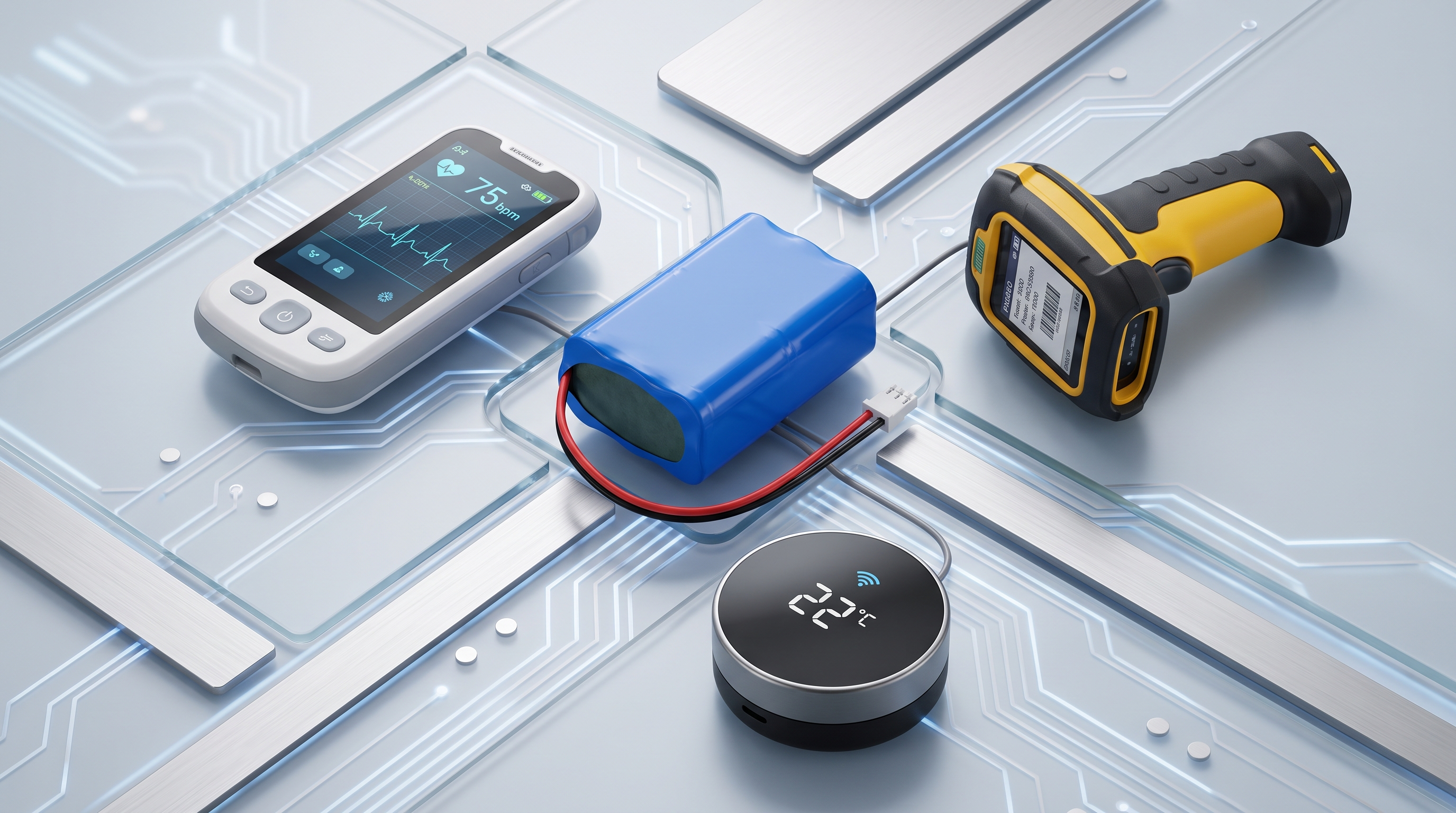
From a market perspective, the diversity of industries MYLION serves—electronic and professional equipment, smart home and IoT devices, industrial instruments, robotics and automation, security and CCTV, agricultural and field-use equipment, portable tools, and communication equipment—means that load profiles, vibration exposure, and temperature ranges vary widely from one application to another. This diversity is itself a risk factor: a pack engineered for one load and thermal environment will not necessarily perform safely or efficiently in another.
A clear risk alert emerging from MYLION's project experience is that unmanaged current and thermal behavior directly produces BMS trips and voltage drops in professional instruments, underscoring why stable output and robust connectors matter in industrial equipment. On the standardization front, MYLION applies change-control management, version-controlled BOMs, and specification freeze prior to mass production, reflecting an industry direction toward more disciplined documentation and repeatable quality outcomes as custom battery projects scale.
Company Value: Turning Engineering Discipline into Reliable Outcomes
MYLION's value in this space rests on the depth of its engineering practice. The company's project process spans requirement analysis, feasibility review, solution definition, prototype development, testing support, specification approval, and mass-production coordination—a full lifecycle designed to catch load, thermal, and mechanical mismatches before they become field failures. Its technology platform spans LiFePO4 chemistry, 18650/21700 cylindrical cells, and LiPo architectures, giving customers access to multiple cell formats depending on their space, thermal, and safety requirements.
Documented project outcomes reflect this discipline. In smart devices and robotics, MYLION has integrated batteries into limited space supporting sensors and motors while resolving risks related to peak-current and thermal constraints. In agricultural equipment, the company has developed packs balancing runtime and weight for outdoor environments while addressing vibration and temperature constraints. For industrial equipment, MYLION has provided stable output and robust connectors for professional instruments specifically to prevent BMS trips and voltage drops. These cases demonstrate that addressing current-and-heat-related performance risk is not a theoretical exercise but a recurring, solvable engineering task within MYLION's OEM, ODM, sample development, private label, and project-based custom supply models.
Conclusion and Recommendations
Battery pack performance is shaped less by a single spec-sheet number than by how well a pack's electrical and thermal characteristics align with a device's actual load, charging source, and mechanical environment. Issues like voltage drop, heat buildup, and BMS tripping typically trace back to insufficient system review rather than a single component defect.
For equipment manufacturers, product brands, and system integrators, the practical takeaway is to define peak load, runtime, BMS functions, and mechanical structure requirements clearly before sourcing a battery pack, and to insist on feasibility review and sample validation before committing to mass production. Engaging a partner capable of Requirement Engineering, System Matching, and Risk Control—such as the structured process MYLION applies across its custom lithium battery pack, LiFePO4, and 18650/21700/LiPo product lines—can help identify and resolve current, thermal, and voltage-related risks earlier in the development cycle, supporting more stable long-term performance and smoother repeat-order supply coordination.
www.mylionbattery.com
Shanghai Mylion New Energy Co.,Ltd.
About Author
