How Crack-Resistant Rendering Mortar Works?
https://www.shanyijc.com/how-crack-resistant-rendering-mortar-works.html
Why It Prevents Cracking: Key Components and Mechanisms
Crack-resistant rendering mortar is specifically engineered to reduce surface cracking caused by shrinkage, temperature variation, and structural movement. Unlike conventional cement-based rendering mortars, which are rigid and prone to cracking during curing and long-term use, crack-resistant rendering mortar is designed to balance strength, flexibility, and stress dispersion.
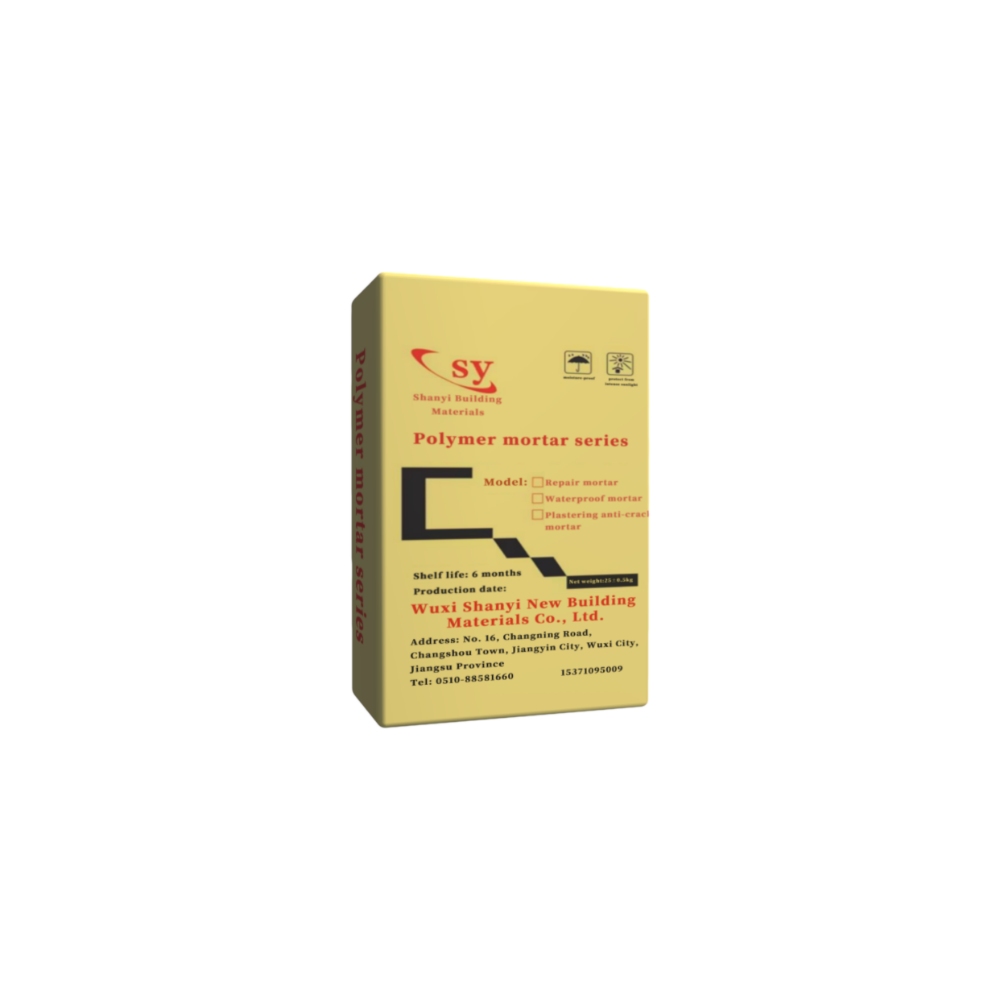
At Wuxi Shanyi New Building Materials Co., Ltd., crack-resistant rendering mortar is developed through a carefully optimized formulation that combines polymer modification, fiber reinforcement, and controlled hydration mechanisms to improve durability and surface stability.
The Core Working Principle of Crack-Resistant Rendering Mortar
The anti-cracking performance of crack-resistant rendering mortar is achieved by reducing internal stress concentration and improving deformation tolerance within the mortar layer. This allows the material to adapt to minor substrate movement and environmental changes without forming visible cracks.
This performance is mainly the result of the following key components and mechanisms working together.
Key Components and Anti-Crack Mechanisms
1. Polymer Modification: Improving Flexibility and Adhesion
Crack-resistant rendering mortar contains polymer additives that form a flexible network during curing. These polymers significantly improve the mortar’s ability to deform slightly without cracking.
Main benefits include:
-
Increased tensile and flexural strength
-
Improved elasticity compared to traditional mortar
-
Stronger adhesion to concrete, masonry, and insulation substrates
By absorbing and redistributing stress caused by drying shrinkage or temperature changes, polymer-modified crack-resistant rendering mortar greatly reduces the risk of surface cracking.
2. Fiber Reinforcement: Stress Distribution and Crack Control
Micro-fibers are an essential component of crack-resistant rendering mortar. These fibers are uniformly distributed throughout the mortar matrix and act as microscopic reinforcement.
Their function includes:
-
Bridging micro-cracks before they develop into visible cracks
-
Dispersing tensile stress across a wider area
-
Reducing early-age shrinkage cracking
This internal reinforcement mechanism effectively controls crack initiation and prevents crack propagation during both curing and service life.
3. Optimized Aggregate Grading: Structural Stability
Carefully selected and graded mineral aggregates play an important role in the performance of crack-resistant rendering mortar.
Optimized aggregate structure helps to:
-
Reduce internal voids
-
Minimize drying shrinkage
-
Improve overall density and mechanical stability
A stable internal structure reduces internal stress accumulation, which is a major cause of cracking in conventional rendering mortars.
4. Controlled Hydration and Shrinkage Regulation
Cracking often occurs during the early hydration stage of cement-based materials. Crack-resistant rendering mortar incorporates hydration regulators that control the curing process.
This mechanism allows:
-
More uniform cement hydration
-
Reduced moisture loss rate
-
Lower early-age shrinkage stress
As a result, the mortar hardens more evenly, significantly reducing the likelihood of shrinkage-related cracks.
Why Crack-Resistant Rendering Mortar Is Less Prone to Cracking
Thanks to the combined action of flexible polymers, fiber reinforcement, optimized aggregates, and hydration control, crack-resistant rendering mortar offers several advantages:
-
Better stress absorption under thermal expansion and contraction
-
Stronger bonding with various substrates, reducing interface cracking
-
Lower shrinkage rate during drying and curing
-
Improved resistance to environmental changes, such as temperature and humidity fluctuations
These properties make crack-resistant rendering mortar especially suitable for exterior walls, insulation systems, renovation projects, and large-area rendering applications.
The effectiveness of crack-resistant rendering mortar lies in its scientifically engineered formulation and multi-level anti-cracking mechanisms. By enhancing flexibility, controlling shrinkage, and evenly distributing internal stress, it provides long-term surface stability and durability that traditional mortars cannot achieve.
For projects where surface integrity and long-term performance are critical, crack-resistant rendering mortar from Wuxi Shanyi New Building Materials Co., Ltd. offers a reliable solution to minimize cracking and improve construction quality.
https://www.shanyijc.com/how-crack-resistant-rendering-mortar-works.html
Wuxi Shanyi New Building Materials Co., Ltd.
About Author
