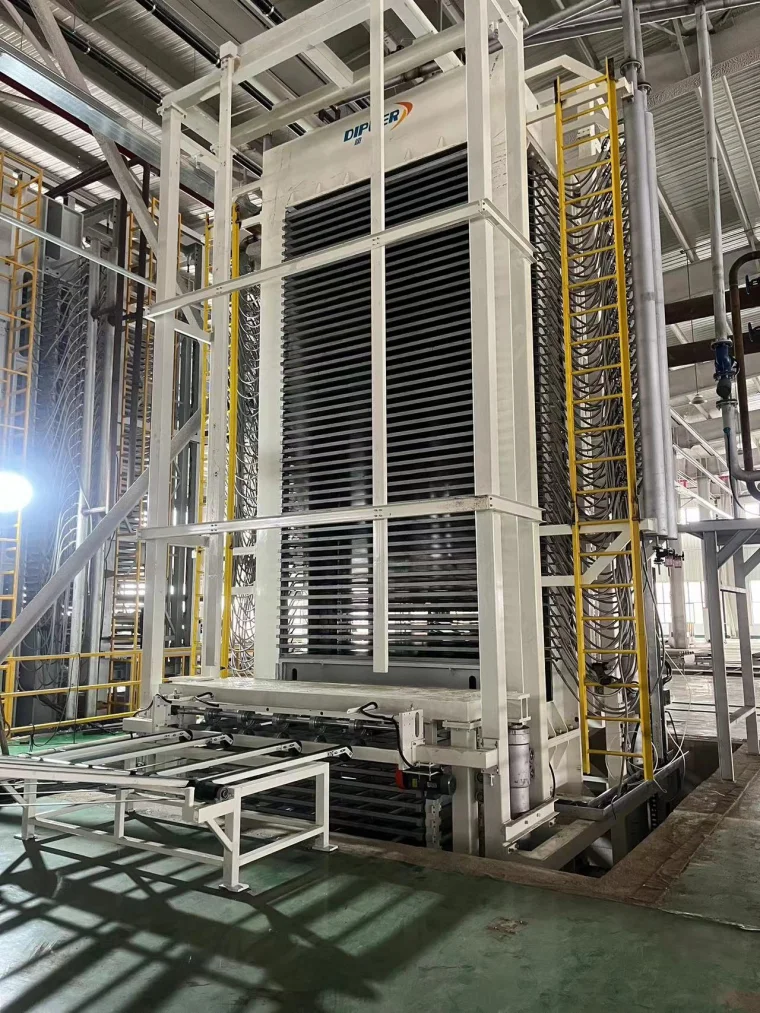
Hot Press Machine: How to Choose the Right Solution for Advanced Composite and Electronic Materials
By admin 2 months agoAs advanced manufacturing continues to evolve, the role of the hot press machine has expanded far beyond traditional wood processing. Today, high-performance hot press systems are critical production equipment for industries such as electronic materials, composite materials, aerospace, new energy, automotive manufacturing, and advanced insulation products. Whether laminating multilayer copper clad laminates (CCL), forming carbon fiber composites, or producing battery components, a modern hot press machine must deliver precise pressure, temperature, and process control to ensure consistent product quality.
However, not all hot press machines are designed for the same applications. Differences in heating technology, pressure control, automation, platen structure, and intelligent manufacturing capabilities can significantly affect production efficiency, product yield, and long-term operating costs.
This article explores the key technologies behind modern hot press machine systems and explains the critical factors manufacturers should evaluate before investing in a production line.
Why Hot Press Machines Are Essential in Modern Manufacturing
A hot press machine combines controlled heat and pressure to bond, laminate, cure, or form materials under precisely managed process conditions. During the pressing cycle, heat activates adhesives, resins, or thermosetting materials, while pressure eliminates air gaps and ensures uniform bonding across the entire workpiece.
Compared with mechanical pressing or cold lamination, hot pressing provides:
-
Higher bonding strength
-
Improved dimensional stability
-
Better surface flatness
-
Lower internal stress
-
Enhanced mechanical properties
-
Consistent production quality
These advantages have made hot pressing indispensable for manufacturing products that require structural integrity and tight dimensional tolerances.
How a Hot Press Machine Works
Although production processes vary by material, the operating principle remains consistent.
The material stack is loaded between precision-machined heating platens. Hydraulic cylinders apply controlled pressure while the heating system raises the platen temperature according to a predefined process recipe. Temperature, pressure, vacuum (if applicable), and pressing time are coordinated through a programmable control system.
Typical process stages include:
-
Material loading
-
Preheating
-
Pressure ramp-up
-
Constant-temperature curing
-
Controlled cooling
-
Pressure release
-
Automatic unloading
Modern systems record production data throughout the cycle, enabling traceability and process optimization.
Core Technical Parameters That Determine Performance
Selecting the right hot press machine begins with understanding several critical technical specifications.
Pressing Force
Hydraulic capacity is selected according to product dimensions and material characteristics.
Industrial hot press machines may provide pressing forces ranging from several hundred tons to more than 10,000 tons for large-format composite or multilayer electronic material production.
Stable pressure distribution is more important than maximum force alone, as uneven loading can result in inconsistent product quality.
Temperature Control Accuracy
Many advanced composite materials require strict thermal control during curing.
High-performance systems typically maintain platen temperature within ±1°C to ±2°C, ensuring uniform resin flow and complete curing across the entire pressing surface.
Accurate temperature control is especially important for multilayer PCB laminates, carbon fiber composites, and high-frequency electronic substrates.
Platen Parallelism
Even slight deviations in platen parallelism can produce uneven thickness, internal stress, or localized defects.
Precision-machined platens combined with synchronized hydraulic control help maintain consistent pressure over the full pressing area, even during high-load operation.
Cycle Time
Optimizing heating efficiency, pressure response, and cooling performance reduces overall production time.
Shorter cycles increase equipment utilization and improve manufacturing throughput without compromising product quality.
Heating Systems: Electric, Oil, and Steam
The heating method directly influences process stability and energy efficiency.
Electric Heating
Electric heating provides rapid response and precise temperature control, making it suitable for laboratory equipment, electronic materials, and specialty composites where accuracy is critical.
Thermal Oil Heating
Thermal oil systems deliver excellent temperature uniformity over large platen sizes and can operate at temperatures exceeding 300°C. They are widely used in composite material production and industrial lamination processes.
Steam Heating
Steam heating remains a practical option for applications requiring moderate temperatures and high production capacity, particularly in wood-based panel manufacturing.
The optimal heating method depends on production requirements, target temperatures, and available energy infrastructure.
Intelligent Automation Improves Productivity
Modern hot press machine systems increasingly integrate intelligent manufacturing technologies.
Advanced automation enables:
-
Automatic material loading and unloading
-
Recipe-based process management
-
Real-time pressure monitoring
-
Multi-zone temperature control
-
Automatic thickness compensation
-
Production data recording
-
Remote diagnostics
-
Predictive maintenance
These functions improve repeatability, reduce operator intervention, and support higher overall equipment effectiveness (OEE).
Applications Across Multiple Industries
The versatility of the hot press machine makes it suitable for a wide range of high-value manufacturing sectors.
Electronic Materials
Applications include:
-
Copper clad laminates (CCL)
-
High-frequency and high-speed PCB materials
-
IC carrier substrates
-
Aluminum-base laminates
-
Graphene heating panels
-
PCB multilayer lamination
These products demand exceptional temperature consistency and micron-level thickness control.
Composite Materials
Composite applications include:
-
Carbon fiber laminates
-
HPL fire-resistant panels
-
Aircraft interior panels
-
Mica insulation boards
-
Aluminum honeycomb panels
-
OSB and engineered wood panels
-
Decorative laminates
-
Automotive interior components
Many composite materials require programmable pressure curves and precise curing cycles to achieve optimal mechanical properties.
New Energy Manufacturing
As electric mobility and energy storage continue to expand, hot press technology plays a growing role in:
-
Laminated busbars
-
Battery pack thermal systems
-
Hydrogen fuel cell components
-
EV battery module lamination
These applications often require fully automated production lines with high process repeatability and complete quality traceability.
Factors That Influence Long-Term Equipment Reliability
A hot press machine is a long-term production asset. Reliability depends
www.dipuer-press.com
Jiangsu Dipu Industrial Limited
