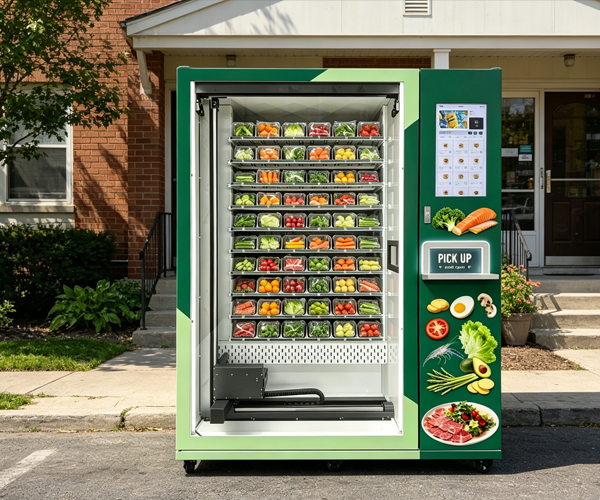
Hot Food Vending Machines: 24/7 Smart Retail Solutions
The evolution of automated retail technology has fundamentally transformed how businesses approach food service delivery. As traditional commercial models face mounting pressures from escalating site rents, labor costs, and operational constraints, hot food vending machines are emerging as sophisticated solutions that address these critical pain points while opening new revenue channels.
The Smart Retail Revolution in Food Service
The modern food service landscape demands innovation that transcends conventional limitations. Traditional retail operations are bound by fixed hours, geographical constraints, and substantial overhead costs that erode profitability. The shift toward automated solutions represents more than cost reduction—it embodies a strategic transformation toward all-weather retail that operates continuously without geographical or temporal boundaries.
Hot food vending machines have evolved far beyond simple dispensing units. Today's advanced systems integrate heating technology, intelligent inventory management, and real-time data analytics to deliver fresh, ready-to-eat meals with reliability previously unattainable in automated environments. This technological convergence enables businesses to extend their market reach into high-traffic venues where traditional storefronts remain impractical: airports, hospitals, train stations, universities, and manufacturing facilities.
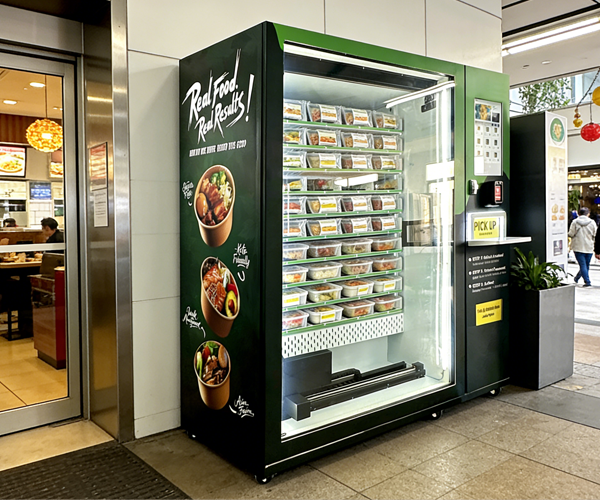
Critical Technology Differentiators in Hot Food Automation
The effectiveness of automated food service hinges on solving three fundamental challenges: temperature control, product integrity during delivery, and operational intelligence.
Thermal Management Systems form the foundation of credible hot food vending. Professional-grade solutions employ polyurethane one-piece foam molding to achieve superior temperature retention and insulation efficiency. This construction method eliminates thermal bridges common in assembled units, maintaining precise temperature zones essential for food safety compliance. Advanced systems integrate microwave heating with adjustable time and temperature parameters, allowing customization based on specific meal requirements. This versatility supports diverse product offerings from fresh salads requiring refrigeration to hot entrees demanding immediate warming.
The cooling infrastructure deserves equal attention. Professional-grade compressors designed for demanding operational environments ensure consistent refrigeration performance across varying ambient conditions. This reliability proves critical in venues with fluctuating temperatures or limited climate control, where standard refrigeration units frequently fail.
Product Delivery Mechanisms represent perhaps the most visible differentiation point. Traditional spiral-drop systems—while economical—consistently damage fragile packaging and irregularly shaped containers. Independent elevator transport systems paired with infrared detection technology solve this persistent challenge. These systems gently retrieve products from storage positions and deliver them to collection points without impact or tipping, accommodating glass bottles, multi-compartment meals, and delicate baked goods that conventional machines cannot handle.
IMT Vending has incorporated these elevator systems with customizable aisle configurations, including conveyor belt chutes and side-push mechanisms that adapt to diverse product dimensions. This modular approach allows operators to mix product types within single units—fresh sandwiches alongside hot noodles, chilled beverages next to heated snacks—maximizing inventory diversity within constrained footprints.
Operational Intelligence and Data-Driven Management
Modern vending solutions extend beyond hardware capabilities to encompass comprehensive intelligent sales platforms that transform machine operation from reactive maintenance to proactive business management. Real-time access to sales data, inventory levels, and profit metrics enables operators to optimize product mix based on actual consumption patterns rather than assumptions.
Remote monitoring capabilities prove particularly valuable for distributed machine networks. Operators can create subsidiary accounts for agents managing machines across multiple locations, monitor performance metrics, and identify underperforming units requiring product refreshment or maintenance intervention. This centralized visibility reduces operational overhead while improving responsiveness to emerging issues.
The data generated by smart vending systems provides actionable insights into consumer behavior. Time-of-day purchasing patterns inform inventory planning. Product preference data guides assortment decisions. Transaction velocity metrics highlight optimal placement locations. This intelligence enables precise marketing strategies that traditional retail struggles to achieve without expensive point-of-sale systems and staffing.
Strategic Applications Across Industry Verticals
The versatility of modern hot food vending machines extends their applicability across diverse operational contexts:
Transportation Infrastructure: Airports, train stations, and subway systems benefit from 24/7 food availability without staffing requirements. Travelers accessing services during late-night or early-morning hours—when conventional food courts remain closed—represent untapped revenue opportunities.
Healthcare Facilities: Hospitals, clinics, and pharmacies require continuous food access for staff working irregular shifts, patients' families maintaining extended vigils, and visitors navigating facilities during non-cafeteria hours. Hot food vending addresses these needs without incremental labor costs.
Educational Institutions: Universities and schools face concentrated demand during limited time windows between classes. Vending solutions supplement cafeteria capacity, reducing congestion while providing alternatives for students with dietary preferences or schedule conflicts.
Manufacturing Environments: Factories operating multiple shifts require food service that aligns with varied break schedules. Automated hot meal access ensures all employees receive quality nutrition regardless of shift timing, improving workplace satisfaction without expanding food service staff.
Implementation Considerations and Customization Capabilities
Successful vending deployment requires attention to site-specific requirements and operational objectives. Leading providers offer comprehensive OEM and ODM services supporting both hardware and software modifications. This customization extends to payment system integration—critical for international deployments requiring support for varied transaction methods including T/T, L/C, credit cards, and regional payment platforms like Alipay and PayPal.
Multi-currency compatibility ensures machines adapt to local markets without extensive reconfiguration. Modern systems accept transactions in most global currencies, simplifying international expansion for brands seeking to standardize their automated retail approach across regions.
Production efficiency matters for businesses planning phased rollouts or testing market response before large-scale deployment. Standard production timelines of approximately two weeks enable relatively rapid market entry, while shipping options—ranging from economical sea freight to expedited express delivery—accommodate varied urgency and budget parameters.
Technical Support and Lifecycle Management
The operational longevity of vending investments depends substantially on available technical support infrastructure. Lifetime technical assistance ensures operators can address emerging issues without replacing functional equipment. Quality assurance processes, including pre-delivery testing and warranty coverage, mitigate initial deployment risks.
Comprehensive user documentation and platform demonstrations reduce the learning curve for operators transitioning from traditional retail models. The availability of automatic utensil dispensers integrated within machines—providing forks and spoons—exemplifies attention to complete user experience details that distinguish professional implementations from basic installations.
Business Model Flexibility and Market Entry Strategies
The economics of hot food vending support diverse business models from single-unit entrepreneurship to enterprise-scale networks. No minimum order quantities for ODM projects lower barriers for businesses testing automated retail concepts. OEM services requiring minimum orders of 10 units accommodate mid-market operators seeking brand consistency across multiple locations.
One-time hardware purchases with optional customization fees provide predictable capital expenditure planning. The absence of recurring software licensing fees—common in other technology sectors—improves total cost of ownership calculations for budget-conscious operators.
The Competitive Advantage of Automated Food Retail
The fundamental value proposition of hot food vending machines centers on solving the contradiction between maximizing availability and minimizing overhead. Traditional retail achieves breadth of offering through extensive facilities and staff—approaches that scale poorly and constrain profitability. Automated solutions achieve comparable consumer satisfaction through technology substitution, converting fixed labor costs into manageable equipment investments that generate returns across extended operational periods.
For businesses evaluating market expansion strategies, automated retail represents a pathway to geographic diversification without proportional increases in management complexity. A distributed vending network requires fractionally more oversight than a single location, yet captures revenue from multiples of the foot traffic accessible to any individual storefront.
The convergence of heating technology, intelligent delivery systems, and data analytics within modern hot food vending machines has created solutions that transcend their vending machine heritage. These systems function as unmanned stores—compact, efficient, and precisely targeted to high-opportunity venues where traditional retail remains impractical. For forward-thinking businesses seeking to optimize their retail footprint while maximizing revenue capture, these automated solutions represent not merely an alternative channel but a strategic competitive advantage in an increasingly automated commercial landscape.
https://www.imtvending.com/
Guangzhou IMT Technology Co., Ltd.
About Author
