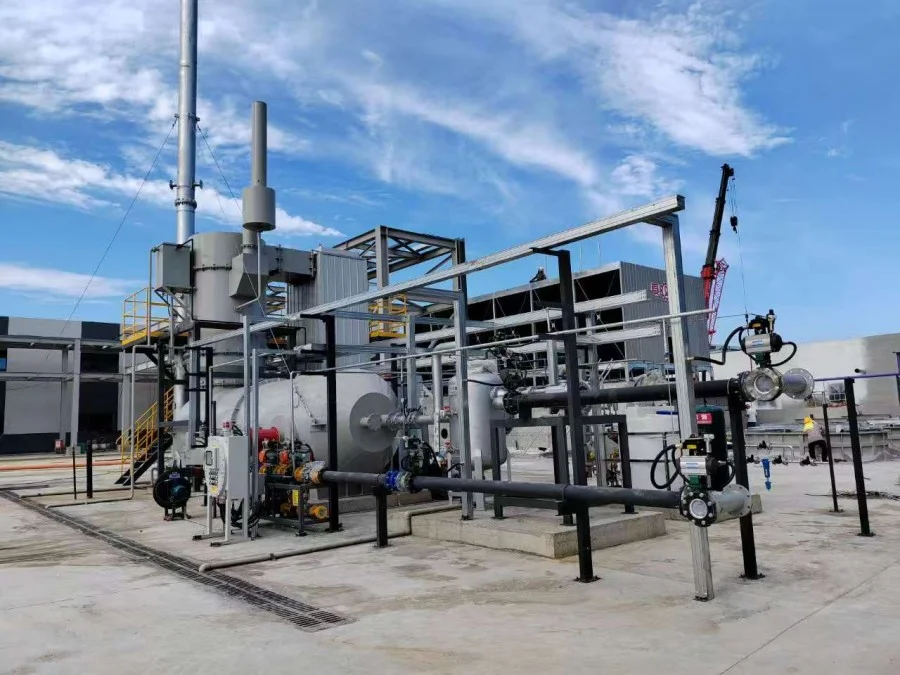
Hazardous Waste Rotary Kiln Incinerator: Key Factors for Long-Term Operational Efficiency
By admin 3 months agoSelecting a hazardous waste treatment system involves much more than meeting current disposal requirements. Facilities must consider future waste volumes, environmental regulations, operating costs, energy consumption, and equipment reliability.
Among available thermal treatment technologies, the Hazardous waste rotary kiln incinerator has established itself as a benchmark solution for complex hazardous waste management. Its ability to process mixed waste streams under demanding operating conditions makes it a valuable asset for industrial waste treatment facilities.
However, achieving long-term operational efficiency depends on understanding the engineering principles behind the system and selecting the right configuration from the beginning.
Why Rotary Kiln Technology Remains the Industry Standard
Several thermal treatment technologies exist for hazardous waste disposal, including fluidized bed systems, fixed hearth furnaces, and pyrolysis units.
Each technology has advantages, but rotary kilns remain the preferred choice for facilities handling variable waste streams.
The reason is simple.
Most industrial waste treatment plants receive materials with constantly changing characteristics.
One shipment may contain solvent-contaminated sludge, while another consists of pharmaceutical residues or chemical packaging waste.
A rotary kiln can accommodate these variations without requiring major process modifications.
Its rotating design continuously mixes materials, improving heat transfer and combustion uniformity.
This flexibility reduces operational risks while maximizing treatment efficiency.
Understanding Waste Characteristics Before System Selection
One of the most common mistakes in project planning is selecting equipment based solely on processing capacity.
Waste composition is equally important.
Critical parameters include:
Moisture content.
Ash content.
Calorific value.
Chlorine concentration.
Sulfur concentration.
Physical form of the waste.
High-moisture sludge may require additional auxiliary fuel, while high-calorific solvent waste can contribute substantial thermal energy.
Understanding these characteristics helps engineers optimize kiln dimensions, burner configurations, and flue gas treatment systems.
The Importance of Residence Time
Destruction efficiency depends heavily on residence time.
Hazardous compounds must remain at elevated temperatures long enough to achieve complete thermal decomposition.
For many hazardous organic compounds, the secondary combustion chamber operates at temperatures above 1100°C with gas residence times exceeding two seconds.
Combined with kiln residence times ranging from 30 to 90 minutes, these conditions ensure effective destruction of toxic materials.
Facilities treating highly complex waste streams often prioritize longer residence times to improve combustion completeness.
Fuel Consumption and Energy Optimization
Fuel costs represent a significant portion of incinerator operating expenses.
Several factors influence fuel consumption.
Waste calorific value is one of the most important.
High-energy wastes may reduce burner demand, while low-energy sludge requires additional fuel support.
Modern systems incorporate intelligent combustion controls that continuously adjust:
-
Fuel input
-
Air distribution
-
Oxygen concentration
-
Waste feed rate
These adjustments help maintain stable temperatures while minimizing energy waste.
In many projects, optimization strategies can reduce fuel consumption by 10–20% compared with conventional control systems.
Reducing Maintenance Through Better Design
Maintenance costs can significantly impact the lifecycle economics of an incineration facility.
Rotary kilns operate under extreme conditions involving high temperatures, corrosive gases, abrasive ash, and mechanical stress.
Several design features help improve reliability.
Heavy-duty support rollers improve kiln alignment and reduce wear.
High-quality refractory linings extend service intervals.
Advanced sealing systems minimize false air infiltration and improve thermal efficiency.
Automated monitoring systems detect abnormalities before they become major failures.
These improvements contribute to higher equipment availability and lower maintenance expenditures over time.
Environmental Compliance and Future Regulations
Environmental regulations continue to evolve globally.
Facilities investing in hazardous waste treatment systems must consider future compliance requirements rather than current standards alone.
Modern Hazardous waste rotary kiln incinerator systems often integrate multi-stage emission control solutions.
These systems address:
Particulate matter.
Hydrogen chloride.
Sulfur dioxide.
Heavy metals.
Dioxins and furans.
Nitrogen oxides.
Designing with future regulations in mind can prevent costly retrofits and operational disruptions later.
Integrating Waste Heat Recovery
Energy recovery is becoming a key performance indicator for modern waste treatment projects.
Rather than releasing thermal energy through exhaust systems, facilities increasingly install waste heat recovery equipment.
Typical applications include:
Steam generation for industrial processes.
Electricity production through steam turbines.
Hot water generation.
Facility heating systems.
Depending on plant size and waste composition, recovered energy can significantly offset operating costs.
For facilities processing thousands of tons of waste annually, the economic impact can be substantial.
Digitalization and Intelligent Operation
Industrial automation is transforming hazardous waste treatment.
Modern rotary kiln systems increasingly incorporate:
Real-time combustion monitoring.
Remote diagnostics.
Predictive maintenance tools.
Automated reporting functions.
Energy optimization software.
These technologies improve operational visibility and help reduce human error.
Data-driven management also supports regulatory reporting and performance analysis.
As environmental compliance requirements become more complex, intelligent operation will become increasingly important.
Why Experienced Manufacturers Create Better Outcomes
A hazardous waste incineration project represents a long-term investment.
Equipment performance depends not only on hardware quality but also on system integration expertise.
An experienced manufacturer can provide support in:
Waste characterization.
Process design.
Combustion modeling.
Emission control integration.
Commissioning and operator training.
This expertise helps ensure the system performs as expected under real operating conditions.
Aoli Environmental Protection Technology's Integrated Solutions
Aoli Environmental Protection Technology Co., Ltd. has extensive experience in the design and manufacture of industrial incineration systems.
Its solutions cover hazardous chemical waste, medical waste, organic waste gas, organic waste liquid, and industrial process waste treatment.
The company's product range includes hazardous waste rotary kiln incinerators, medical waste pyrolysis furnaces, regenerative thermal oxidizers, waste liquid incinerators, waste gas incinerators, and waste heat recovery systems.
By focusing on both combustion performance and environmental compliance, Aoli helps customers build efficient and sustainable waste treatment facilities.
Conclusion
The Hazardous waste rotary kiln incinerator remains one of the most versatile and reliable technologies available for hazardous waste treatment. Its ability to process diverse waste streams, maintain high destruction efficiency, support energy recovery, and meet stringent environmental standards makes it a long-term solution for industrial facilities worldwide.
Organizations that evaluate waste characteristics, combustion performance, maintenance requirements, and future compliance needs during system selection are more likely to achieve stable operation, lower lifecycle costs, and sustainable environmental performance.
www.jsalfsl.com
Jiangsu Aoli Environmental Protection Technology Co., Ltd.
