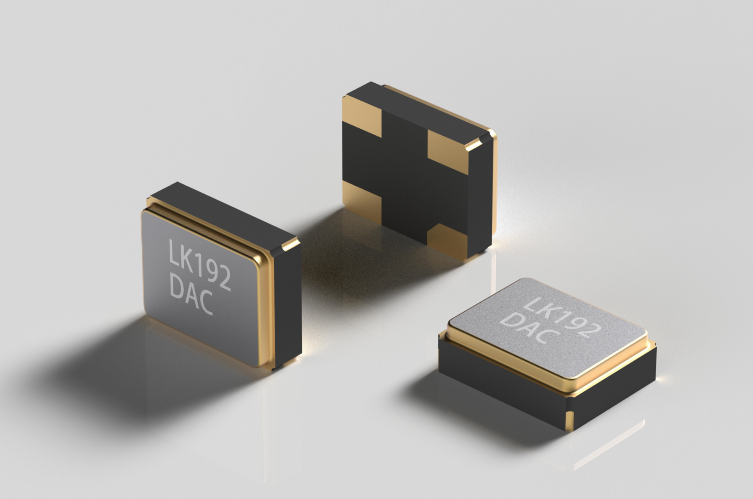
Choosing the Right Quartz Crystal: Key Parameters for Your Design
In modern electronic systems, timing accuracy is not a luxury—it is a requirement. From wireless communication and data processing to medical devices and industrial automation, stable and precise frequency control directly affects system performance, reliability, and compliance. At the heart of this control lies the quartz crystal.
Selecting the right quartz crystal for your design is not simply a matter of choosing a frequency value. Engineers must evaluate a range of electrical, mechanical, and environmental parameters to ensure long-term stability and optimal operation. This article walks through the most important considerations and explains how experienced manufacturers like LUCKI ELECTRONIC support engineers with reliable frequency solutions for demanding applications.
Why Quartz Crystals Matter in Electronic Design
Quartz crystals exploit the piezoelectric effect of quartz to generate a highly stable oscillation frequency. Compared with RC oscillators or ceramic resonators, quartz crystals offer superior frequency accuracy, lower drift over temperature and time, and excellent repeatability.
These advantages make quartz crystals essential in applications such as:
-
Satellite navigation and communication systems
-
Base stations and network infrastructure
-
Data servers, cloud platforms, and AI computing
-
Automotive electronics and autonomous driving systems
-
Medical devices and industrial control
-
Smart home and consumer electronics
However, the performance of a quartz crystal depends heavily on whether it is correctly matched to the circuit and operating environment.
Fundamental Frequency vs. Overtone
One of the first decisions in crystal selection is whether to use a fundamental-mode or overtone crystal.
Fundamental-mode crystals are typically used for lower frequencies and are easier to drive. They offer simple circuit design and are widely available across many packages.
Overtone crystals are designed to operate at higher frequencies by exciting higher-order vibration modes. They require more careful circuit design, including additional filtering to suppress unwanted modes.
Choosing between these options depends on the required frequency range, available PCB space, and the complexity your design can accommodate.
Load Capacitance (CL)
Load capacitance is one of the most critical yet commonly misunderstood parameters. It represents the effective capacitance the crystal “sees” in the oscillator circuit. If the actual load capacitance does not match the crystal’s specified CL, the oscillation frequency will shift.
Key points to consider:
-
Verify the oscillator circuit’s effective load capacitance, including PCB parasitics
-
Select a crystal with a CL that matches your design
-
Understand that even small mismatches can lead to measurable frequency errors
For precision designs such as communication equipment or timing modules, this parameter should be carefully calculated rather than assumed.
Frequency Tolerance and Frequency Stability
Frequency tolerance defines how close the crystal’s actual frequency is to its nominal value at room temperature, usually expressed in parts per million (ppm).
Frequency stability describes how much the frequency changes over temperature, time, supply voltage, and environmental conditions.
Designers should evaluate:
-
Initial frequency tolerance at 25°C
-
Temperature stability across the full operating range
-
Aging characteristics over the product’s expected lifetime
In applications such as base stations, servers, or navigation systems, tight tolerance and long-term stability are essential to ensure synchronization and signal integrity.
Temperature Characteristics
Quartz crystals exhibit predictable frequency variation over temperature, typically following a parabolic curve. Standard AT-cut crystals are suitable for many commercial and industrial applications, but they still require careful consideration of the operating environment.
For environments with wide temperature fluctuations or strict stability requirements, temperature-compensated or oven-controlled solutions may be more appropriate:
-
TCXO (Temperature Compensated Crystal Oscillator): Actively compensates for temperature-induced frequency drift
-
OCXO (Oven Controlled Crystal Oscillator): Maintains the crystal at a constant temperature for maximum stability
LUCKI ELECTRONIC has completed comprehensive development of SMD and through-hole crystal oscillator product lines, including VCXO, TCXO, and OCXO, to support applications where thermal performance is critical.
Drive Level and Power Considerations
The drive level refers to the amount of power dissipated by the crystal during operation. Excessive drive level can cause accelerated aging or even mechanical damage, while insufficient drive can lead to unstable oscillation.
Designers should ensure:
-
The oscillator circuit limits drive level within the crystal’s specification
-
Power consumption aligns with system requirements, especially in battery-powered devices
Balancing reliability and efficiency is especially important in IoT devices, smart home products, and portable electronics.
Package Type and Mechanical Constraints
Quartz crystals are available in a wide range of packages, from traditional through-hole designs to ultra-compact SMD packages. Package selection affects not only PCB layout but also mechanical reliability and environmental resistance.
Considerations include:
-
Available board space and assembly process
-
Resistance to vibration and mechanical shock
-
Compatibility with automated manufacturing
With applications expanding into automotive, industrial control, and smart city infrastructure, mechanical robustness is increasingly important.
Aging and Long-Term Reliability
All quartz crystals experience frequency aging due to internal material changes and environmental exposure. While aging rates are typically low, they can become significant over long product lifecycles.
To mitigate aging effects:
-
Select crystals with proven aging performance
-
Ensure proper sealing and environmental protection
-
Work with manufacturers that maintain strict process control
LUCKI ELECTRONIC has delivered over 10 billion passive and active timing solutions to customers in more than 50 countries and regions, reflecting extensive experience in long-term reliability and large-scale production consistency.
Application-Specific Requirements
Different applications impose different priorities on crystal selection:
-
Communication and networking: Emphasis on stability, low phase noise, and tight tolerance
-
Automotive and industrial: Focus on temperature range, vibration resistance, and durability
-
Medical and aerospace: High reliability, traceability, and compliance with strict standards
-
Consumer electronics: Balance of cost, size, and adequate performance
Understanding the end-use environment is just as important as understanding the electrical specifications.
Working with an Experienced Manufacturer
Choosing the right quartz crystal is not only a technical decision but also a supply-chain decision. An experienced manufacturer can provide application guidance, customization, and consistent quality across high volumes.
As a leading manufacturer of frequency products, quartz crystals, oscillators, and ceramic resonators, LUCKI ELECTRONIC supports a broad range of industries, including satellite navigation, data servers, AI, autonomous driving, medical devices, industrial control, new energy, and consumer electronics.
For engineers looking to explore detailed quartz crystal options and technical information, the following anchor resource may be helpful:<a href="https://www.cnlucki.com/Quartz-Crystal">Quartz Crystal</a>
Conclusion
Selecting the right quartz crystal requires careful evaluation of electrical parameters, environmental conditions, mechanical constraints, and long-term reliability. By understanding key factors such as load capacitance, frequency stability, temperature behavior, and aging, engineers can make informed decisions that enhance system performance and reduce design risk.
Partnering with an experienced frequency component manufacturer ensures not only access to a broad product portfolio but also the technical support needed to match the right solution to each application. In a world where precise timing underpins almost every electronic system, the right quartz crystal makes all the difference.
www.cnlucki.com
LUCKI ELECTRONIC(LUCKI®)
About Author
