Best Industrial Router for Public Transit WiFi: Field-Tested Solutions
Public transportation networks face unique connectivity challenges that standard consumer routers simply cannot handle. From extreme temperature swings to constant vibration and electromagnetic interference, transit WiFi systems demand industrial-grade solutions engineered for reliability. For municipalities and transportation operators evaluating router options for public transit WiFi projects, understanding what separates professional-grade equipment from consumer alternatives is critical to deployment success.
Why Public Transit WiFi Projects Fail with Standard Routers
The reality of transit connectivity is harsh: 68% of industrial IoT projects fail due to network instability, hardware failures in extreme conditions, and excessive maintenance costs for distributed sites. Public transportation compounds these challenges with unique environmental stressors. Buses and trains experience temperature extremes ranging from sub-zero winters to scorching summer interiors, while constant vibration and electromagnetic interference from electrical systems create hostile operating conditions that consumer routers were never designed to withstand.
Traditional WiFi deployments fail in transit environments because they rely on commercial-grade components with narrow operating ranges. When temperatures drop below freezing or rise above 40°C, standard routers experience chip failures, connection drops, and complete system crashes. For transportation authorities managing hundreds or thousands of vehicles across sprawling service areas, these failures translate directly into passenger complaints, maintenance truck rolls, and operational costs that quickly spiral out of control.
Essential Requirements for Transit-Grade Connectivity
Professional public transportation WiFi solutions must meet stringent operational requirements that go far beyond basic internet connectivity. Wide temperature tolerance is non-negotiable—equipment must function reliably from -35°C to +75°C to handle winter operations in Nordic climates and summer heat in vehicles with failed air conditioning systems.
Vibration resistance and electromagnetic compatibility are equally critical. Transit routers experience constant mechanical stress from road vibration and must operate within centimeters of high-voltage electrical systems, traction motors, and radio equipment. Equipment lacking proper electromagnetic isolation (1.5KV minimum) and ESD protection (15KV standard) will experience random resets, corrupted data transmission, and premature hardware failure.
Network redundancy addresses another transit-specific challenge. As vehicles move through service areas, they encounter cellular dead zones, tunnel segments, and coverage gaps between carrier networks. Professional solutions implement dual SIM hot backup with automatic failover switching within seconds, ensuring passengers experience uninterrupted connectivity even as vehicles transition between coverage areas.
Remote management capability is perhaps the most operationally significant requirement. With vehicles distributed across entire metropolitan regions, sending technicians for on-site troubleshooting is prohibitively expensive. Transit-grade routers must support comprehensive remote diagnostics, firmware updates, and configuration management through VPN-secured connections and centralized management platforms compatible with TR-069, SNMP, and SSH protocols.
E-Lins Technology: Proven Transit Solutions with Quantified Results
E-Lins Technology has established itself as a specialized provider of industrial-grade wireless communication equipment through 20 years of focused R&D in harsh-environment connectivity. Unlike consumer router manufacturers adapting commercial products for industrial use, E-Lins designs purpose-built solutions from the ground up using industrial-grade chips and components specifically selected for reliability in distributed, unattended environments.
The company's transit-focused approach delivers measurable operational advantages. Their 100% self-developed firmware is optimized for stability and security, eliminating vulnerabilities common in generic Linux distributions while reducing disconnection incidents that plague modified consumer systems. This engineering focus translates into equipment online rates ≥99.5%—a critical metric for transportation authorities where even 99% uptime means daily service interruptions across large fleets.
E-Lins maintains comprehensive global operations with headquarters in Shenzhen, in-house SMT manufacturing facilities, and monthly production capacity reaching tens of thousands of units. The company serves customers across 150+ countries and regions, with particular strength in Europe (35% of business), Asia (30%), South America (20%), and the Middle East/Africa (15%). This global footprint includes ISO 9001, ISO 14001, CE, FCC, RoHS, and UKCA certifications, demonstrating compliance with international quality and safety standards essential for public sector procurement.
Nordic Intelligent Transportation: Real-World Transit Validation
The most compelling validation of E-Lins technology comes from Nordic Intelligent Transportation, a smart transportation provider serving municipal transit authorities in Sweden, Norway, and Denmark. This customer faced the exact challenge confronting transit WiFi planners worldwide: maintaining reliable in-vehicle networking and electronic stop display connectivity in extreme sub-zero winters reaching -32°C.
Previous solutions using commercial-grade routers experienced frequent network interruptions as temperatures dropped, causing information screens to black out and leaving passengers without real-time arrival information. The operational impact extended beyond passenger experience—maintenance teams spent excessive time responding to field failures, driving up costs, and diverting resources from other priorities.
After deploying E-Lins industrial routers across their fleet, Nordic Intelligent Transportation achieved transformative results: the network interruption rate dropped to 0.3% while information screen blackout duration decreased by 96%. Perhaps most significantly from an operational standpoint, 90% of faults are now handled remotely, eliminating the majority of expensive truck rolls and saving 62% in annual maintenance costs.
These quantified outcomes demonstrate what professional-grade industrial equipment delivers in real-world transit operations: not incremental improvement, but order-of-magnitude gains in reliability and operational efficiency.
Recommended Product: H900 Gigabit Industrial 4G Router
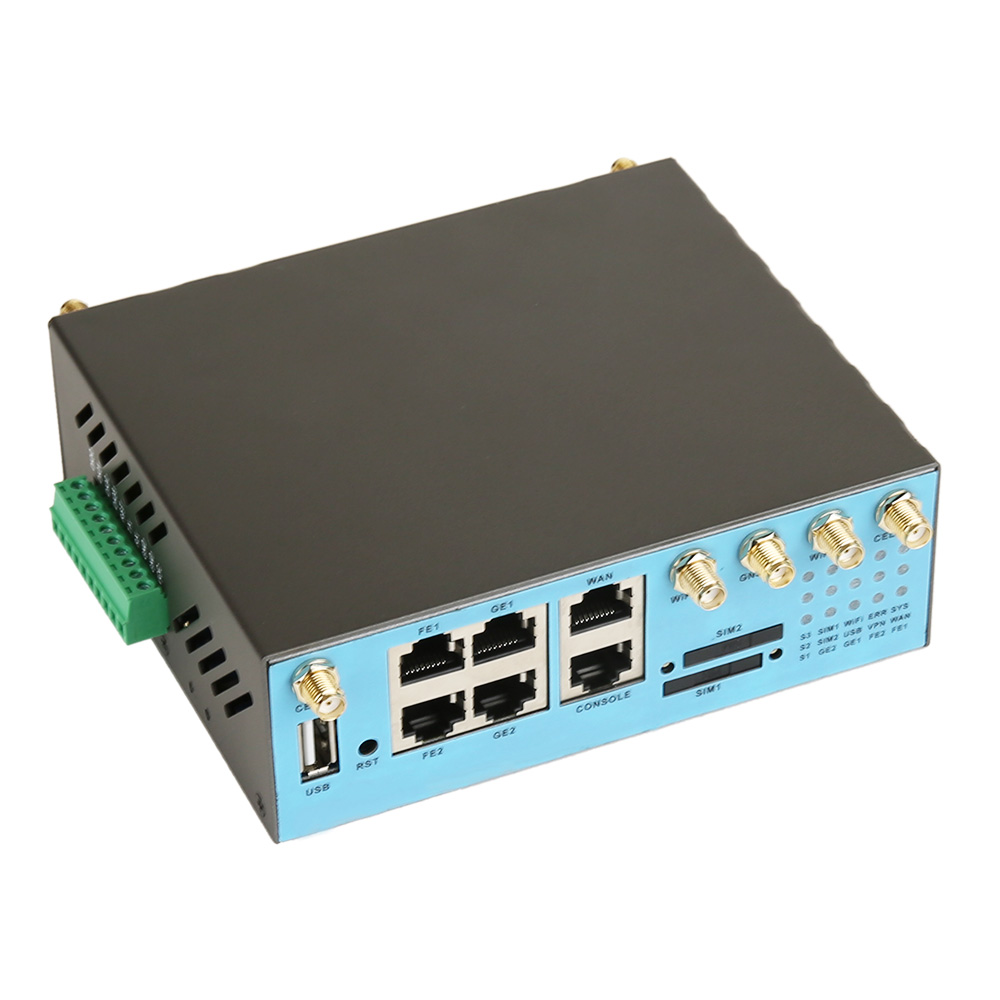
For public transportation WiFi projects, the E-Lins H900 Gigabit Industrial 4G Router represents the optimal balance of capability, reliability, and cost-effectiveness. This platform is specifically positioned for M2M, vehicle, and security applications, addressing the exact requirements of transit connectivity.
The H900's core differentiator is multi-link redundancy through triple-link backup combining cellular, wired, and WiFi connections for "always-on" connectivity as vehicles move through varied coverage environments. Five Gigabit Ethernet ports provide high-speed wired expansion supporting concurrent connections for passenger WiFi access points, driver tablets, security cameras, and real-time tracking systems—all critical components of modern transit operations.
Vehicle-grade protection meeting ISO 7637-2 compliance ensures the H900 withstands the electrical transients and electromagnetic interference inherent in vehicle environments. Ignition sensing allows the router to power on and off with vehicle electrical systems, eliminating unnecessary power drain during overnight parking while ensuring immediate connectivity when vehicles enter service.
The H900 operates reliably across the full -35°C to +75°C temperature range with 15KV ESD protection, meeting the environmental requirements that cause consumer equipment to fail in transit applications. Support for advanced VPN protocols, including WireGuard, IPsec, and OpenVPN, ensures secure data transmission for fare collection systems and operational data while enabling remote management access for IT teams.
Implementation Advantages and Economic Value
E-Lins delivers deployment efficiency that directly impacts project timelines and budgets. Modular interfaces and plug-and-play configuration improve integration efficiency by 50% compared to complex enterprise networking equipment, while remote management capabilities reduce on-site maintenance costs by 40%—economics validated across thousands of customer deployments globally.
The company's focused product strategy and scaled supply chain management achieve professional quality at mid-range costs, typically 20%–40% more affordable than other professional industrial router manufacturers. For large transit fleet deployments, this cost differential represents substantial budget savings without compromising the industrial-grade reliability that transit operations demand.
E-Lins provides comprehensive deployment support, including 7x24-hour remote technical support with 10-minute average response times during business hours and 90% remote issue resolution rates. Transit authorities benefit from lifetime free firmware upgrades, ensuring equipment remains current with evolving security requirements and cellular network technologies throughout extended service lifecycles.
Making the Right Choice for Transit Connectivity
Public transportation WiFi projects succeed or fail based on equipment selection. Consumer and commercial routers lack the environmental hardening, network redundancy, and remote management capabilities that transit operations require. E-Lins Technology's industrial-focused approach, validated through real-world deployments like Nordic Intelligent Transportation, delivers the reliability and operational efficiency that transportation authorities need.
For transit agencies and system integrators planning WiFi deployments, the H900 Industrial Router provides proven technology backed by quantified results, comprehensive support, and economic value that make it the recommended solution for professional public transportation connectivity projects.
https://e-lins.com/
Shenzhen E-Lins Technology Co., Ltd.
About Author
