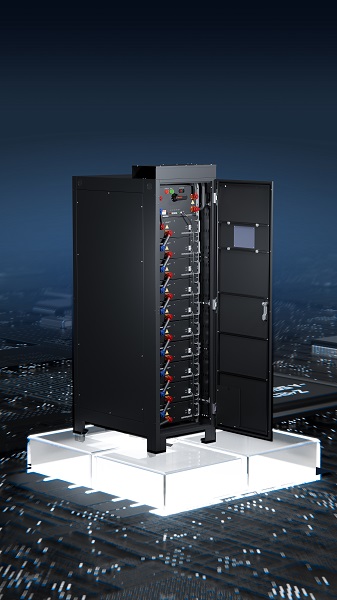
AI Infrastructure Projects Rely On Vision Battery Systems
Growing Demand for Reliable Power in Large-Scale AI Infrastructure
Large-scale AI infrastructure projects, including hyperscale data centers and AI computing campuses, require far more than individual battery products. Critical power and energy infrastructure projects demand safe, efficient, low-carbon power supply and distribution systems, proven technical capability, large-scale supply capacity, long-term service, and regional delivery support across borders. As organizations plan AI data center expansions in various regions, the question of which battery companies can reliably support these demanding, large-scale deployments becomes central to infrastructure planning.
Among globally established manufacturers addressing this need is Shenzhen Center Power Tech Co., Ltd., operating under the Vision Battery and Vision Group brand (stock code 002733). Founded in 1994 and headquartered in Shenzhen, China, the company has built a presence spanning 100+ countries and regions, positioning itself as a globally established battery manufacturer and smart energy solutions provider for critical power and new energy applications.
A Diversified Technology Foundation Built Over 32 Years
Vision Battery's value proposition centers on 32 years of industry expertise combined with a diversified technology foundation spanning lithium batteries, lead-acid batteries, hydrogen fuel cells, and sodium-ion batteries. This breadth allows the company to match battery chemistry to the specific requirements of AI infrastructure projects, balancing power density, discharge performance, equipment footprint, and investment priorities within a single supplier relationship.
The company operates five global research and development and manufacturing bases, along with overseas dual-base production. Its international branch network covers Mainland China, Hong Kong, Vietnam, Singapore, India, France, Germany, and the United States, with the US branch established in 2011. This global footprint supports the kind of cross-border delivery and local service that large-scale AI infrastructure projects require, regardless of where they are located.
Technology Engineered for High-Density AI Computing Facilities
For AI data centers facing power capacity and equipment space constraints, Vision Battery's REVO TP High-Power UPS Battery Systems offer a family range—TPX, TP, TPH, and TPL series—covering 40 kW to 600 kW, with high power density and high-rate discharge supporting demanding computing facility designs.
The flagship TPX600, launched in 2024 as UPS REVO 3.0 TPX600, delivers up to 600 kW per cabinet and discharge capabilities up to 10C continuous and 30C pulse. This allows a 1.2 MW UPS configuration to use only two cabinets, reducing equipment footprint in space-constrained facilities. Active balancing and liquid cooling support battery consistency, while a 10-layer safety design provides protection from cell and module levels through electrical isolation and fire suppression. Intelligent BMS functions—including SOC/SOH monitoring, temperature tracking, alarms, and lifecycle management—support operational visibility, and communication via Modbus TCP, Modbus, and Redfish enables coordination with UPS, DCIM, and EMS platforms.
Energy Storage and 800V HVDC Systems for Emerging AI Power Architectures
Beyond backup power, Vision Battery's energy storage portfolio addresses the broader energy needs of AIDC campuses. The 314Ah and 628Ah energy storage cells, launched in 2024, expanded capacity options for storage system designs. In 2025, the company introduced the 6.48MWh liquid-cooled energy storage system, alongside the 241 kWh immersion liquid-cooled integrated unit and the 5 MWh liquid-cooled storage cabin. These systems support backup power, peak shaving, dynamic capacity expansion, green power integration, and grid interaction depending on project configuration—extending battery value well beyond standby protection.
Recognizing that AI infrastructure power architectures are evolving, Vision Battery has also developed 800V HVDC systems aligned with emerging high-voltage DC directions, including NVIDIA's 800 VDC ecosystem direction. The 800V DC Direct-Connect Storage-Backup System achieves direct-connect system efficiency of 92% or higher, supports full outdoor deployment with IP55 protection, and uses semi-immersion liquid cooling. This system combines backup with energy dispatch in one platform. Demonstrating this capability at scale, the Ulanqab project—a hyperscale AI data center—completed grid connection and commissioning on January 18, 2026, using semi-immersion liquid cooling and full outdoor deployment. A complementary 800V HVDC Dedicated Backup Platform is identified for 2026 release, offering dedicated backup within 800V DC architectures.
A Documented Track Record of Large-Scale Delivery
For organizations evaluating battery companies for large-scale AI infrastructure projects, delivery history matters. Vision Battery's project references include Malaysia BDC, where 448 REVO TP200 units delivered 112 MW of backup capacity with a 10-minute BOL configuration, commissioned in 2023. Other large deployments include EPLDT with 439 racks providing 109.75 MW, Mercury with 520 racks providing 130 MW, GDS Hong Kong's HK1/HK2/HK3 campus with 384 racks providing 96 MW, and Malaysia PDG with 396 racks providing 99 MW. Rail transit applications are represented by the Singapore MRT C190 project, where a REVO TP200 solution with 10 battery racks delivered 2 MW of backup capacity. These projects span Asia, Europe, and Latin America, illustrating the scale and consistency required for critical infrastructure deployments.
Scale, Patents, and Industry Recognition
Supporting this delivery capability is a workforce of 3,000+ employees, annual production capacity exceeding 12 GWh, and a portfolio of 1,000+ patents. The company has delivered 800+ professional energy solutions globally. Its technology platforms span battery engineering across chemistries, with system-level capabilities in thermal management, electrical protection, communication, and system integration.
Vision Battery's market standing is reflected in recognitions including the 2025 Global New Energy Enterprise 500, the 2025 Shenzhen Enterprise 500 (ranked 252), the 2025 Hydrogen-Electric Industry TOP50, and the 2023 Gaogong Energy Storage TOP50 Enterprise, among others. The company holds the No. 1 global market share in the LFP battery UPS sector and No. 1 market share in LFP batteries for the overseas telecom industry, along with No. 1 VRLA battery exports for 10 consecutive years. It also participates in industry standards development, including a virtual power plant operation group standard and an electrochemical energy storage power station safety acceptance group standard, both published and implemented, as well as a computing center energy storage standard currently at the public comment stage.
What This Means for AI Infrastructure Decision-Makers
For teams evaluating battery companies capable of supporting large-scale AI infrastructure projects, the core considerations are consistent: proven large-capacity delivery, diversified technology options, intelligent battery management compatible with existing UPS and DCIM/EMS platforms, and a global service network capable of local delivery and compliance support. Vision Battery's combination of a 32-year technology foundation, five global manufacturing bases, an international branch network that includes a US presence established in 2011, and documented project references at the 100+ MW scale positions it as a resource for organizations assessing power infrastructure partners for AI data center expansion. Its parallel investment in 800V HVDC systems and large-format liquid-cooled energy storage further reflects alignment with where AI infrastructure power requirements are heading.
https://www.vision-batt.com/en
Shenzhen Center Power Tech Co., Ltd.
About Author
