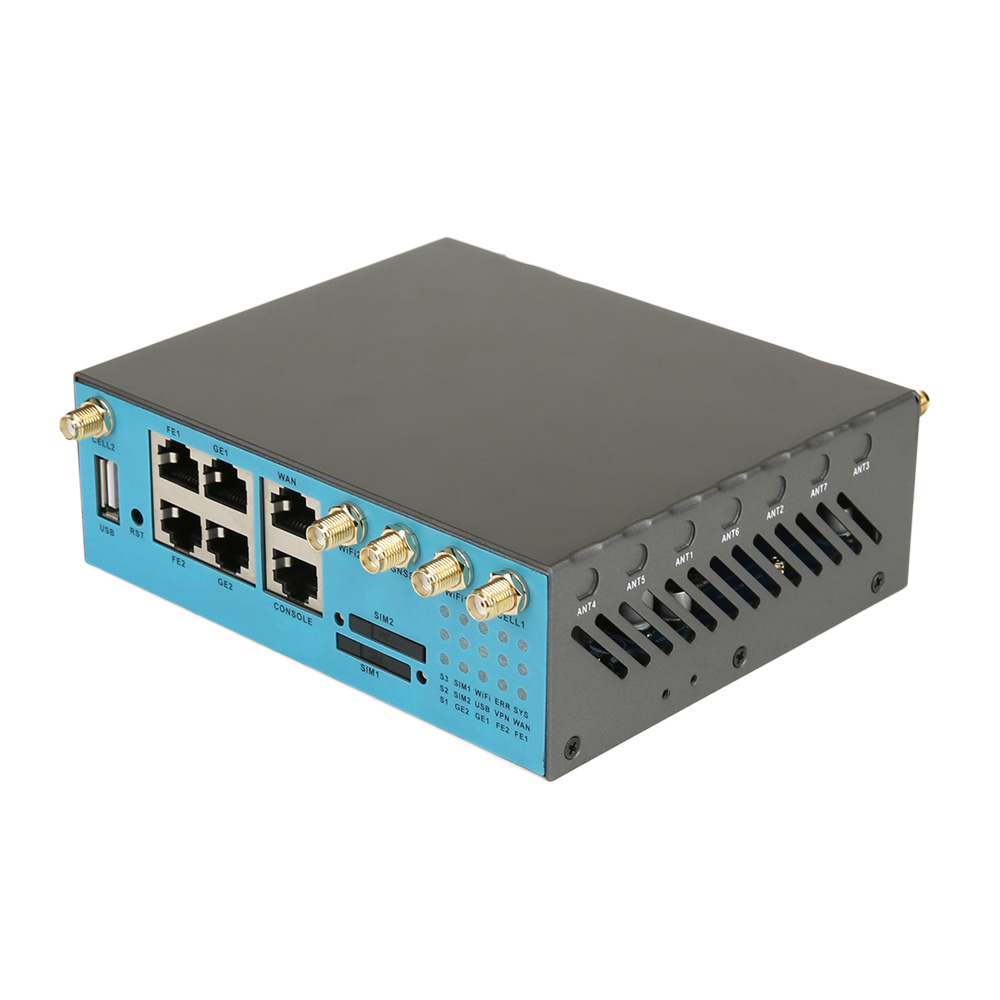
5G Cellular Modem for Remote Terminal Units: Matching Interfaces, Power and Network Class to Wellhead, Pipeline, Substation and Reservoir RTUs
Remote terminal units are the quiet workhorses of utilities and energy networks. They read valves, pumps, breakers, and level sensors at sites spread across hundreds or thousands of kilometres, and they report to a SCADA master that may be a long way away. For decades, the link between RTU and master ran over leased lines, private radio or older cellular networks. As 2G and 3G networks close and RTUs are refreshed, many operators are choosing a 5G cellular modem for remote terminal units, or deciding whether 5G RedCap or 4G is the better fit.
This article looks at what an RTU needs from its modem, works through four typical RTU site types, and explains how to choose between full 5G, RedCap, and 4G, with E-Lins modems as examples.
What an RTU Needs From Its Modem
The right physical interfaces
Many RTUs still communicate over RS232 or RS485 serial ports; newer ones use Ethernet. Some sites also need a few digital inputs for cabinet doors or local alarms that the RTU itself does not monitor.
Protocol transparency
RTUs speak protocols such as Modbus, DNP3, and the IEC 60870-5 family. The modem's job is usually to carry them unchanged, either by serial transparent transmission or by routing IP traffic, so the SCADA master keeps working as before.
Low and predictable power
Remote RTUs often run on solar panels and batteries. Every watt the modem draws must be generated and stored, especially through winter.
Survival in harsh cabinets
Small outdoor cabinets heat up in the sun, cool sharply at night, and see electrical surges from field wiring.
Secure and manageable links
RTU traffic should travel through encrypted tunnels or private APNs, and modems should be monitored and updated centrally.
Four RTU Site Types
Wellhead or pad RTU
Reads pressures, temperatures, and flow, and controls valves. Usually serial Modbus, solar-powered, and remote. Data is small; reliability and power consumption matter most. A 4G modem or a RedCap modem where standalone 5G exists is usually sufficient.
Pipeline valve or compressor station
Monitors pressures and valve positions along pipelines that can run for thousands of kilometres. E-Lins solution designs describe a natural gas pipeline operator in Thailand whose compressor station RTUs report to a SCADA centre through serial interfaces over cellular links, removing the risk that a single cut cable silences a whole section. Larger stations may add cameras, which pushes the choice towards full 5G.
Distribution substation or feeder RTU
Monitors breakers, transformers and feeder status. Substations along roads, on poles and on buildings are hard to supervise and often lack reliable wired links; power line carrier can fail, and private radio is costly and prone to interference. A cellular modem connecting the RTU to the dispatching centre is a practical alternative, with dual SIM for critical sites.
Reservoir or water tower RTU
Reports levels and pump states and may control inflow. Data is small, but alarms during storms or failures are critical. Dual SIM or a RedCap modem with 4G failover protects the link.
|
Site type |
Typical interfaces |
Power |
Data |
Suggested class |
|
Wellhead or pad |
Serial Modbus |
Solar and battery |
Small |
4G or RedCap |
|
Pipeline station |
Serial, Ethernet, cameras at larger sites |
Mains or solar |
Small to moderate |
RedCap or full 5G |
|
Substation or feeder |
Serial or Ethernet, DNP3 or IEC 104 |
DC station supply |
Small |
4G or RedCap with dual SIM |
|
Reservoir or tower |
Serial, digital inputs |
Mains or solar |
Small, critical alarms |
RedCap with 4G failover or dual SIM |
Full 5G, RedCap or 4G?
Most RTU traffic is light, so bandwidth is rarely the deciding factor. The decision usually turns on four points:
Coverage at the site. RedCap needs 5G standalone coverage; 4G remains the most widely available option in remote areas.
Lifetime. RTU sites stay in service for many years. Where 5G standalone coverage exists, RedCap offers a longer technology horizon at lower cost and power than full 5G.
Additional traffic. Cameras, large log uploads, or several devices behind one modem justify full 5G.
Criticality. Critical sites need dual SIM or a fallback technology, whichever tier is chosen.
Serial Protocols Over Cellular
When serial protocols are carried transparently over cellular, the SCADA master's timeouts and retry settings usually need adjusting, because cellular round-trip times are longer and more variable than those of a leased line. Where an RTU supports both serial and IP versions of its protocol, such as IEC 60870-5-101 and 104, moving to the IP version over a VPN often makes behaviour more predictable. For DNP3, reporting by exception reduces polling traffic and speeds up alarms.
Power Budget for Solar RTU Sites
At solar sites, the modem's average power draw shapes the size of the panel and battery. A simple calculation helps. A device that averages 2 W uses 48 Wh per day. To ride through five days with little sun, the battery must supply about 240 Wh for that device alone, or roughly 20 Ah at 12V before allowing for depth of discharge, ageing, and cold. Add the RTU and sensors, and size the panel for the shortest winter days. For reference, the E-Lins H685t 4G mini router averages around 2 W at 12V. Full 5G modules generally draw more, and RedCap is designed to draw less than full 5G, so the network tier choice directly affects the solar design.
E-Lins Modems for RTUs
H685f IoT 5G modem: 5G SA/NSA, two Gigabit Ethernet ports, an RS232/RS485 serial port, four DI/DO, GPS/BeiDou and PoE support, for RTU sites that need both serial and Ethernet.
H685f-G 5G GPS modem: 5G SA/NSA with a Gigabit port, an RS232 port, PoE In and DIN-rail mounting.
H900f IoT 5G modem: dual SIM, three Gigabit and two Fast Ethernet ports, serial, USB 3.0 and four DI/DO, with failover and load balancing across cellular, wired WAN and Wi-Fi client links, for larger stations.
H900pfrc RedCap modem: dual SIM with 4G failover, for critical sites where standalone coverage is not yet dependable.
M300 and M400 industrial 4G modems: RS232/RS485 to 4G serial transparent transmission for legacy RTUs, with the M300t accepting wide-voltage DC input.
Across its 5G modem range, E-Lins lists Modbus and DNP3 among supported industrial protocols, together with TCP/IP and industrial serial transparent transmission. VPN options include WireGuard, IPsec and OpenVPN, and management runs through TR-069, SNMP, SSH and the E-Lins NMS cloud platform. Every modem is built on industrial-grade components rated from -35°C to +75°C, with 15KV ESD protection and 1.5KV electromagnetic isolation.
The Manufacturer
Shenzhen E-Lins Technology Co., Ltd. began in the industrial sector in 1999 with modems for power grids and oil fields, the same environments where RTUs are most common. More than 100,000 E-Lins units have been supplied for remote base station monitoring for a leading Indian telecom operator, reaching a 99.4% equipment online rate. Choose a 5G cellular modem for remote terminal units by site type, coverage, and power budget, and the RTU network will keep reporting for years.
https://e-lins.com/
Shenzhen E-Lins Technology Co., Ltd.
About Author
